 Listicle
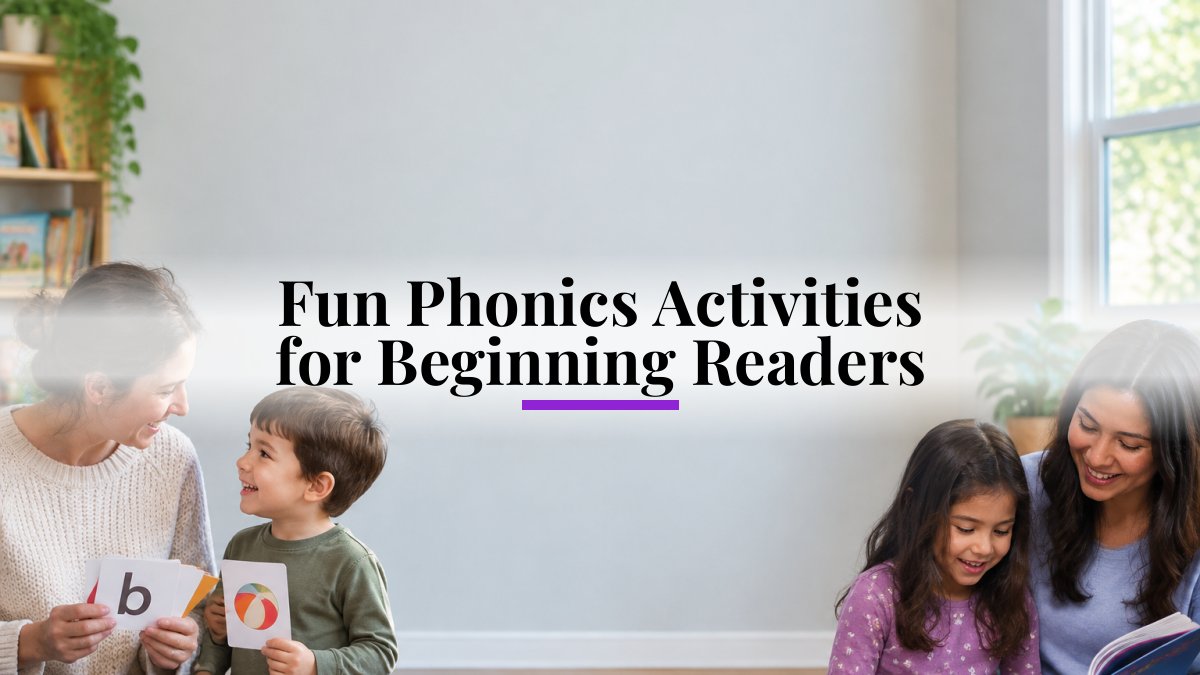
Fun Phonics Activities for Beginning Readers
Last Updated: November 6, 2026
Quick Summary
Fun phonics activities for beginning readers work best as short, low-pressure games that build from hearing sounds to blending them into words. Try sound detective, letter hops, and sound slides at home in ten-minute bursts, because play is repetition that doesn't feel like repetition.
- Start with phonemic awareness games like sound detective and rhyme ping-pong before bringing in letters.
- Segmenting usually comes more easily than blending, so keep blending practice short and playful.
- CVC words like cat, hop, and sit make perfect first words because they use short vowels and three letters.
- Short, frequent practice beats long sessions, so fit sound games into grocery runs, bath time, and car rides.
- If a game turns into a power struggle, stop and try again tomorrow.
Table of Contents
- Why Play Beats Flashcards for Beginning Readers
- Phonemic Awareness Games for Kids: Start With Sounds, Not Letters
- Phonics Games for Kindergarten: Letter Sounds and Beginning Sounds
- Blending and Segmenting: The Bridge to Real Words
- Phonics Activities Without Worksheets: Movement, Sorting, and I Spy
- Phonics Activities at Home: Fitting Practice Into Your Real Day
- How to Tell It's Working: Signs of Mastery
- Pick One Game and Try It Tonight
- Frequently Asked Questions
Why Play Beats Flashcards for Beginning Readers
My youngest once spent twenty minutes hopping from one construction-paper letter to the next, shouting sounds every time she landed. She thought she was playing.
That's the case for play-based phonics in a nutshell. Plenty of families try to drill letter sounds with flashcards, only to meet tears by week two. Games work better because they lower the stakes.
There's solid research behind this.
A Quick Word on How Phonics Works
Phonics is the connection between letters and the sounds they make. A child who knows that the letter m says /m/ can eventually blend /m/ /a/ /p/ into "map." That's decoding, and it's the bridge from knowing letters to actually reading words.
Most phonics instruction moves through a rough order: hearing sounds in spoken words first, then matching letters to sounds, then blending and segmenting, then reading simple words. Games fit at every stage. You don't need a curriculum binder to start.
Phonemic Awareness Games for Kids: Start With Sounds, Not Letters
Before letters, there are sounds. Phonemic awareness is the ability to hear and play with individual sounds in spoken words, and it's one of the strongest early predictors of reading success. It's also completely screen-free and costs nothing.
Try these tonight:
- Sound detective: "I'm thinking of something in this room that starts with /s/." Let your child hunt for it.
- Sound counting: Say a word like "cat" and clap once per sound: /c/ /a/ /t/. Three claps.
- Rhyme ping-pong: You say "cat," they say "hat." Keep going until someone gets stuck.
If you want a deeper walkthrough, our guide on how to teach phonemic awareness at home breaks it into steps. For a ready-made list, these phonemic awareness games for kindergarteners are sorted by difficulty.
Phonics Games for Kindergarten: Letter Sounds and Beginning Sounds
Once your child can hear sounds, bring in the letters. Letter recognition and letter-sound correspondence are the next rung on the ladder, and kindergarten is prime time for both.
A few favorites that need almost no prep:
- Letter sound hunt: Hide magnetic letters around the room. Your child finds one, says its sound, then sticks it on the fridge.
- Beginning sound baskets: Set out three baskets labeled with letters. Your child sorts small toys or pantry items by their initial sound.
- Sound bingo: Make a card with six letters. Call out sounds instead of letter names. First to cover a row wins.
For more structured play, our list of phonics games to play at home tonight gives you nine options with full instructions. If you're wondering whether this playful approach actually holds up, we answer that in is play-based phonics worth it for kindergarten.
Blending and Segmenting: The Bridge to Real Words
Blending and segmenting are where letters turn into reading. Blending means pushing sounds together to make a word: /c/ /a/ /t/ becomes "cat." Segmenting is the reverse, pulling a word apart into its sounds. Kids need both, and they need lots of short, happy reps with each.
Here's the part most guides skip: segmenting usually comes more easily than blending. A child who can tell you the sounds in "dog" may still freeze when you ask them to smoosh /d/ /o/ /g/ together. That's normal.
Three Games With Everything You Need to Know
Each game below lists the target skill, what to grab, how long setup takes, the steps, and ways to make it easier or harder. Pick the one that matches where your child is right now.
1. Slow Motion Guess
- Target skill: blending sounds into a word.
- Materials: none.
- Setup: none.
- Steps: Stretch a word out slowly, like "ssssuuuunnn." Ask your child to say it fast. Trade places so they get to stretch a word for you.
- Easier: use two-sound words first ("at," "me," "up").
- Harder: stretch four-sound words with blends ("stop," "flag").
2. Sound Slide
- Target skill: blending three sounds in order.
- Materials: a piece of paper and a marker, or three sticky notes.
- Setup: about one minute. Write three letters spaced apart (c, a, t).
- Steps: Your child says each sound as they touch each letter, then slides a finger across all three and says the word.
- Easier: start with two letters (a, t).
- Harder: add a fourth letter or swap in a new vowel.
3. Break It Apart
- Target skill: segmenting a spoken word into sounds.
- Materials: three small objects (coins, blocks, cereal pieces).
- Setup: none.
- Steps: Say a three-sound word like "map." Your child pushes one object forward per sound: /m/ /a/ /p/. Count the objects at the end.
- Easier: clap the sounds instead of pushing objects.
- Harder: try four-sound words, or have them write a letter for each sound.
CVC Words and Short Vowels
CVC words follow a consonant-vowel-consonant pattern: cat, hop, sit, bed. They're the perfect first words because they use short vowel sounds and only three letters.
A quick word list to keep on the fridge: cat, hat, map, sun, pig, hop, bed, sit, mud, run.
Watch out: if your child starts guessing from the first letter and the picture, slow down and cover the picture.
Once blending feels easy, move to decodable words and simple decodable texts built from the sounds they know. Our guide on choosing decodable books for beginners helps you pick the right ones.
Here is a quick look at the three blending and segmenting games, matched to the skill each one builds.
| Game | Target skill | Materials | Setup |
|---|---|---|---|
| Slow Motion Guess | Blending sounds into a word | None | None |
| Sound Slide | Blending three sounds in order | Paper and marker, or three sticky notes | About one minute |
| Break It Apart | Segmenting a spoken word into sounds | Three small objects (coins, blocks, cereal) | None |
Phonics Activities Without Worksheets: Movement, Sorting, and I Spy
Some kids wilt at a worksheet and light up when they can move. If that's yours, skip the paper.
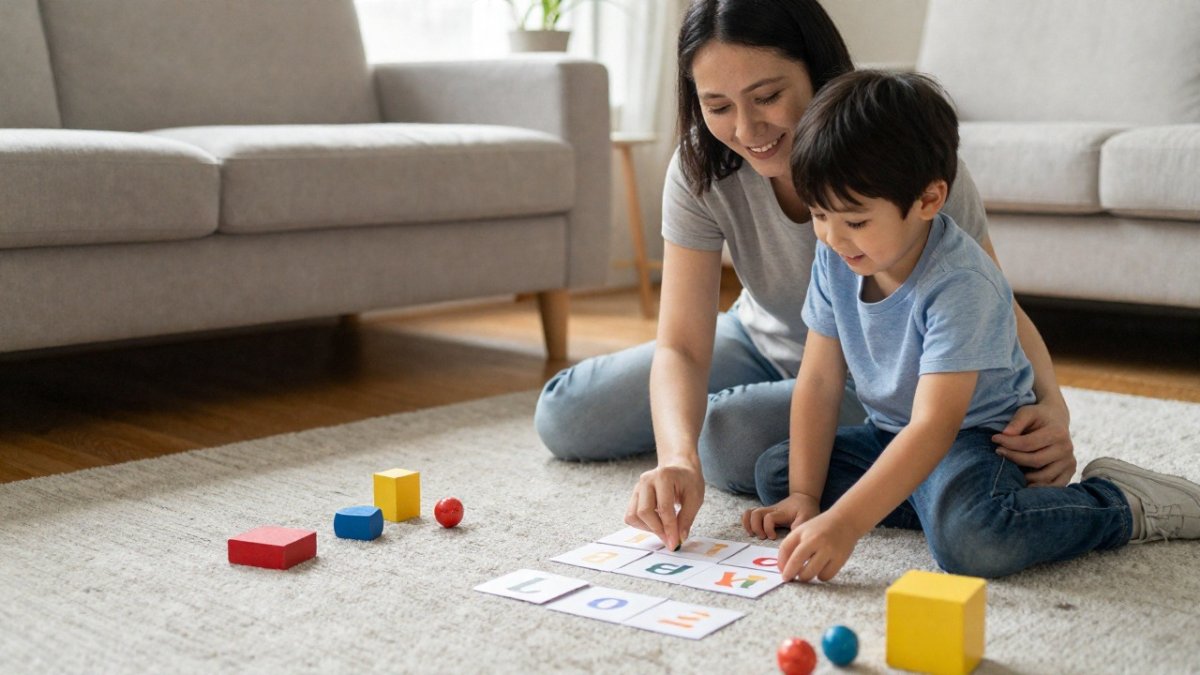
Movement: Letter Hop
- Target skill: matching a spoken sound to a letter.
- Materials: sticky notes and a marker.
- Setup: about two minutes. Write one letter per note and spread them on the floor.
- Steps: Call a sound ("hop to /m/"). Your child hops to the matching letter and says the sound back.
- Easier: use three letters only.
- Harder: call a word and have them hop the sounds in order.
- Small-space swap: tap the notes with a hand instead of hopping.
Sorting: Muffin Tin Sounds
- Target skill: beginning sound sorting.
- Materials: a muffin tin, sticky notes, small household objects.
- Setup: about three minutes. Label each cup with a letter and gather a few small items.
- Steps: Your child sorts each object into the cup that matches its beginning sound.
- Easier: start with two letters that sound very different (m and s).
- Harder: add letters that sound alike (b and p).
- Sensory-conscious swap: let them point to the cup instead of dropping items in.
No-Materials: I Spy Sounds
- Target skill: hearing and naming beginning sounds.
- Materials: none.
- Setup: none.
- Steps: "I spy something that starts with /b/." Your child guesses, then takes a turn calling a sound.
- Easier: give a hint about the object.
- Harder: use ending sounds or middle vowel sounds.
- Works anywhere: the car, the grocery line, the waiting room.
Word Building: Block Stacks
- Target skill: building and reading CVC words.
- Materials: blocks and a marker, or letter tiles.
- Setup: about two minutes. Write one letter per block.
- Steps: Your child stacks three blocks into a word, reads it, then swaps one block to make a new word.
- Easier: build the word for them and let them read it.
- Harder: see how many words they can make from the same three letters.
If you have a child learning more than one language at home, these games work in any language. Say the sound in the home language first, then try it in English.
Watch out: if a game turns into a power struggle, stop. Ten happy seconds beat a ten-minute battle, and you can always try again tomorrow.
Phonics Activities at Home: Fitting Practice Into Your Real Day
You don't need a dedicated 30-minute block. Short, frequent practice beats long sessions, and it fits into what you're already doing.
Try this:
- Grocery store: "Find something that starts with /m/." (Chapter 12 of Literacy Roots has a whole grocery-vocabulary routine.)
- Bath time: Foam letters on the wall. Say the sound as your child sticks each one up.
- Car rides: Sound games while you drive. No materials needed.
- Bedtime: Read aloud together, then play one quick sound game before lights out.
Matching the Activity to Your Child's Level
Match the game to where your child actually is, not where you think they should be.
- Just learning letters: focus on letter names and sounds, one at a time.
- Knows most sounds: move to beginning sounds and sorting.
- Starting to blend: short CVC words and slow-motion games.
- Reading simple words: decodable texts and word building.
If your child gets frustrated, drop back a level. Easy wins build confidence, and confidence keeps them coming back.
How to Tell It's Working: Signs of Mastery
You don't need a formal assessment. Watch for small signals that the skills are sticking.
Signs to look for:
- Your child hears and identifies beginning sounds without help.
- They blend three sounds into a word on their own.
- They spot letters and sounds in the world, like on signs or cereal boxes.
- They reach for books and try to sound out words.
If rhyming stays hard, or reading feels like a struggle well past the early years, that's a good reason to talk with your child's teacher or pediatrician. It's not a diagnosis, just a conversation worth having. Chapter 6 of Literacy Roots walks through gentle signs and next steps.
Pick One Game and Try It Tonight
You don't need a perfect system. You need one game, ten minutes, and a little patience.
Literacy Roots: Nurturing Your Child's Reading Journey from Birth to Brilliance is built for exactly this: small, warm, daily moments that add up.
One game tonight is enough to begin. If you want the full playbook, Literacy Roots gives you twelve chapters of research-backed, everyday strategies you can start the same day it arrives.
Frequently Asked Questions
What are some fun phonics activities for beginning readers?
Start with sound games before letters: 'I Spy' for beginning sounds, clapping syllables, and rhyming riddles. Then move to letter-sound matching with a bingo card or a hopscotch board. Once your child knows a handful of sounds, try blending games like Build-a-Word with letter cards. Keep sessions short, five to ten minutes, and stop while it's still fun. The goal is a happy habit, not a finished lesson.
How can I teach phonics at home in a playful way?
Turn practice into games instead of drills. Use household materials: magnetic letters on the fridge, letter cards for a sound hunt, or chalk on the sidewalk for hopscotch. Narrate sounds during everyday moments, like naming the first sound in 'milk' at the store. Consistency matters more than length, so a few playful minutes daily beats a long weekend session.
How long should a beginning reader practice phonics each day?
Short and steady wins. Aim for five to ten minutes of playful practice for young beginners, and follow your child's mood. If attention fades, stop and pick it up tomorrow. Daily repetition builds sound-letter knowledge faster than one long session, and keeping it light protects the joy that keeps kids coming back.
What phonics games can I play with my child without worksheets?
Plenty. Try Sound Matching Bingo with letter cards, Phonics Hopscotch with sounds in the squares, an I Spy sound hunt around the room, or a Build-a-Word board with magnetic letters. Word sorting with picture cards and a simple flashcard challenge also work well. All of these use materials you likely already have and skip printing entirely.