 Listicle
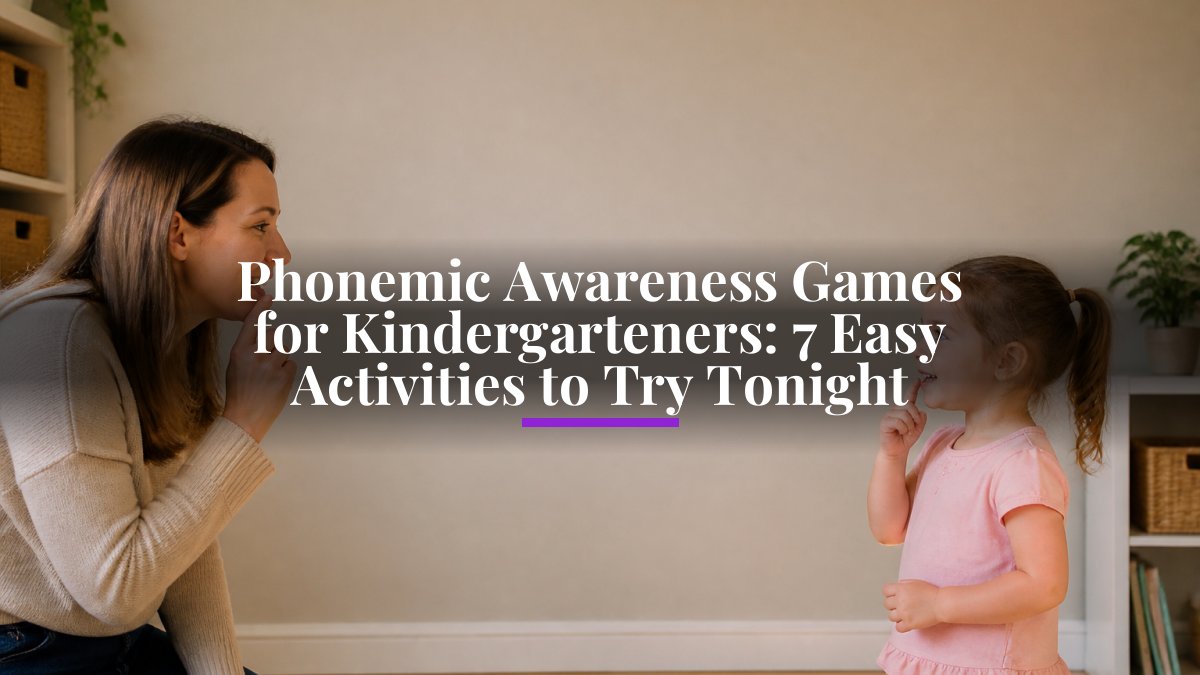
Phonemic Awareness Games for Kindergarteners: 7 Easy Activities to Try Tonight
Last Updated: October 25, 2026
Quick Summary
Phonemic awareness games for kindergarteners are playful sound activities you can do anywhere, from rhyming at dinner to stretching beginning sounds in the car. These games help children hear and play with individual sounds in words, building the foundation they need to read fluently later on.
- Rhyming, beginning sounds, and blending are the easiest skills to start with in early kindergarten.
- Phonemic awareness skills build in order: rhyme, syllables, beginning sounds, blending, segmenting, deletion, then sound swapping.
- You need no materials or prep; five minutes of playful sound talk daily works better than a longer lesson once a month.
- If rhyming stays hard well into kindergarten or you notice reversals past age 7, talk with your child's teacher or pediatrician.
- Phonemic awareness games work in any language; home language skills support English reading later.
Table of Contents
- Why Phonemic Awareness Games Matter Before Reading Starts
- Rhyming Games for Kindergarten: The Foundation
- Beginning Sounds Activities That Stick
- Phoneme Blending Games: Putting Sounds Together
- Sound Segmentation and Phoneme Deletion: The Next Level
- Phonemic Awareness Activities at Home: No Prep Required
- Adapting Games for Different Learners and Languages
- Start Your Sound Journey Tonight
- Frequently Asked Questions
Why Phonemic Awareness Games Matter Before Reading Starts
Your kindergartener doesn't need a workbook to learn to read. Get Started With Early Literacy: A Parent's Guide walks you through how sound play fits into your child's whole literacy journey. They need to hear sounds, play with sounds, and notice how sounds fit together.
Phonemic awareness is the ability to hear, identify, and play with the individual sounds (called phonemes) in spoken words. It's not about letters yet. It's purely about sound.
The good news? You don't need special materials or a lesson plan. Phonemic awareness games for kindergarteners happen in the car, at the dinner table, and on the playground. They're playful, free, and built into everyday talk. When you know what to listen for, any moment becomes a sound-learning opportunity.
Here are seven phonemic awareness games for kindergarteners you can start tonight. Each is easy, joyful, and adaptable to your family's rhythm. Chapter 2 of Literacy Roots digs into how everyday talk builds literacy, and Chapter 3 shows how to make sound play thrive at home.
Rhyming Games for Kindergarten: The Foundation
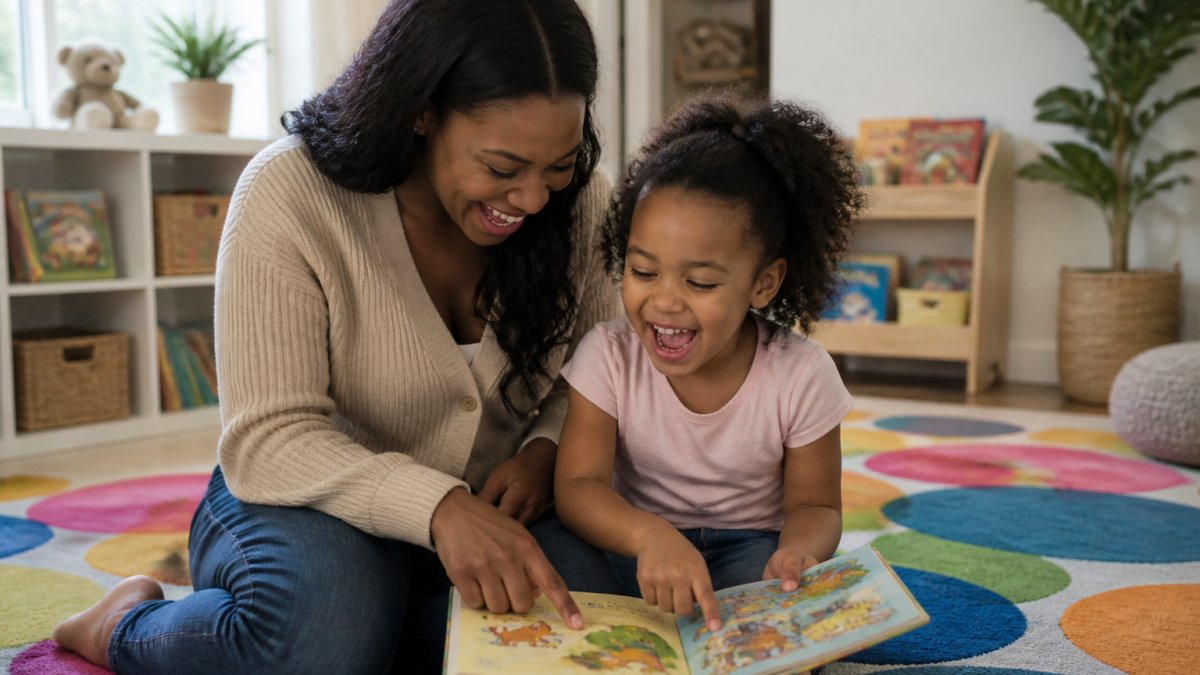
Rhyming is where phonemic awareness starts. When kids notice that "cat" and "bat" sound alike at the end, they're hearing patterns in sound. Rhyming games are playful, silly, and kids love them.
Play rhyming pairs. Say a word and ask your child for a rhyme. Start easy: "cat" (bat, hat, mat), "dog" (log, fog, hog).
Sing rhyming songs. Songs like "Twinkle, Twinkle, Little Star" and "Baa, Baa, Black Sheep" are packed with rhymes. You don't need a perfect voice. The repetition and rhythm help children internalize rhyme patterns.
Read rhyming books together. Picture books like Brown Bear, Brown Bear, What Do You See? and Chicka Chicka Boom Boom are built on rhyme and rhythm.
Rhyming games feel like pure fun, but they build a critical skill. Kids who recognize and produce rhymes are developing the ear for sound patterns they'll need for letter sounds.
Beginning Sounds Activities That Stick
Once kids notice rhymes, they're ready for individual sounds. Beginning sounds are the easiest place to start because they're the loudest part of a word.
Play "I Spy" with sounds. Instead of "something blue," try "I spy something that starts with /s/." Name a few: "sock, sun, sandwich." Your child finds one. This works anywhere: car, grocery store, walk.
Stretch the beginning sound. Say a word slowly, stretching the first sound: "ssssun," "mmmmilk," "nnnose." Ask your child to repeat it back, stretching the sound. This helps them isolate the beginning sound from the rest of the word. It's a simple move that builds sound awareness.
Collect words that start the same. Pick a sound like /b/ and spend a few minutes naming things that start with it: "ball, banana, button, baby, bed." You can do this while doing dishes or waiting in line.
These activities work because they're concrete and playful. Your child isn't memorizing letter names. They're noticing how their mouth moves when they say different sounds.
Phoneme Blending Games: Putting Sounds Together
Blending is when a child pushes separate sounds together to make a word. It's the skill that eventually lets them read: they sound out /c/ /a/ /t/ and blend it into "cat."
Play "sound stretching." Say three sounds separately with pauses: "/m/ /a/ /t/." Ask your child, "What word is that?" At first, they might need help. Say it again, blending the sounds a little faster: "mmmaaattt." Then say it naturally: "mat." Over time, they'll start blending on their own.
Use objects to blend. Pull out toys or household items. Say the sounds for each object separately, then blend: "/b/ /a/ /t/" (pause), then "bat." Let your child hold the object and say the sounds with you. This makes blending concrete and tactile.
Sing or chant blended sounds. Make up a silly tune and chant the sounds: "/d/ /o/ /g/" to the tune of "Twinkle, Twinkle." Then sing the blended word: "dog." The rhythm helps children remember and practice the skill.
Blending is harder than rhyming or beginning sounds, so don't rush it. Some kids get it right away; others need months of playful practice. Both are normal.
Sound Segmentation and Phoneme Deletion: The Next Level
Here's where many parents hit a wall. Your child rhymes up a storm and spots beginning sounds, then you ask, "What sounds do you hear in 'sit'?" and get a blank stare.
Phonemic awareness isn't one skill. It's a stack, and most kids move up in roughly this order: rhyme, syllables, beginning sounds, blending, segmenting, then deleting or swapping sounds.
Segment by syllables first. Clap the beats in a name: "El-i-za-beth" gets four claps. Do it with snack words ("ba-na-na"), then move to one-syllable words broken into sounds. Syllables are the friendly on-ramp to full segmentation.
Use movement to segment sounds. Say a word and clap once for each sound. "Dog" gets three claps. "Jump" gets four. Kids love the movement, and it helps them feel the sounds in their body.
Play "take away a sound." Say a word, then ask what's left if you remove one sound.
Try sound swapping last. "Change the /c/ in 'cat' to /b/. What word do you get?" This is the hardest rung and often a first-grade skill. If your kindergartener isn't there yet, that's completely normal.
How do you know when to move up?
These games work best when children already have some experience with rhyming and beginning sounds. They're the next level, not the starting point. Chapter 2 of Literacy Roots explains how everyday talk builds this sound awareness long before kids can name a single letter.
Here's how phonemic awareness skills build on each other, from easiest to hardest.
| Skill | What It Means | When Kids Usually Try It |
|---|---|---|
| Rhyming | Noticing words that sound alike at the end | Early kindergarten |
| Syllables | Clapping or counting beats in words | Early to mid-kindergarten |
| Beginning sounds | Hearing the first sound in a word | Mid-kindergarten |
| Blending | Pushing separate sounds together into a word | Mid to late kindergarten |
| Segmenting | Breaking a word into individual sounds | Late kindergarten |
| Deletion | Removing one sound and saying what's left | Late kindergarten to first grade |
| Sound swapping | Changing one sound to make a new word | First grade and beyond |
Phonemic Awareness Activities at Home: No Prep Required
The best part about phonemic awareness games is that you don't need materials, worksheets, or special time. They fit into moments you're already living.
During meals: Ask about the sounds in food words. "What sounds do you hear in 'apple'? /a/ /p/ /p/ /l/." Ask your child to name foods that start with a certain sound.
In the car: Play rhyming games or "I Spy" with sounds. Long drives are perfect for this. No screen needed, and everyone's focused.
While getting ready: Sing songs with rhymes while brushing teeth or getting dressed. Talk about the sounds in clothing words: "shirt" (/sh/ /i/ /r/ /t/), "socks" (/s/ /o/ /k/ /s/).
At bedtime: Read a rhyming book and pause for your child to guess the rhyme. Sing a favorite song and stretch the sounds.
The magic is consistency and joy. How to Teach Phonemic Awareness at Home offers deeper strategies and activities you can weave into your family's routine.
Adapting Games for Different Learners and Languages
Every child learns at their own pace. Some dive into rhyming games and invent rhymes at dinner. Others need weeks of listening before they'll try.
Scaffolds for a child who needs more support. Offer choices instead of open questions.
Extensions for a child who's ready for more. Ask them to produce three rhymes instead of one. Move from two-sound words to three- and four-sound words. Try deletion and swapping games. Let them be the teacher and quiz you, which is sneaky practice and usually a hit.
For children with speech or hearing differences. If your child has a diagnosed speech delay or hearing loss, loop in their speech-language pathologist or teacher.
For multilingual families. Phonemic awareness games work in any language. Play them in the language your child hears at home.
If you're raising a bilingual child, you can find more specific strategies for supporting both languages at home.
Quick checks you can do at home. You don't need a formal test. Try these three observations once a month and jot a note on your phone:
- Rhyme check: Can your child give you one word that rhymes with "cat" without choices?
- Beginning-sound check: Can they name two things that start with /s/ in the kitchen?
- Segmenting check: Can they break a three-sound word like "sun" into /s/ /u/ /n/?
If a check is a struggle, that's your cue to play more at the rung below, not a red flag.
Phonemic awareness games can include movement, music, and tactile play. Some kids need to clap, jump, or hold an object; others learn best through listening and singing. Try a few approaches and notice what your child responds to.
Start Your Sound Journey Tonight
Your kindergartener doesn't need a fancy program or special materials to build phonemic awareness. They need you, playfulness, and a little sound talk woven into your day.
Pick one game from this list. Maybe it's rhyming at dinner. Maybe it's "I Spy" with sounds on your next car ride. Start there. Notice what your child enjoys. Build from what works.
If you want a deeper look at how phonemic awareness fits into your child's whole literacy journey, Literacy Roots walks you through this and every other early literacy skill.
For more structured activities and step-by-step guidance, you can find deeper strategies and printable resources.
If your child is showing signs of difficulty with rhyming, reversals past age 7, slow reading, or avoidance of reading activities, it's worth talking with your child's teacher or pediatrician.
You're already your child's first and most important teacher. These games are how you show up. Get the book and start building your family's literacy plan tonight.
Frequently Asked Questions
What's the difference between phonemic awareness and phonics?
Phonemic awareness is hearing and playing with sounds in spoken words. You don't need letters or books. Phonics comes later: it's matching those sounds to written letters. A child can clap syllables in 'but-ter-fly' (phonemic awareness) before recognizing that 'b' makes the /b/ sound (phonics). Both matter, but phonemic awareness comes first and builds the foundation.
How can I teach phonemic awareness at home without special materials?
Use what you have: your voice, household objects, and movement. Sing rhyming songs together. Play 'I Spy' with beginning sounds ('I spy with my little eye something that starts with /s/'). Count sounds on your fingers while saying a word slowly. Clap syllables while cooking. These phonemic awareness activities at home cost nothing and happen during everyday moments. Consistency matters more than fancy tools.
Can you practice phonemic awareness without worksheets?
Absolutely. Worksheets aren't necessary and often feel like busywork. Kids learn phonemic awareness through play, movement, and conversation. Rhyming games, sound hunts, and singing all build these skills. The research shows that playful, oral practice is just as effective as (and more joyful than) worksheets. Your kindergartener doesn't need to write or trace anything to become aware of sounds.
What should I do if my child struggles with phoneme blending or sound segmentation?
Start simpler. If blending feels hard, spend more time on rhyming and beginning-sound identification first. Phoneme blending games work best after a child is solid on hearing individual sounds. Go slowly, use concrete objects (beads or blocks), and model repeatedly. If struggles continue, talk with your child's teacher. Early support makes a real difference, and there's no shame in asking for guidance.