 Listicle
7 Free Bilingual Literacy Activities for Toddlers
Last Updated: November 20, 2026
Quick Summary
Bilingual literacy activities for toddlers are simple, free routines like reading the same picture book in both languages, narrating daily chores, and singing songs in each language. Everyday talk counts, and you don't need flashcards or a special curriculum to start building early literacy in two languages.
- Read the same picture book twice, once in each language, pointing and naming pictures.
- Label everyday objects in both languages during routines like pouring juice or bath time.
- Sing songs and nursery rhymes in both languages to build sound patterns through repetition.
- If you aren't fluent in a language, tell the story in your own words and let the pictures carry it.
- Keep books in every family language within reach on a low shelf or basket.
Table of Contents
- You Don't Need Flashcards: Why Everyday Talk Counts in Two Languages
- Free Bilingual Literacy Activities for Toddlers: Read-Alouds in Both Languages
- Literacy Activities for 1- and 2-Year-Olds Built Into Daily Routines
- Language Development Activities for 1- and 2-Year-Olds: Songs, Rhymes, and Play
- Matching Activities to Your Toddler's Interests and Stage
- Reading Tips for Parents in Multiple Languages (Including Mixed-Language Homes)
- Your First Bilingual Literacy Activity Tonight
- Frequently Asked Questions
You Don't Need Flashcards: Why Everyday Talk Counts in Two Languages
Picture this: you're in the grocery store, your toddler is buckled into the cart, and you're narrating every item. "Apple. Red apple. Crunchy!" Then you switch to Spanish for the bananas, and your little one points and babbles back. That running commentary? It counts.
Lauren Daugherty, author of Literacy Roots at Lauren's Literacy Lounge, makes this point in Chapter 2, "Parents as First Teachers." Early brain research, including work by Dr. Patricia Kuhl, shows that babies learn language through back-and-forth exchanges with the adults around them. The book calls this everyday talk "language nutrition."
You don't need flashcards or a special curriculum. You need a few minutes of warm conversation in the language you speak best at home, and that's enough to start.
Free Bilingual Literacy Activities for Toddlers: Read-Alouds in Both Languages
Reading aloud is one of the simplest bilingual literacy activities for toddlers, and it costs nothing if you use your library card. Find more on building a home library for preschoolers that holds books in both of your languages. Chapter 3 of Literacy Roots describes the value of a home literacy environment rich in books.
Try this tonight: read the same picture book twice, once in each language. Point to the pictures and name them. Your toddler doesn't need to understand every word. They're learning that books have stories and that both languages carry meaning.
If you only speak one language, that's fine too. Tell the story in your own words and let the pictures do some of the work.
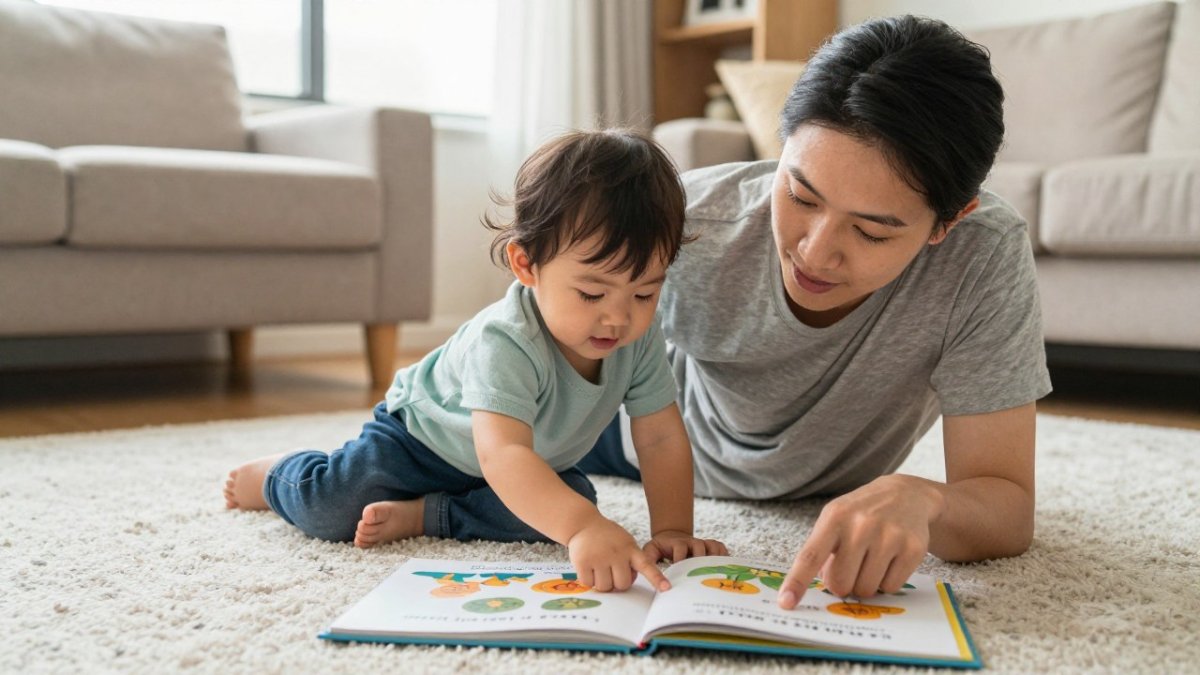
Here's a quick look at a few simple read-aloud and routine ideas you can start with tonight.
| Activity | What to do | Cost |
|---|---|---|
| Read the same book twice | Once in each language, pointing and naming pictures | Free with library card |
| Tell the story in your own words | Let the pictures carry part of the story | Free |
| Label the kitchen | Say "cup" and "taza" while pouring juice | Free |
| Name the bath toys | "Duck. Pato. Splash!" | Free |
| Read the cereal box | Read it aloud at breakfast | Free |
| Sing the goodnight song | Use the language your family uses most at bedtime | Free |
Literacy Activities for 1- and 2-Year-Olds Built Into Daily Routines
You already have a daily routine that builds literacy. If you're wondering whether play-based phonics is worth adding at this age, there's a clear answer waiting for you. Bath time, bedtime, and mealtimes are full of chances to talk. Everyday materials like magazines and take-out menus can be perfect for little hands.
Some easy routine ideas:
- Label the kitchen. Say "cup" in one language and "taza" in the other while you pour juice.
- Name the bath toys. "Duck. Pato. Splash!"
- Read the cereal box aloud at breakfast.
- Sing the goodnight song in whichever language your family uses most at bedtime.
Chapter 10 of the book reminds us that access to materials matters. A stack of junk mail and a crayon can become a literacy tool.
Language Development Activities for 1- and 2-Year-Olds: Songs, Rhymes, and Play
Songs and nursery rhymes are some of the most effective bilingual literacy activities for toddlers because repetition helps little ones tune in to sounds. You can see how to weave nursery rhymes into daily routines for even more literacy practice. A familiar tune in two languages gives your child a built-in pattern to hold onto.
Try these:
- Sing "Itsy Bitsy Spider" and "La Araña Pequeñita" during bath time.
- Clap out syllables as you say names: "Ba-na-na, plá-ta-no."
- Play peek-a-boo and announce the hiding spot in both languages.
Play-based vocabulary games connect language to movement and fun. You don't need to be a performer. Your silly voice is exactly what your toddler wants to hear.
Matching Activities to Your Toddler's Interests and Stage
Your 14-month-old and your 30-month-old are not the same audience, even though both count as toddlers. The activities in this article work for both, but the expectations and the tweaks are different. Matching the activity to your child's stage, and to whatever they're already obsessed with, is what makes it stick. For more home games that build real early reading skills, see reading readiness games for home.
Chapter 6 of Literacy Roots notes that early support works best, and Chapter 2 explains that the brain grows rapidly in the early years. That's a plain way of saying the toddler years are a prime time for language, and small daily moments matter.
Younger toddlers (roughly 12 to 24 months). Expect pointing, babbling, and one-word approximations. A "ba" for ball is a win. Try:
- Name-and-point walks. Walk the room and name five things in both languages. Stop when your child loses interest. Two minutes is plenty.
- Peek-a-boo with named objects. Hide a stuffed animal under a blanket and ask, "Where's the bear? ¿Dónde está el oso?" Lift the blanket and cheer.
- Board books with one image per page. Point, name, and turn. Skip the words if your child is grabbing the pages.
Older toddlers (roughly 24 to 36 months). Expect two-word combinations, simple questions, and growing pretend play. Try:
- Pretend kitchen talk. Narrate what you're "cooking" in both languages: "Stir the soup. Revuelve la sopa."
- Color and shape hunts. "Find something blue. Encuentra algo azul." Cheer whatever they bring.
- Simple story retells. After a favorite book, ask, "What happened to the duck?" Accept any answer, in either language.
Follow the obsession. If your toddler is deep into trucks, name trucks in both languages, read truck books, and sing a made-up truck song. If animals are the thing, pair animal sounds with animal words. Interest is the engine. You're just adding the second language to something they already love.
Progress indicators, gently. You're not looking for a word count. You're looking for signs that language is growing: more back-and-forth sounds, pointing to named objects, following a simple direction in either language, adding new words over weeks. If your child is meeting some of these and not others, that's normal. Toddlers develop on their own timelines.
Adaptations for different needs. If your child has a speech delay, hearing difference, sensory sensitivity, or motor difference, the same activities work with small changes:
- Speech differences: accept signs, gestures, and approximations as communication. Model the word back without correcting.
- Hearing differences: face your child when you speak, keep background noise low, and use books with clear, high-contrast pictures.
- Sensory sensitivity: offer a quiet corner, soft books, and short sessions. Five calm minutes beats twenty overstimulating ones.
- Motor differences: use board books with thick pages, prop books on a pillow, or try cloth books your child can grip.
- Limited books or supplies: junk mail, cereal boxes, and library books all work. Chapter 10 of Literacy Roots reminds us that access to materials matters, and access doesn't require a big budget.
Watch out: if you find yourself comparing your toddler's word count to another child's, step back. The goal is warm exposure, not a milestone race. If you ever feel worried about speech or language development, talk with your pediatrician. That's a conversation, not a diagnosis.
Reading Tips for Parents in Multiple Languages (Including Mixed-Language Homes)
Every bilingual household runs on a different pattern. If you're wondering which books suit each language, this guide on choosing decodable books for beginners walks through the basics. Maybe you speak Spanish and your partner speaks English.
Chapter 7 of Literacy Roots makes a reassuring point: a child's home language strengthens, rather than delays, later English learning. So the goal isn't perfect balance.
Here's how to make the activities in this article work across common family patterns.
When caregivers speak different languages. Try the one-person, one-language approach: one adult consistently uses one language, the other adult uses the other.
When one language is less familiar to you. You don't have to be fluent to read aloud. Use a picture book with simple text and read it slowly, sounding out words as you go.
When exposure varies by setting. Some families use one language at home and another at daycare or with a sitter.
When grandparents or relatives are the main source. Video calls count. Ask a grandparent to read one short book or sing one song during a weekly call.
When you're mixing languages in the same sentence. Many bilingual parents do this, and it's normal. If your toddler understands you, keep going.
A few practical guardrails:
- Keep books in every language your family uses within reach, not on a high shelf. A low basket works.
- Don't quiz. Asking "What's this?" in a second language can turn a cozy moment into a test. Name things and move on.
- Let the stronger language lead during new or exciting moments, then add the other language once your child is calm and engaged.
- Skip the guilt if one language gets more airtime some weeks. Consistency over months matters more than balance on any given Tuesday.
Watch out: if you find yourself avoiding read-alouds in a language because you feel self-conscious, that's the moment to lean on audio, video calls, or a fluent relative rather than dropping the language entirely. Exposure beats perfection.
If you're building a home library, one board book in each language your family uses is a fine start.
Your First Bilingual Literacy Activity Tonight
You don't need to try everything at once. Pick one idea from this article and do it tonight. Narrate your dinner prep in both languages. Read one short book twice. Sing one song in your second language.
Small, warm, daily moments are where literacy grows. As Lauren writes, consistency and joy beat perfection. If you want a complete plan for building reading, writing, speaking, and listening skills from birth onward, Literacy Roots: Nurturing Your Child's Reading Journey from Birth to Brilliance is available on Amazon.
Frequently Asked Questions
What are some good language literacy activities for toddlers?
Start with the simplest habits. Read picture books daily, name objects during routines like bath time or meals, and sing songs with hand motions. Pointing at pictures and asking 'What's that?' builds vocabulary without any materials. Chapter 2 of Literacy Roots explains why repetition matters so much at this age: your toddler loves hearing the same book again because each reading teaches them something new. Pick the activities that fit your day, and repeat them often.
How can I teach my toddler to be bilingual?
You don't have to follow a strict plan. Many families use one language per caregiver, or one language at home and another outside. What matters most is consistent, warm exposure in each language. Talk, read, and sing in the language you're most comfortable with, and keep those conversations going. Chapter 7 of Literacy Roots notes that strong home-language skills support English learning, so there's no need to drop the language you already speak at home.
How can I support my toddler's home language while they learn English?
Keep your home language in daily routines like reading, storytelling, and everyday chatter. Ask your child questions in that language and let them answer however they can, even with single words or gestures. Chapter 7 of Literacy Roots shares that home languages strengthen English learning rather than slowing it down. Your toddler is building a foundation that transfers across languages, so keep the conversation going in both.
What are some free bilingual literacy activities for toddlers?
Try these at no cost: read a book in one language, then retell it in the other; label household objects in both languages during meals; sing nursery rhymes from each culture; play a 'point and name' game on walks; and use the mail or grocery flyers as reading material. Chapter 3 of Literacy Roots shows that a home full of print, even free print, supports literacy. Choose one activity this week and repeat it often.