 blog
Is Play-Based Phonics Worth It for Kindergarten?
Table of Contents
- What Play-Based Phonics Actually Teaches in Kindergarten
- Play-Based Phonics vs. Explicit, Systematic Phonics: A Side-by-Side Look
- Play-Based Phonics Activities for Kindergarten That Build Real Reading Skills
- Phonics Games for Kindergarten: What Makes One Worth Playing
- How to Teach Phonics to Kindergarteners Without Losing the Play
- How to Tell Whether Play-Based Phonics Is Working
- The Verdict: Who Play-Based Phonics Works For, and Who Needs More
- Frequently Asked Questions
Last Updated: October 7, 2026
What Play-Based Phonics Actually Teaches in Kindergarten
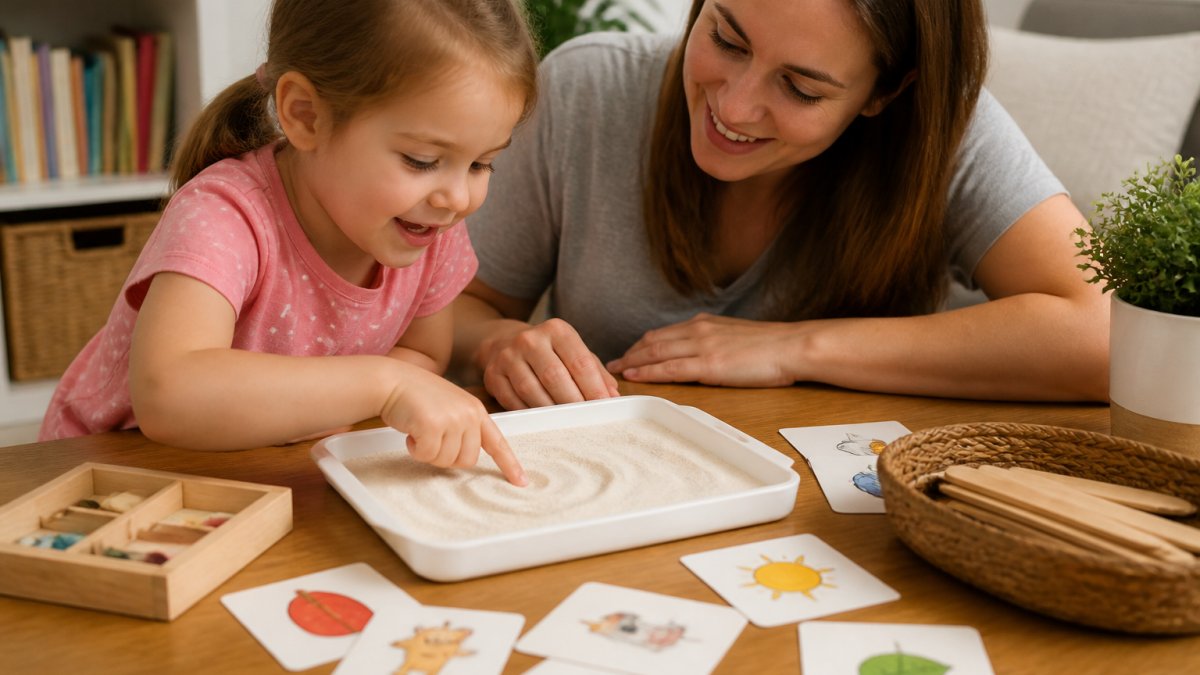
Play-based phonics is the practice of teaching letter sounds, sound-letter relationships, and decoding through games, movement, and hands-on play instead of worksheets and drills.
Parents often ask this question. The worry is always the same: will my child actually learn to read, or will they just play?
Here is the honest answer. Play-based phonics works when the play has a clear literacy goal.
The difference is teacher guidance. The play is the vehicle, not the destination.
The Skills Behind the Games
Every good phonics game targets a specific skill. These are the building blocks of early literacy:
- Phonemic awareness: hearing individual sounds in words
- Letter sounds: knowing that "m" says /m/
- Sound-letter relationships: matching sounds to written letters
A well-designed game hits one or two of these. A random craft project hits none.
Play-Based Phonics vs. Explicit, Systematic Phonics: A Side-by-Side Look
Most articles treat play-based phonics and explicit, systematic phonics as rival camps. They are not.
Here is the honest comparison, with the trade-offs spelled out.
| Feature | Play-Based Phonics | Explicit, Systematic Phonics |
|---|---|---|
| Main method | Games, movement, hands-on play | Direct instruction, modeling, guided practice |
| Child's role | Active explorer who discovers patterns | Guided learner who follows a set sequence |
| Structure | Flexible, interest-led, teacher-guided | Fixed scope and sequence of sounds |
| Typical dose | 5-15 minutes, several times a week | 10-20 minutes of focused instruction, daily |
| Strength | Engagement, motivation, oral language, confidence | Faster, more reliable gains in letter-sound knowledge and decoding |
| Main risk | Play without a clear literacy goal | Boredom, low engagement, passive compliance |
| Best for | Reinforcing and applying skills | Introducing new sounds and closing gaps |
Neither approach wins outright. Play-based phonics keeps children willing to practice. The research consensus, echoed in guidance from the National Center on Improving Literacy, points to a blend: systematic skill teaching wrapped in playful practice.
What the Kindergarten Evidence Actually Shows
Broad claims about "early learning" are easy to find. Kindergarten-specific evidence is narrower and more useful. A common pattern reported by kindergarten teachers and reading specialists is that children who receive explicit, systematic phonics instruction make faster gains in letter-sound knowledge and decoding than children who receive play-based practice alone.
In practice, the sequence that tends to work best in kindergarten looks like this:
- Introduce the sound or pattern directly, in under five minutes.
- Model blending or segmenting out loud while the child watches.
- Practice the skill through a game, movement activity, or pretend-play scenario.
- Apply the skill in real reading, a decodable sentence, a sign, a label.
- Review the sound again the next day, briefly.
Play-based phonics is the practice and application stages. Explicit instruction is the introduction and modeling stages. Skipping either one weakens the whole.
How Much of Each Does a Kindergartener Need?
There is no single correct ratio, but a workable starting point for most five- and six-year-olds is roughly 10-15 minutes of explicit phonics instruction per day, plus 10-20 minutes of playful practice spread across the day. Children who already know most letter sounds can lean more heavily on play. Children who are still learning letter names and sounds usually need more direct teaching before play-based practice clicks.
That is the real answer to whether play-based phonics is worth it. It is worth it as the delivery method. It is not a substitute for teaching the skills in a sensible order.
Play-Based Phonics Activities for Kindergarten That Build Real Reading Skills
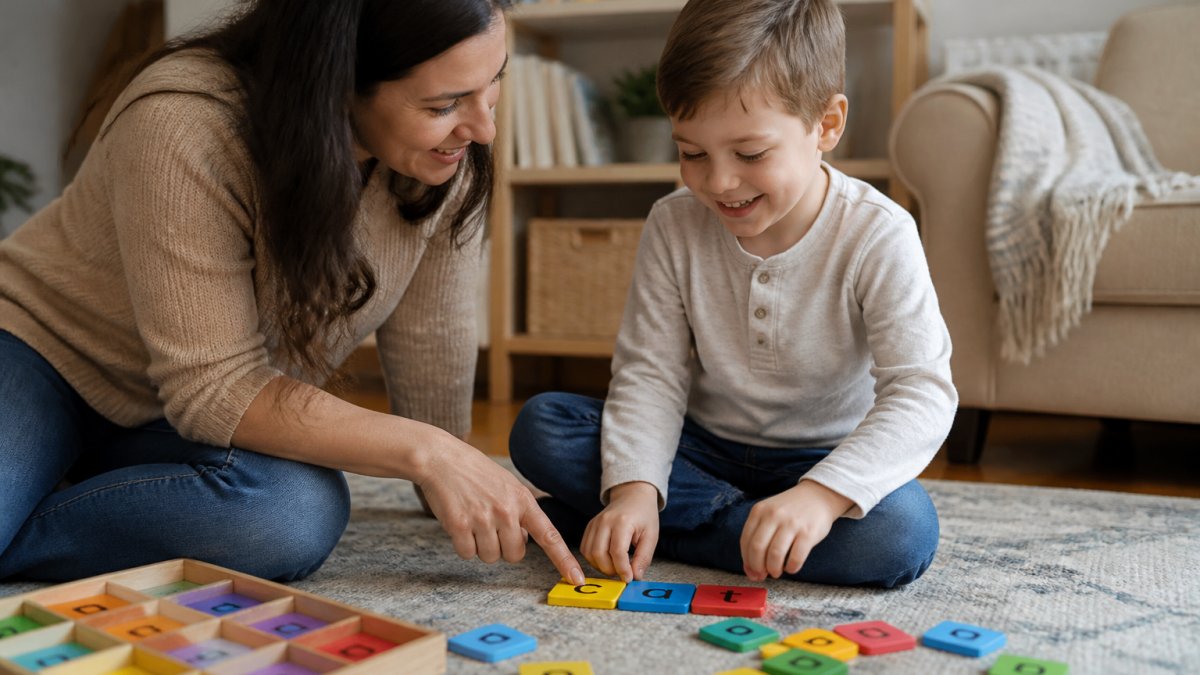
The best play-based phonics activities for kindergarten take under ten minutes and need no special materials. Three activities cover most of the core skills: sound sorting, blending, and word building.
Three Activities You Can Run Tomorrow
1. Sound Hunt (5 minutes) Say a sound, like /s/.
2. Letter Tile Build (10 minutes) Give your child letter tiles or magnetic letters. Say a simple word like "cat." They build it.
3. Sound Hop (5 minutes) Tape letters to the floor. Say a word. Your child hops to each letter in order.
Run one activity a day. Short and consistent beats long and rare.
Phonics Games for Kindergarten: What Makes One Worth Playing
A phonics game for kindergarten is worth playing when it targets one clear skill, gives your child many chances to practice, and lets them succeed most of the time.
Use this quick checklist before you add a game to your routine:
- Does it target one specific skill?
- Does your child get many turns, not just one?
- Can they succeed most of the time?
Games that fail two or more of these usually get abandoned within a week. This is often observed with families who buy flashy kits.
What most guides miss is that repetition matters more than novelty. A simple game played daily beats a new game every day.
How to Teach Phonics to Kindergarteners Without Losing the Play
To teach phonics to kindergarteners, embed the skill inside the play rather than pausing the play to teach. Guidance from the American Academy of Pediatrics on play supports this balance: children learn best when adults join in without taking over.
Here is how that looks in practice:
- Follow your child's interest, then attach the skill to it
- Model the sound, then let them try
- Correct gently and move on
- Keep sessions short
The thing nobody tells you about kindergarten phonics is that a five-minute game done daily beats a thirty-minute session done once a week. Consistency wins.
If you want a structured path instead of building games from scratch, our Literacy Roots program walks parents through exactly this process, from birth through early reading, so you are never guessing what comes next.
How to Tell Whether Play-Based Phonics Is Working
Most guides tell you play-based phonics is working if your child "seems engaged" or "asks to play again." That is not a progress check. Enjoyment and learning are not the same thing, and the only way to know whether the play is doing its job is to look at what your child can actually do with sounds and letters.
Here is a concrete way to check, using observable kindergarten milestones and a five-minute weekly routine.
Observable Milestones to Watch For
By the end of a kindergarten year, most children who are on track can do the following. Use these as a rough map, not a rigid timetable, children vary, and the point is the direction of travel, not the exact date.
- Letter sounds: Says the most common sound for at least 20-26 letters when shown the letter.
- Phonemic awareness: Hears and says the first sound in a spoken word ("What's the first sound in sun?" → /s/).
- Blending: Blends three sounds into a word (/c/ /a/ /t/ → cat).
- Segmenting: Breaks a simple word into its sounds (map → /m/ /a/ /p/).
If your child is doing most of these by the end of the year, the play is working. If they are doing none of them after several weeks of regular practice, the play is not carrying enough instructional weight on its own.
A Five-Minute Weekly Check
Once a week, sit down with your child and run a short, low-pressure check. Keep it light, this is information for you, not a test for them.
- Show five letters. Ask for the sound each one makes. Note which ones they know.
- Say three words. Ask for the first sound in each.
- Write three short words (like cat, sun, pig). Ask your child to read them.
- Write one new word they have not seen. Ask them to read it.
Write down what they got. Do this for four to six weeks. You are looking for a trend, not a single score. A child who knew 8 letter sounds in week one and 18 in week six is making progress, even if they are not yet at the end-of-year target.
When to Add More Direct Instruction
If you see little or no movement across several weeks, the same letters missed, the same words not decoded, that is a signal, not a failure.
A common pattern is that children who struggle with phonemic awareness (hearing the individual sounds in spoken words) need that skill taught directly before phonics games make sense.
When that happens, add 10 minutes of direct, structured instruction per day, and keep the games as reinforcement rather than the main event.
Play-based phonics is worth it when you can point to specific skills your child has gained. The games are the vehicle. The milestones are the proof.
The Verdict: Who Play-Based Phonics Works For, and Who Needs More
Play-based phonics is worth it for most kindergarteners, especially when it is paired with some direct instruction.
Play-based phonics is not a replacement for systematic instruction. It is the delivery method that keeps young children willing to practice. The skills still have to be taught in a sensible order.
That is why Literacy Roots was built the way it was.
Frequently Asked Questions
Is play-based phonics effective for kindergarteners?
It depends on how it is used. Play-based phonics builds phonemic awareness, letter sounds, and sound-letter relationships through games, songs, and hands-on materials. Children stay engaged and motivated, which matters because kindergarten attention spans are short. The catch is that play alone rarely covers every letter pattern a child needs. Most kindergarteners do best when play-based phonics is paired with short, direct instruction on specific sounds and spelling rules, then given time to practice in play.
What do play-based phonics activities for kindergarten look like day to day?
A typical session runs 10 to 15 minutes. A child might hunt for objects starting with a target sound, build words with letter tiles, sort picture cards by beginning sound, or play a board game where landing on a letter means saying its sound. The activity changes, the target skill does not. Keep the goal narrow (one or two letter sounds per week), repeat the same game a few times, and swap materials rather than rules. Consistency matters more than novelty.
Can children learn to read through phonics games alone?
Games build the pieces of reading: phonemic awareness, decoding, and reading fluency with familiar words. They are less reliable for teaching irregular words, spelling patterns, and comprehension, which need explanation and discussion. A kindergartener who only plays phonics games may decode simple words well but struggle with vocabulary and comprehension later. Pair games with read-alouds, conversation, and a few minutes of explicit instruction each day to cover the full early literacy picture.
How can I tell if my kindergartener is making progress in phonics?
Watch for three signals. First, can your child say the sound for letters you have practiced without hints? Second, can they blend three sounds into a word, like /c/ /a/ /t/ into cat? Third, do they spot letter patterns in books on their own? Check every four to six weeks by asking them to read a short list of practiced words. If they stall for more than a month on the same skill, add more direct instruction or talk with their teacher.
Kindergarten reading does not need a classroom, a curriculum license, or a teaching degree. It needs a parent who knows what to practice and a child who still thinks it is a game. Lauren's Literacy Lounge gives you the skill sequence, the daily activities, and the parent scripts to make that happen. Get started with Lauren's Literacy Lounge and turn ten minutes a day into a confident, independent reader.