 How-to
How to Choose Decodable Books for Beginners
Table of Contents
- What Makes a Book Decodable for Beginning Readers
- How to Use Decodable Books at Home
- Matching Decodable Books by Phonics Skill
- How to Match Decodable Books to Reading Level
- Decodable Books vs Leveled Readers: What's the Difference
- A Practical Checklist for Choosing Decodable Books
- Supporting Your Child Without Guessing Strategies
- Conclusion
- Frequently Asked Questions
Last Updated: October 21, 2026
What Makes a Book Decodable for Beginning Readers
You're at the library with your early reader, and you grab a colorful picture book. Your child freezes. The words don't match the sounds they've been learning. That's when decodable books help.
Decodable books for beginners are texts where most words follow phonics patterns the child has already been taught. If your child has learned the sounds for short vowels and consonants, a decodable book uses those sounds heavily.
Beginning readers need to practice what they know. When a book throws in words like "the," "was," or "said" before a child has learned them, guessing takes over and decoding stops.
Chapter 3 of Literacy Roots covers the home literacy environment, including how to choose books that support your child's actual skill level. The goal isn't perfection. It's consistency and joy.
Most decodable books also use repetition, short sentences, lots of white space, and pictures that support the story rather than replace it. Your child reads the words first, then checks the picture to confirm.
How to Use Decodable Books at Home
Reading a decodable book with your child isn't complicated, but it's different from reading picture books. You're building a skill, not just enjoying a story.
Start by letting your child read first. Don't correct every mistake. Let them sound out the word, even if it takes 10 seconds. If they get stuck, ask: "What sound does that letter make?" Then let them blend the sounds.
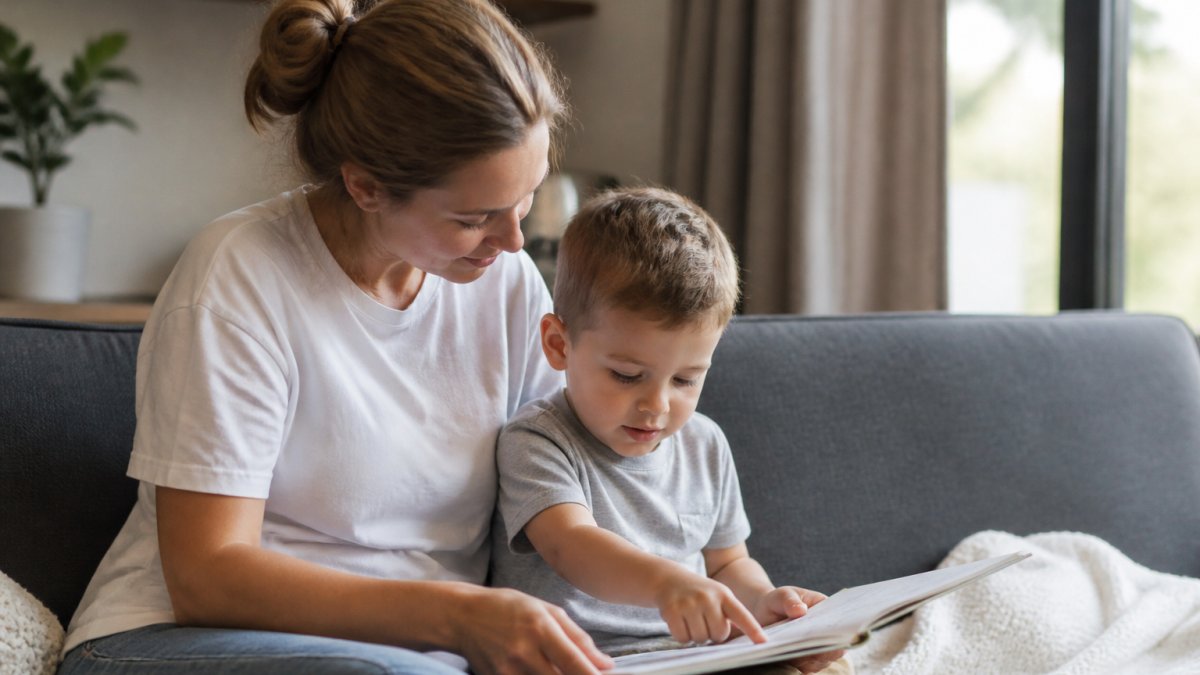
After a page or two, read it back to them so they hear what it sounds like when it all comes together.
Keep sessions short. Five to ten minutes is plenty. One decodable book three times a week beats one long session once a month.
Make it part of a routine: after breakfast, before bed, after school snack. Same time every day turns it into a habit, not a chore.
Matching Decodable Books by Phonics Skill
You've got a book in one hand and your child's phonics list in the other, and you're not sure they line up. Here's how to match them.
Then run a page check. Open to a middle page (first pages are often easiest).
Here's the method many reading teachers use: divide the decodable words plus taught high-frequency words by the total words on the page. Around 90% or higher is independent practice.
Decide how to treat irregular words. Words like said, was, and of don't follow beginner phonics rules.
Use your child's errors as a signal. If they stumble on short vowels, back up to more CVC words (like cat and hop).
Follow a logical order. Most decodable series move from short vowels to blends to digraphs to long vowel patterns and vowel teams. Some follow that order tightly.
If your child is learning English alongside another home language, pronunciation differences can make a pattern feel harder than it looks. That's not a reason to skip decodable practice. Slow down and celebrate the sounds they already own. Chapter 7 of Literacy Roots covers how home languages strengthen English learning.
One more reassurance: you don't have to get this perfect on the first try. Pick a book, read a page together, and adjust. The match gets easier every time.
How to Match Decodable Books to Reading Level
Reading level isn't just about how many words a child can decode. It's about how fast, how smoothly, and whether they understand what they read.
A book that's too easy doesn't help. Your child reads it perfectly but learns nothing new. A book that's too hard creates frustration. Your child guesses, skips words, or gives up.
The sweet spot is what teachers call the "instructional level." Your child can decode most words with some effort and might need help with one or two tricky words per page, but can sound them out with a little support.
You'll know a book is at the right level when your child can read a page without stopping to guess. They might slow down on a new pattern, but they keep trying.
Watch for these signs a book might be too hard:
- Your child points at pictures instead of reading words
- They skip words or guess based on the first letter
- They ask you to read it to them instead of trying
Signs a book might be too easy:
- Your child reads it perfectly the first time
- They're not sounding out words, just remembering them
- They lose interest quickly
Decodable books for beginners usually come in levels or series. Start with level one or two if your child is just beginning, and move up as they sound out words smoothly. Jumping ahead skips important practice.
Decodable Books vs Leveled Readers: What's the Difference
You'll hear both terms, and they're not the same thing. The difference changes how you shop.
Leveled readers are organized by reading difficulty and age. They use controlled vocabulary, but not always based on phonics.
Decodable books for beginners are organized by phonics patterns. Every word is chosen because it uses sounds the child has been taught. There's no guessing. There's sounding out.
The difference matters most at the very beginning. A child learning letter sounds needs decodable books. A child already reading sight words fluently can handle leveled readers.
Many families use both. Early on, decodable books build the skill of sounding out. Later, leveled readers add variety and story. They serve different purposes at different times.
One more thing: decodable books often look less polished. The illustrations might be simple. The stories are short and repetitive. That's not a flaw. It's the design. Every choice supports the child's brain as it learns to decode.
A Practical Checklist for Choosing Decodable Books
Picture this: you're in the library, your child has picked three books, and you have about four minutes before someone melts down. You need a fast, repeatable way to check a book. Here's the checklist, plus a worked example.
The 60-second page inspection. Grab the book, open to a middle page, and run these five checks:
- Count the words. Is the page short enough that your child can finish it without fatigue? Short sentences of five to ten words are a good sign for beginners.
- Scan for known patterns. Do most words use letter sounds your child has already learned? If you're seeing lots of patterns from the "new" column, put it back.
- Spot the irregular words. Are there high-frequency words your child has been taught (like the, is, and)? A few are fine. A flood of untaught ones means it's not decodable for them yet.
- Check the pictures. Do the illustrations support the story without giving away every word? If your child can guess the whole sentence from the picture, the text isn't doing the work.
- Look at the layout. White space, large print, and clear spacing between lines all reduce visual load for a beginner.
A worked example. Say your child knows short vowels, consonants, and the words the, a, and is. You open a page and read: "The cat sat on a mat.
Print, digital, or library? All three can work. Print is easiest for pointing and tracking words with a finger, which beginners rely on.
Red flags that a book isn't decodable, no matter the label. It's shelved in the early reader section but the words are mostly long and irregular. The pictures tell the whole story. The sentences are long and complex. The book relies on guessing from context.
If you're ever unsure, ask a children's librarian. Most are glad to point you toward genuinely decodable series, and many libraries group them separately once you know to ask. Chapter 3 of Literacy Roots goes deeper on building a home literacy environment that matches your child's real level, and Chapter 4 explains why sounding out, not guessing, is the skill you're protecting.
Start with one book this week. Run the page check. Read it together three times. Adjust from there. That's the whole method, and it gets faster with practice.
Supporting Your Child Without Guessing Strategies
Here's where many parents accidentally slow down their child's progress. When your child gets stuck on a word, what do you do?
The most common instinct is to say, "Look at the picture.
Instead, when your child is stuck, say: "Let's sound it out. What's the first letter? What sound does it make?" Guide them through blending. "Now the next letter.
This takes longer. It's worth it. Your child is learning that they can figure out a word by sounding it out. That confidence carries to every new word they meet.
If your child truly can't sound out a word because they haven't learned that pattern yet, tell them: "That's a tricky word.
The key is consistency. Every time your child gets stuck, respond the same way. Sound it out. Don't guess. Don't skip. Don't let the picture do the work.
This is what Chapter 4 of Literacy Roots calls the "mosaic" of literacy. Reading, writing, speaking, and listening all work together.
Conclusion
Choosing decodable books for beginners isn't about finding the fanciest option. It's about matching the book to what your child is learning right now. When that match is solid, your child stops guessing and starts reading.
The confidence that comes with sounding out a whole page? That's the real win. Your child learns that reading is a skill they're building, not a talent they either have or don't.
Start with one decodable book this week. Ask your child's teacher what phonics patterns they're working on. Find a book that matches. Read it together three times. Watch your child get a little faster each time. That's progress.
Frequently Asked Questions
What makes a book decodable for a beginning reader?
A decodable book uses only the letter-sound correspondences and phonetic patterns a child has already been taught. If your child has learned the sounds for 'c', 'a', 't', and 's', a decodable book might feature words like 'cat', 'sat', and 'cast'. The vocabulary is controlled so your child can blend sounds together without guessing or relying on picture cues. This approach builds confidence because every word is within reach.
How do I match decodable books to my child's current reading level?
Start by identifying which phonics patterns your child has been taught (ask their teacher or check their phonics scope and sequence). Choose books that use only those patterns plus high-frequency words they know. Begin with books featuring single-syllable words and cumulative review of earlier skills. As your child masters blending and segmenting, gradually introduce longer words and more complex patterns. Watch for frustration or guessing, which signals the book is too advanced.
Should my child read decodable books or leveled readers first?
Decodable books come first for early learners just beginning to blend sounds. They're designed to match phonics instruction step by step, so your child practices what they've been taught. Leveled readers often include irregular words and picture cues that can encourage guessing instead of decoding. Once your child has built fluency with phonetic patterns and can decode most single-syllable words, you can gradually introduce leveled books and predictable texts alongside decodable ones.
How can I tell if a decodable book is too difficult for my child?
If your child is guessing based on pictures, skipping words, or asking you to read for them, the book likely has untaught patterns or too many irregular words. Flip through the pages and check: Do most words use only the sounds they've learned? Are there too many high-frequency sight words they don't know yet? If you answer no to either question, set that book aside and choose one with more controlled vocabulary and simpler word patterns. A good fit means your child can decode at least 90% of the words with support.
Pick up Literacy Roots: Nurturing Your Child's Reading Journey from Birth to Brilliance to dig deeper into how decodable books fit into your whole literacy plan. Chapter 3 covers the home literacy environment, including book selection strategies that work for every family. Get your copy on Amazon and start building your child's reading foundation tonight.


