 Listicle
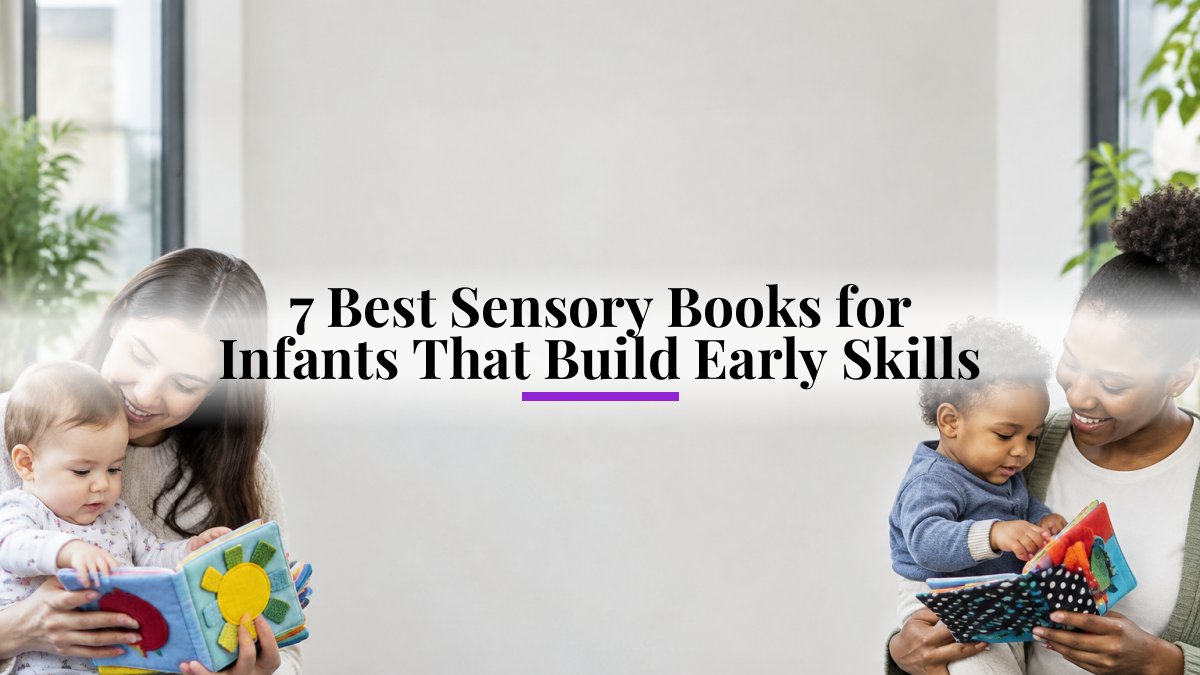
7 Best Sensory Books for Infants That Build Early Skills
Last Updated: November 9, 2026
Quick Summary
The best sensory books for infants pair simple words with textures, flaps, or soft fabric so your baby learns by touching, not just looking. Match the feature to their stage: cloth books for grabbing, then board books with flaps for the pincer grasp. Start with one textured page tonight.
- Cloth books suit newborns and babies still working on a whole-hand grab.
- Around 9 to 12 months, board books with lift-the-flap corners match the pincer grasp.
- Check the binding and give every flap a firm tug before handing a book over.
- A homemade fabric swatch book costs almost nothing and works just as well.
- Let your baby's hand lead, then say the texture word twice.
Table of Contents
- Why Sensory Books Matter for Your Baby's Growing Brain
- Quick Comparison: Best Sensory Books for Infants at a Glance
- Best Sensory Books for Infants 6-12 Months
- Touch and Feel Books for Babies: What to Look For
- Touch and Feel Books for 1 Year Old: Picks That Grow With Them
- Safety and Material Transparency: What Parents Should Check
- DIY Sensory Book Ideas You Can Make at Home
- Start Your Baby's Reading Journey Tonight
- Frequently Asked Questions
Why Sensory Books Matter for Your Baby's Growing Brain
You know that moment when your baby grabs a board book, ignores the words, and spends five minutes rubbing the fuzzy patch on the cover? That's not a detour from reading. That's the reading.
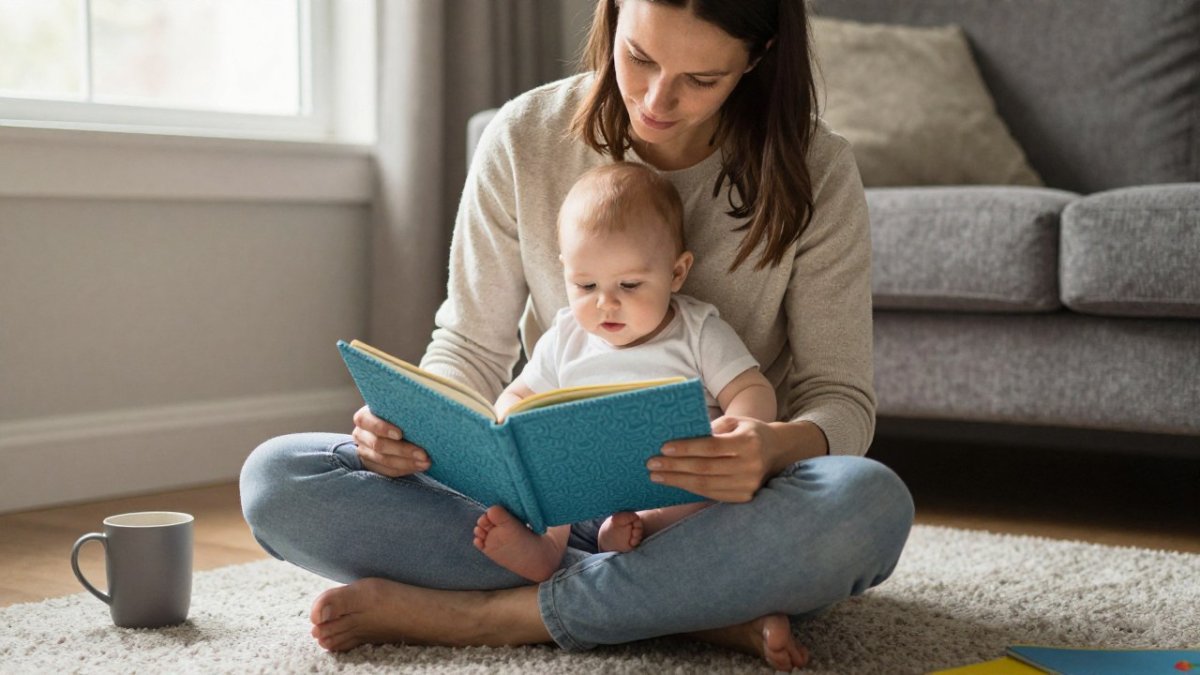
Sensory books for infants are books built with textures, flaps, sounds, or soft fabrics that let a baby explore a story with their hands and ears, not just their eyes.
The research backs up the simple version. Dr. Patricia Kuhl's work on how babies tune into language shows that repetition and back-and-forth interaction are how early learning sticks.
A touchable book makes reading aloud easier when attention spans are roughly the length of a sneeze. If you want a bigger-picture look at how this fits into early literacy, see what emergent literacy for babies actually means. And if you're building a first shelf, our list of sensory books for newborn brain development pairs well with this one.
Quick Comparison: Best Sensory Books for Infants at a Glance
| Book | Format | Best Age Range | Listed Price | Standout Feature |
|---|---|---|---|---|
| First 100 Words Touch-and-Feel | Board book | 6-12 months | Not listed | First words plus tactile patches |
| Sensory Seasons Soft Baby Book | Soft cloth book | 0 months and up | $9.96 | Fabric pages for newborns |
| Happy Baby Cloth Book & Teether | Cloth book with teether | 3-12 months | $3.95 | Book and teether in one |
| ABC: A First Sensory Alphabet Book | Board book | 6 months and up | $6.87 | Alphabet exposure with sensory format |
| My Busy Shiny Touchy Smelly ABC | Sensory board book | Pre-K | $12.99 | Alphabet plus sensory exploration |
| Around the Farm Sound Book | Sound book | 1 year and up | Not listed | 30 animal sound buttons |
| TouchThinkLearn Series | Board book series | 1-3 years | Not listed | Die-cut shapes to trace |
Listed prices of sensory books for infants
Best Sensory Books for Infants 6-12 Months
Six to twelve months is the sweet spot for the best sensory books for infants 6-12 months: babies sit up, grab, mouth, and start to connect a picture with a word.
Here is the developmental angle most lists skip. Match the book's sensory feature to what your baby is working on right now, and the book does double duty.
- Visual tracking (holds from birth, sharpens around 3 to 4 months): high-contrast black-and-white or bold primary-color pages with one image per page.
- Palmar grasp (around 4 to 6 months): soft cloth books light enough to clutch and pull toward the mouth.
- Pincer grasp (around 9 to 12 months): board books with lift-the-flap corners, slider tabs, or raised textures small enough to pinch.
Look for thick board pages, rounded corners, and textures big enough for a whole palm at the younger end, then smaller and more precise as the pincer grasp kicks in.
First 100 Words Touch-and-Feel
This title does one thing well: it pairs everyday vocabulary with surfaces to touch. That combination is exactly what you want at this age, because your baby is learning that a word and a thing go together, and their fingers are helping make the connection.
Best for: caregivers who want vocabulary and texture on the same page. Skip if: your baby is still in the everything-goes-in-the-mouth phase and you'd rather start with fabric.
Sensory Seasons Soft Baby Book
This soft book is the one to hand a baby who hasn't mastered grabbing yet. Fabric pages are forgiving, light, and easy to clutch. It's also the easiest type to toss in a diaper bag. For the 6-to-9-month crowd still working on a whole-hand grab, the crinkle and squish give immediate feedback without any fine-motor precision required.
Best for: newborns and young babies who need something soft. Skip if: your baby already wants pages that hold still.
Happy Baby Cloth Book & Teether
This one earns its place because it solves a real problem: the book and the teether are the same object. Around 6 to 9 months, mouthing is the main way your baby explores, so a book that welcomes chewing gets more use than one you have to keep rescuing.
Best for: babies in the heavy-mouthing stage who need a book that can take it. Skip if: you want pages with words and pictures to name together.
ABC: A First Sensory Alphabet Book
At the older end of this range, alphabet exposure starts to matter, but not as drilling.
Best for: 9-to-12-month-olds who are starting to point and name. Skip if: your baby is still mostly interested in chewing, since the sensory patches here are smaller.
A quick word on how to read any of these with a baby this age: let their hand lead.
If your baby is not yet sitting up or grabbing, start with the soft cloth picks and revisit the board books around 9 months. And if you want the bigger picture on how touch fits into early literacy, see what emergent literacy for babies actually means.
Touch and Feel Books for Babies: What to Look For
Touch and feel books for babies work best when the texture is the point, not a decoration. Here's our short checklist before you buy:
- Textures are large enough for a baby's whole hand, not a fingertip
- Pages are thick board or fabric, with rounded corners
- Contrast is strong: simple images, plain backgrounds
One thing most guides skip: check the binding. A lift-the-flap book with a weak hinge becomes a choking hazard once a determined baby gets hold of it. Give every flap a firm tug before you hand it over.
Touch and Feel Books for 1 Year Old: Picks That Grow With Them
By the first birthday, the goal shifts. Your toddler wants to do something to the book. That's why the best touch and feel books for a 1 year old add a second layer: flaps to lift, buttons to press, shapes to trace.
TouchThinkLearn Series
This series uses die-cut shapes your child can trace with a finger. That finger tracing is quiet pre-writing practice, and it builds hand-eye coordination without a single flashcard.
If your toddler is ready for more, our roundup of interactive board books for toddlers takes this next step further.
Safety and Material Transparency: What Parents Should Check
Safety is the part nobody puts in a gift guide. You should still look before you buy. This is the section most roundups skip entirely, and it is the one that matters most once your baby starts mouthing everything.
Read the label like it is the ingredient list
- Age recommendation. "0 months and up" tells you the maker considered newborns. A "3 years and up" label is a warning, not a suggestion, because it usually means small parts.
- Materials. Cloth and vinyl books should say non-toxic, and some list BPA-free or phthalate-free. If the label is silent, that is your cue to look up the maker before you hand it over.
- Washability. A book your baby mouths will get washed. Surface-washable board books and machine-washable cloth books save you from a sad toss in the trash.
The choking-hazard check most parents miss
A lift-the-flap book with a weak hinge becomes a choking hazard once a determined baby gets hold of it. Give every flap a firm tug before you hand it over.
Watch out: a book that passes the tug test on day one can fail it after a month of chewing, so recheck the flaps and seams every few weeks, not just at unboxing.
If your baby is sensory-sensitive
Some babies avoid textures entirely, gag at fabric, or seem distressed by certain surfaces. That is not a discipline problem, and it is not something to push through. Mention it at your next pediatric visit. That is a conversation to have with a professional, not a diagnosis to make from a blog post. In the meantime, you can still read together.
A note on materials and budget
You do not need the most expensive book on the shelf to get a safe one. A plain board book with rounded corners and a sturdy binding does the job, and a homemade fabric book (more on that below) lets you choose every material yourself. Free and low-cost options are real options, and Literacy Roots builds its whole approach around that idea in Chapter 3, where book access matters more than book price.
DIY Sensory Book Ideas You Can Make at Home
Free is a real option. A homemade sensory book costs almost nothing and your baby won't know the difference.
- Fabric swatch book. Cut squares of felt, corduroy, fleece, and satin. Punch holes and tie with ribbon.
- Crinkle page. Sew a clean cereal bag or crinkle paper inside two squares of cotton.
- Photo book. Slip family photos into a small photo album. Name each face.
- Texture tray book. Glue-safe textured items onto cardstock and cover with contact paper.
- Bath book. Use waterproof photo pages for tub time.
For more simple, free ideas, our list of early literacy activities for infants has twelve you can start this week.
Start Your Baby's Reading Journey Tonight
You don't need a shelf full of books. You need one book, five minutes, and the willingness to let your baby lead.
Pick a textured page. Guide their hand to it. If you want more ways to pair books with talk, these tips for encouraging baby speech development fit right alongside your reading routine.
Your baby doesn't need a perfect reading routine.
Frequently Asked Questions
What should I look for in sensory books for infants?
Look for a few key things: safe, non-toxic materials your baby can mouth without worry, sturdy construction like board or cloth pages, and textures that vary from smooth to bumpy to crinkly. High-contrast imagery helps newborns, while interactive elements like peek-a-boo flaps and squeakers keep older babies engaged. Check the age recommendation on the cover, and pick books with simple, clear pictures so your baby can focus on one thing at a time.
Are touch and feel books for babies suitable for newborns?
Yes, with a little guidance. Newborns see best at close range and respond to high-contrast patterns, so hold the book about 8 to 12 inches from their face and gently guide their hand across a texture. Soft cloth books work well at this stage since they are light and washable. Keep sessions short, a minute or two, and follow your baby's cues. If they turn away or fuss, try again another day.
When can babies start using touch and feel books?
Babies can start exploring touch and feel books for babies from birth, though the experience changes as they grow. In the first few months, it is mostly about you holding the book and talking about what you see and feel. Around 4 to 6 months, babies begin reaching and grasping, so let them pat the textures. By 9 to 12 months, they may lift flaps and turn pages with help. The best sensory books for infants 6-12 months have sturdy pages and varied textures for this hands-on stage.
How do I read sensory books with my baby?
Make it a conversation, not a performance. Name the textures out loud (soft, bumpy, scratchy), pause to let your baby touch the page, and follow their lead if they want to stay on one spread. Use a sing-song voice and add sound effects for squeakers or crinkle paper. Repeat the same book often; repetition builds recognition and comfort. Keep sessions short and cozy, and stop when your baby loses interest. The goal is connection, not finishing the book.
What are the best sensory books for infants 6-12 months?
At this stage, babies want to grab, mouth, and explore, so durability matters. Board books with touch-and-feel patches, cloth books with crinkle paper, and titles with simple flaps all work well. Look for books that pair one clear image with one texture per page so your baby can focus. First 100 Words Touch-and-Feel and soft cloth options like Sensory Seasons are good starting points. Rotate a few titles at a time to keep interest high without overwhelming your baby.