 How-to
How to Encourage Baby Speech Development
Last Updated: November 4, 2026
Quick Summary
Baby speech development starts long before the first word, and the everyday talk you share is what builds it. Narrate your day, copy your baby's coos and wait for a reply, and use warm face-to-face parentese. These free, small moments teach turn-taking and sounds without flashcards.
- Narrate your day out loud, naming what you see, touch, and do.
- In serve and return, respond to your baby's sound or gesture, then wait for their turn.
- Parentese means a higher pitch, stretched vowels, and big facial expressions up close.
- Keep solo screen time minimal under 18 months, with video chatting as the main exception.
- Talk, sing, and read in the language you are most comfortable with at home.
Table of Contents
- Start Talking: The Everyday Power of Language Nutrition for Infants
- The Back-and-Forth That Builds Brains: Serve and Return Communication
- Play That Talks: Early Literacy Activities for Babies
- Beyond the Basics: Screen Time, Bilingual Homes, and Other Modern Questions
- When to Check In: Gentle Signs It's Time to Talk to a Professional
- Your Next Step: Try One Thing Tonight
- Frequently Asked Questions
Start Talking: The Everyday Power of Language Nutrition for Infants
You're pushing a cart through the grocery store, and your baby is babbling at the apples.
Baby speech development starts long before the first word. Every coo, gesture, and silly face you answer is building the wiring for language.
Here at Lauren's Literacy Lounge, we've watched parents stress about milestones while missing the easy wins happening in the cereal aisle.
Below, we'll show you exactly how to encourage baby speech development with small moves you can start tonight. No teaching degree required.
Narrate Your Day (Yes, Even the Grocery Run)
Narrate your day out loud, naming what you see, touch, and do. That running commentary is how babies soak up words before they can say them.
Try this:
- "Now we're washing the carrots. Splash, splash."
- "Red apple. Do you see the red apple?"
- "Up the stairs. One, two, three."
Your baby hears rhythm, sounds, and new words all at once. This builds receptive language, the words they understand before they speak.
A common mistake is staying quiet because it feels odd to talk to someone who can't answer. Talk anyway. You're not being weird.
The Back-and-Forth That Builds Brains: Serve and Return Communication
(https://blog.laurensliteracylounge.com/importance-of-infant-communication-milestones) walks through the signals that count.Play That Talks: Early Literacy Activities for Babies
The best early literacy activities for babies are playful, not academic. You're building a literacy foundation through fun, not drills. If you want a ready-made list, our early literacy activities for infants has twelve simple ideas to try.
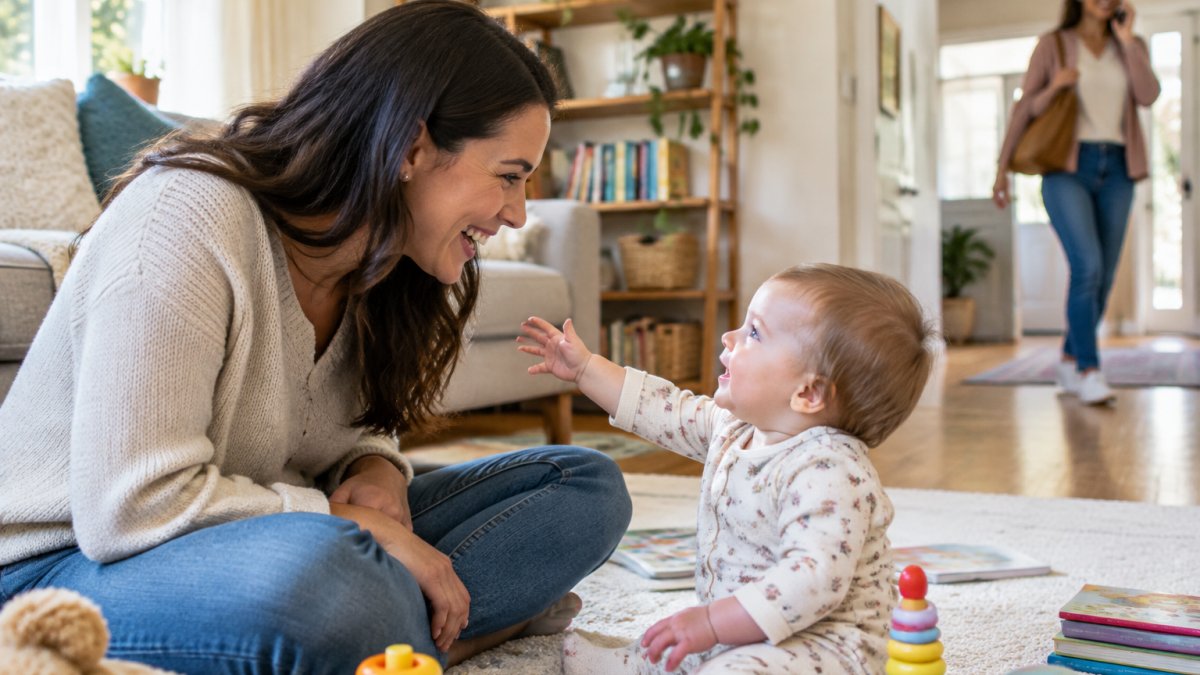
Try these:
- Peek-a-boo: builds anticipation and social interaction.
- Board books: let them chew and turn pages.
- Sensory play: name textures, "squishy," "rough," "cold."
Keep it short. Follow their interest. Ten happy seconds beat ten forced minutes.
Songs, Rhymes, and Following Their Lead
Singing and nursery rhymes boost phonological awareness, the ear for sounds that later helps reading. The rhythm and repetition do the heavy lifting.
Clap, bounce, and pause on the last word of a rhyme to let your baby fill it in. Our post on using nursery rhymes in daily routines shows how to weave songs into diaper changes and bath time.
Beyond the Basics: Screen Time, Bilingual Homes, and Other Modern Questions
You hand your phone to a fussy baby at the checkout line, then spend the drive home wondering if you just set something back. You speak one language at home and worry the second one is confusing your baby. These are the two questions parents ask most, and they deserve real answers, not a shrug.
Screens: What the Research Actually Says
Babies learn language from live, back-and-forth talk, not from a screen. Common Sense Media's 2023 research found that most young children use mobile devices at home.
Here's the mechanism in plain English. When you talk with your baby, their brain links sound to face, gesture, and feeling all at once.
Try these boundaries:
- Keep solo screen time minimal for babies and toddlers. Under 18 months, it's best to keep screen media to a minimum, with video chatting with family as the main exception.
- Co-view and narrate. If a show is on, sit close and talk about it: "Look, the dog is jumping!" You become the language bridge.
- Protect the boring moments. The stroller walk, the bath, the diaper change: those quiet gaps are where serve-and-return talk happens. Fill them with your voice, not a screen.
Watch out: A screen used to stop a meltdown every single time can quietly replace the face-to-face talk that does the teaching.
For practical swaps, our guide on reducing screen time with reading has ideas that fit real routines. Literacy Roots Chapter 8, "Digital Literacy," treats tech as a tool that needs guidance, not a villain.
Two Languages at Home: A Worry You Can Set Down
Speaking your home language does not confuse your baby or delay speech. This is one of the most common myths, and bilingual children may hit some milestones on a slightly different timeline.
Here's why.
What to do:
- Talk, sing, and read in the language you're most comfortable with. Your warmth and fluency matter more than which language you pick.
- Keep it consistent. One parent, one language, or one language per routine both work. Pick what your family can actually sustain.
- Count total words, not words per language. A child who knows 30 words in each of two languages has a bigger vocabulary than you might think.
Watch out: If a bilingual child is losing words in both languages, or not using gestures, that's worth a chat with your pediatrician. The concern isn't the two languages. It's the pattern.
The Other Modern Question: Noise
One more thing worth saying. Background noise, from a TV, a loud kitchen, or constant music, makes it harder for babies to pick out the sounds of speech. A quieter room and a face-to-face chat beat a busy room every time. It's free, and it works.
For building words before the first birthday, our tips on how to build vocabulary in babies go deeper.
When to Check In: Gentle Signs It's Time to Talk to a Professional
Trust your gut, and know that early check-ins help. These signs are reasons to talk with your pediatrician or a speech pathologist, not a diagnosis.
- No babbling by around 9 months.
- No gestures like pointing or waving by around 12 months.
- No single words by around 16 months.
- Fewer words over time, or lost skills.
Early intervention works best, and asking for help is a smart move, not a failure. In Literacy Roots, Chapter 6 walks through gentle next steps for families.
Your Next Step: Try One Thing Tonight
Pick one move from this article and do it during tonight's routine. Narrate the bath. Sing during diaper changes.
That's the heart of Literacy Roots: parents are a child's first and most enduring teachers.
Ready to build your baby's reading journey from the very beginning? Get your copy of Literacy Roots on Amazon and start with one small habit tonight.
Frequently Asked Questions
How can I stimulate my baby's speech during playtime?
Get on the floor at their level and follow their lead. If they pick up a block, say 'block' and stack another one next to it. Pause and wait for them to look at you or make a sound, then respond. This back-and-forth, called serve and return, is how babies learn conversation before they can talk. Sing songs with gestures, describe what they're touching, and keep it playful. Ten minutes of focused, face-to-face play does more than an hour of background noise.
What is the red flag for speech delay?
Every baby develops on their own timeline, but a few signs are worth bringing up with your pediatrician. By 12 months, most babies babble with varied sounds and use gestures like pointing. By 18 months, many say a few words. If your baby isn't babbling by 9 months, isn't using gestures by 12 months, or has lost skills they once had, mention it at the next visit. This isn't a diagnosis, just a reason to check in and get support early.
How does reading aloud help a baby learn to talk?
Reading aloud builds baby speech development by exposing your baby to more words, rhythms, and sounds than everyday talk alone. They hear repeated sounds (phonological awareness), watch your face form words, and learn turn-taking when you pause. You don't have to finish the book. Let them grab it, babble at the pictures, and flip the pages. That interaction is the point, not the story.
What is the 5-3-3 rule for babies?
The 5-3-3 rule is a general guideline some parents use for scheduling, not a speech development tool. It usually refers to feeding or sleep intervals (every 5, then 3, then 3 hours). For speech, what matters more is serve and return communication: responding to your baby's coos, gestures, and sounds throughout the day. If you're ever unsure about feeding or sleep schedules, ask your pediatrician for guidance specific to your baby.
You don't need a teaching background to grow a talker. You need a few minutes and a little nerve to be silly. Grab the book, pick your one thing, and give it a try. Your baby is listening right now.



