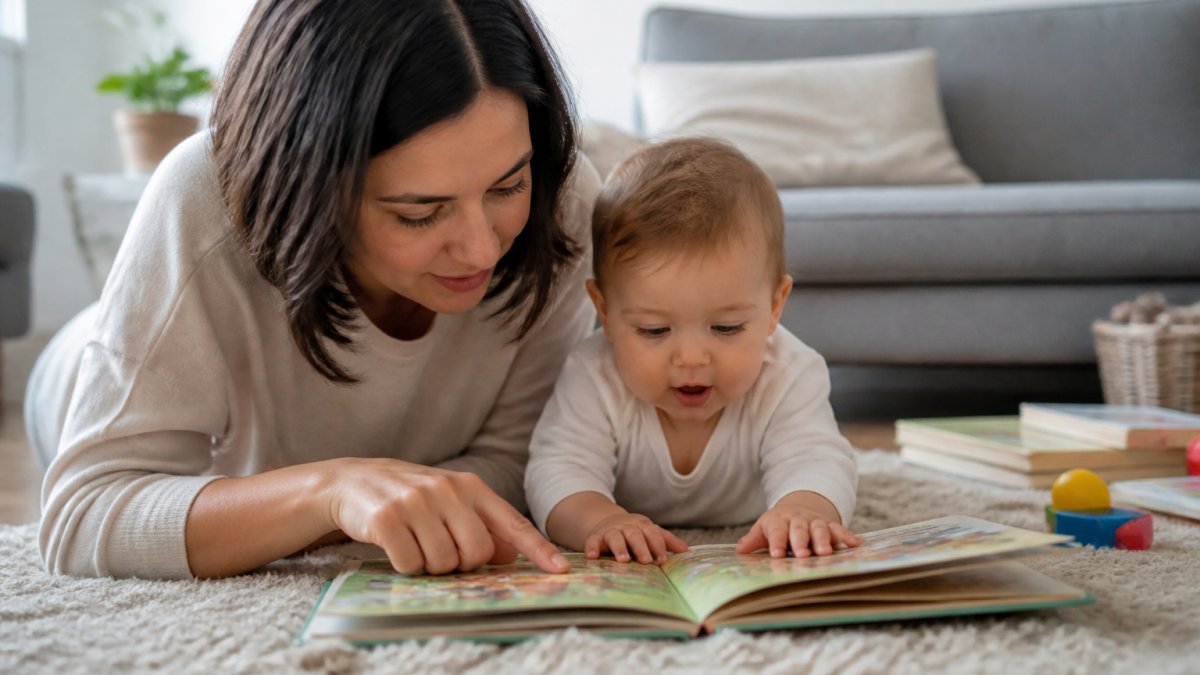
 How-to
What Is Emergent Literacy for Babies? A Parent's Guide
Table of Contents
- What Is Emergent Literacy and Why It Begins at Birth
- Baby Reading Milestones: What to Expect from Birth to Age Two
- The Core Skills That Make Up Early Literacy
- How to Read to a Baby: A Step-by-Step Routine That Works
- Early Literacy Activities for Babies You Can Do in 10 Minutes a Day
- Shared Book Reading for Infants: Making It Stick at Home
- What Not to Expect (and Common Caregiver Concerns)
- Conclusion
- Frequently Asked Questions
Last Updated: October 13, 2026
What Is Emergent Literacy and Why It Begins at Birth
Emergent literacy is the set of skills a child builds before formal reading instruction, starting at birth: learning sounds, noticing print, handling books, and connecting words with meaning. This guide covers the first two years.
Reading does not switch on at age five. It grows from everyday talk, songs, and cuddles with a book. Long before a baby says a word, their brain is sorting sounds, rhythms, and faces, building the base for everything that follows.
Emergent Literacy vs. Learning to Read: What's the Difference?
Learning to read is the formal skill of decoding printed words. Emergent literacy is everything that comes before it, the foundation, not the house.
A baby does not read, but learns that a book has a front and back, that your voice rises and falls when you tell a story, and that pointing at a picture gets a reaction.
Strong emergent literacy makes formal reading easier later; weak early language experiences make the jump harder. The goal in the baby years is not to teach letters but to build the base.
Baby Reading Milestones: What to Expect from Birth to Age Two
Baby reading milestones are not about reading words but the small steps that lead there. Every baby moves at their own pace, so treat these as a general map, not a schedule.
Here is a rough timeline many families notice:
- 0-3 months: Calms to a familiar voice; watches faces; reacts to sound.
- 3-6 months: Reaches for and mouths board books; babbles back at you.
- 6-9 months: Looks at pictures; turns pages with help; enjoys songs.
Some babies hit these early, some later. Both are normal. Keep offering books and talk rather than racing a clock.
The Core Skills That Make Up Early Literacy
Early literacy skills fall into a handful of buckets, and babies build all of them at once through play, talk, and books, no particular order required.
The main skills are:
- Print awareness: knowing how books and print work.
- Phonological awareness: hearing and playing with sounds.
- Oral language: talking, listening, and understanding.
Each grows from daily interaction, with no worksheet or screen needed. What matters most is not which skill you "teach" but how you respond when your baby shows interest. A baby who looks at a picture and then back at you is inviting a conversation, that back-and-forth, sometimes called serve-and-return interaction, is the engine behind every skill below.
Print Awareness and Book Handling
Print awareness is a baby's growing understanding that books hold meaning and print works a certain way. It starts with handling, not reading.
A baby learns that a book opens, that pages turn one way, that words run left to right, and that pictures connect to words, all from you holding the book and letting them grab it.
Let them chew the corner and flip pages backward; that messy play is real learning.
When your baby pats a picture or drags a finger across the page, that gesture is print awareness in action.
Phonological Awareness: Hearing Sounds Before Seeing Letters
Phonological awareness is the ability to hear and play with the sounds in language, starting with listening, not letters.
Songs and rhymes do the heavy lifting. A nursery rhyme with a steady beat teaches how language flows; a silly sound game teaches that words are made of smaller parts.
You do not need to explain any of this. Just talk, sing, and repeat. The learning happens in the repetition.
Oral Language and Vocabulary
Oral language is the foundation every other skill sits on.
You say a word, your baby hears it, and over many repetitions their brain maps the sound to a meaning.
No special vocabulary lists needed. Narrate what you are already doing: "Now we open the fridge. Cold!" Every labeled object and action is a deposit in your baby's word bank.
Narrative Skills: Following and Telling Stories
Narrative skills are about sequence: this happened, then that happened. Babies build them long before they can talk, simply by hearing the same story told the same way.
Reading the same book night after night teaches your baby the shape of the story.
You can strengthen this skill without a book. Tell your baby what you did that morning in order: "First we woke up. Then we had breakfast.
How to Read to a Baby: A Step-by-Step Routine That Works
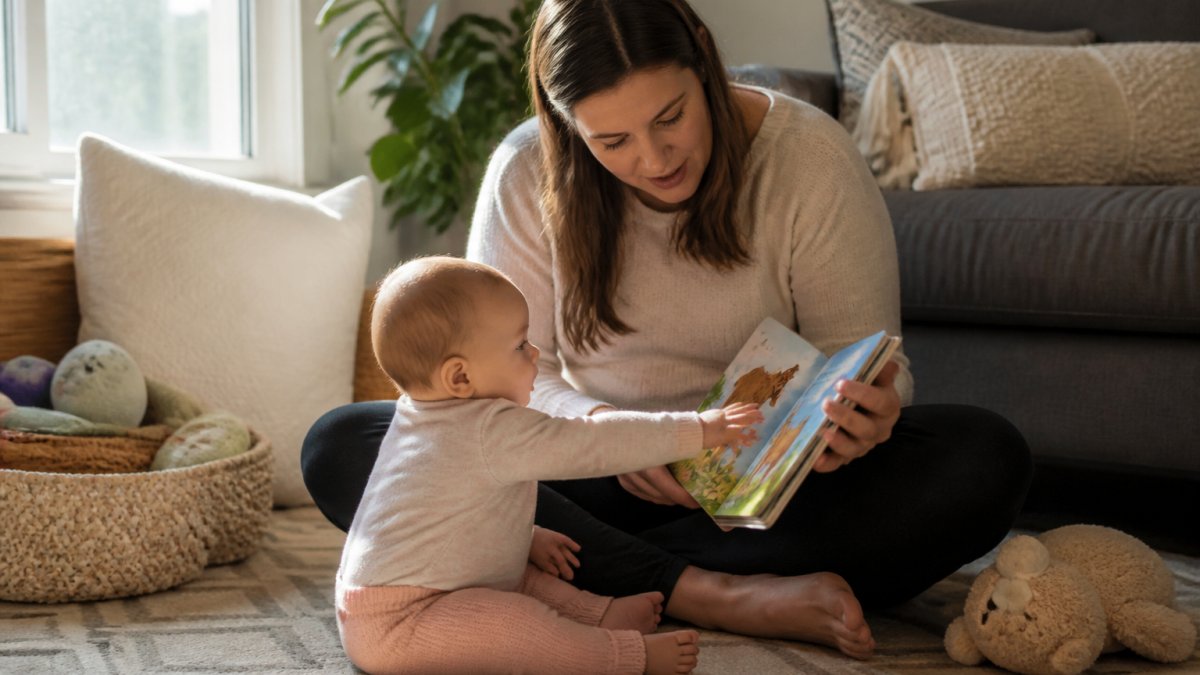
Reading to a baby works best as a short, warm routine, not a performance. Ten minutes a day beats an hour once a week. Here is a routine you can repeat.
- Pick a calm moment. After a nap or before bed works well.
- Sit close and face each other. Hold the baby so they can see the book and your face.
- Open the book and name the cover. "Look, a bear!"
- Point to pictures and talk about them. You do not have to read every word.
- Follow the baby's lead. If they grab the page, let them.
- Use a sing-song voice. Pitch and rhythm hold attention.
- End before they fuss. Short and happy beats long and tired.
Repeat the same few books. Babies learn through repetition; a familiar book is comfort and memory, not boredom.
American Academy of Pediatrics guidance on reading with young children
Early Literacy Activities for Babies You Can Do in 10 Minutes a Day
Early literacy activities for babies need no supplies, screens, or plan. They fit into what you already do, just talk, sing, and name things all day long.
Try these:
- Narrate your day. "Now we wash your hands. Splash, splash."
- Sing the same three songs. Repetition builds sound memory.
- Name body parts during diaper changes. "Nose. Toes. Tummy."
None of these take long. Together, they add up to a language-rich day.
You do not need a program or a schedule. You need ten minutes of talk, song, and books, repeated every day.
Shared Book Reading for Infants: Making It Stick at Home
Shared book reading for infants is any time you and your baby look at a book together. It is not about finishing the story but the back-and-forth. Most guidance stops at "read every day"; what actually changes outcomes is how you respond while you read.
Follow Your Baby's Cues, Not the Script
A baby cannot tell you in words what interests them, but they tell you constantly with their body. Watch for these signals:
- Gaze: Where are their eyes? If they keep looking at the cat on the page, talk about the cat. Do not push on to the next page.
- Pointing or reaching: A reach toward a picture is a question. Answer it by naming what they reached for.
- Sounds: A coo, a squeal, or a babble during a book is a turn in the conversation. Pause and answer it.
This is sometimes called following the child's lead, the difference between reading at a baby and reading with one. When you respond to what they notice, you teach them their attention matters, the same message that makes them want to communicate later.
Short Routines That Fit Real Life
You do not need a dedicated story hour. Attach books to moments you already have:
- Diaper changes: Keep a small basket of board books within arm's reach. One page while you change is enough.
- Feeding: After a feed, when your baby is calm and alert, look at one book together for two minutes.
- Bath time: Plastic or water-safe books let a baby handle a book in a new way, which builds book familiarity without pressure.
The bedtime routine often does the most work, because it is the one most families keep consistent, but any of these slots builds the habit if you repeat it.
Make It Stick
- Keep books where you sit. A small basket by the couch works.
- Let the baby set the pace. Stop when they stop.
- Skip the words if you want. Just talk about the pictures.
A common mistake is waiting for a baby to "be ready" for books. There is no ready, only starting.
Zero to Three resources on early brain and language development
What Not to Expect (and Common Caregiver Concerns)
What you should not expect from a baby is reading, and that is fine. Emergent literacy is not about early decoding but building the base.
Here are concerns we hear often, and honest answers:
- "My baby is only 8 months old. Is this too early?" No. Babies learn from sound and touch from day one.
- "I have no teaching background." You do not need one. Talking and reading aloud are the whole job.
- "We move often. Will routines still work?" Yes. The routine travels with you, even when schools change.
If you want a clear path instead of scattered tips, the Literacy Roots program walks parents through it step by step, built for real families, not teachers.
Do not turn reading into a test. If you quiz a baby or push past their interest, they learn that books mean pressure. Keep it warm and stop early.
Conclusion
The early years are the hardest to see results in and the most important for building them. Every song, pointed picture, and quiet ten minutes with a book adds a brick to your baby's reading foundation.
Lauren's Literacy Roots gives you a simple, age-aware path from birth onward. Get started with Lauren's Literacy Lounge and turn everyday moments into your child's first reading lessons.
Frequently Asked Questions
When does emergent literacy begin in babies?
Emergent literacy begins at birth. Newborns start absorbing language sounds, rhythms, and patterns from the first day they hear a caregiver's voice. Long before a baby can hold a book or speak a word, they are building the foundation for reading through listening, watching faces, and responding to songs and stories. Research consistently shows that these early language experiences shape later reading development, which is why talking, singing, and reading aloud to infants matters from day one.
What are examples of early literacy activities for babies?
Simple activities include narrating your day during diaper changes and feedings, singing nursery rhymes with hand motions, offering cloth or board books for mouthing and grabbing, pointing to and naming pictures during shared book reading, and playing peek-a-boo to build print motivation and joint attention. These early literacy activities for babies take only minutes and fit into routines you already have. The goal is frequent, warm interaction with language and books, not formal instruction.
How often should I read to my baby?
Aim for at least one short session daily, even if it lasts only two or three minutes. Babies under six months often engage for just a minute or two before losing interest, and that is normal. Follow your baby's cues: if they look away or fuss, pause and try again later. Multiple brief sessions across the day work better than one long sitting. Consistency matters more than duration, and shared book reading for infants should feel like connection, not a task.
What is the difference between emergent literacy and learning to read?
Emergent literacy covers the skills and experiences that come before conventional reading, such as print awareness, vocabulary, phonological awareness, and narrative skills. Learning to read is the later stage where a child decodes words and reads independently. Emergent literacy is the foundation, not the building itself. Babies and toddlers are not expected to read; they are developing the prerequisite skills that make formal reading instruction easier when they reach school age.


