 Listicle
10 Best Interactive Board Books for Toddlers 2026
Table of Contents
- How to Choose Interactive Board Books for Toddlers
- Quick Comparison Table
- Touch-and-Feel Books for Toddlers
- Lift-the-Flap Books for Toddlers That Encourage Exploration
- Board Books for 2-Year-Olds With Hands-On Features
- Sound Books and Musical Interactive Titles
- How Interactive Books Support Early Literacy Development
- Which Interactive Board Book Should You Pick?
- Frequently Asked Questions
Last Updated: October 10, 2026
How to Choose Interactive Board Books for Toddlers
What makes a board book interactive? The answer matters more than you'd think. We've curated the 10 best interactive board books for toddlers, which combine durability with features that invite hands-on exploration. These aren't passive reading experiences, they're invitations for little fingers to touch, lift, poke, and discover.

How We Selected These Recommendations for 2026
Our 2026 list evaluates board books currently in print for durability, safety compliance, and genuine interactive engagement. We prioritized titles with staying power and newer releases addressing representation gaps, assessing each for age-appropriateness, motor skill requirements, and safety (choking hazards, material toxicity). We excluded books with loose components, poorly secured flaps, or inaccessible batteries.
What Makes a Board Book Interactive
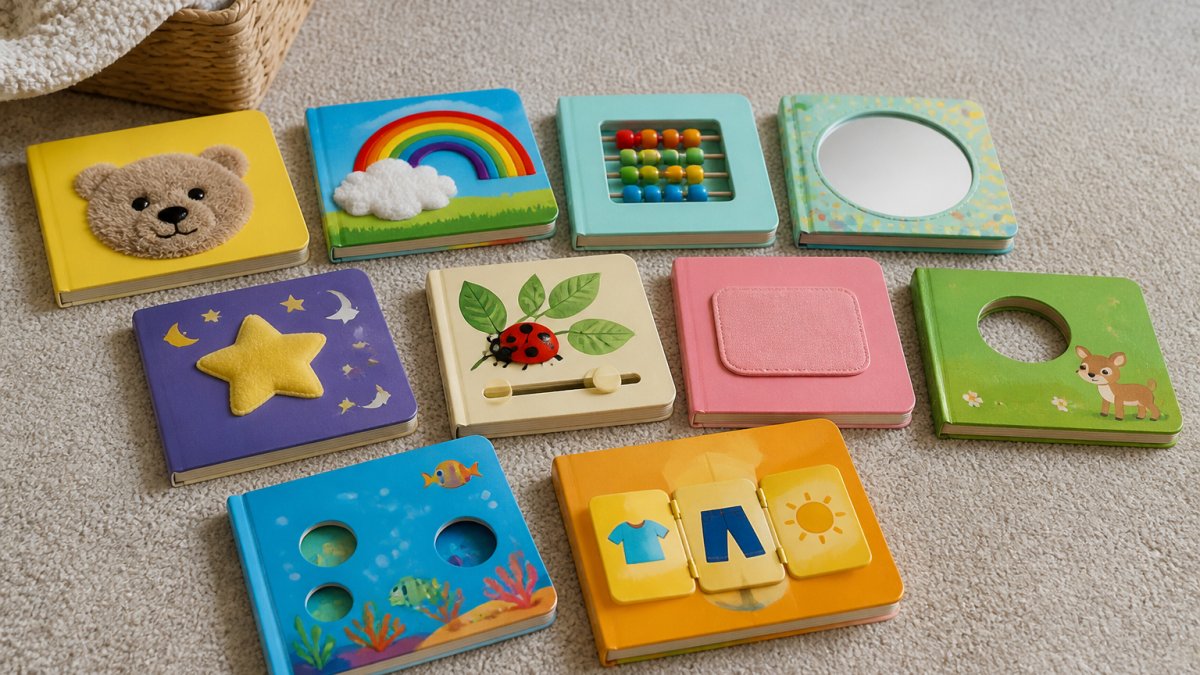
Interactive board books include tactile elements, textures, flaps, buttons, sounds, that engage multiple senses. Thick, laminated pages withstand repeated handling, spills, and teething without tearing.
Age-by-Age Guide to Interactive Features
Not all interactive elements suit all ages. Understanding which features match your child's developmental stage helps you select books they'll actually engage with rather than outgrow in weeks.
Younger babies (6-12 months): Touch-and-feel textures work best, providing sensory feedback without complex motor control. Ensure textures are securely attached and non-toxic (babies mouth everything). Choose gentler sound volumes to avoid startling. Avoid small flaps or buttons requiring pincer grip.
Mid-range toddlers (12-24 months): Lift-the-flap and peek-through mechanics suit their developing fine motor control and ability to anticipate. Books pairing words with interactive discovery support rapid vocabulary growth. Choose sound books with volume control, as toddlers press buttons repeatedly.
Older toddlers (24-36 months): Multi-step flaps, color-coded tabs, and combined interactive types suit their growing complexity tolerance. Recipe themes and cause-and-effect sequences appeal to their emerging pretend play.
Durability and Safety Considerations
Check for rounded corners, non-toxic materials, secure binding, and firmly attached interactive elements with no sharp edges. Inspect flaps for loose edges and ensure buttons are glued or riveted, not snapped. Battery compartments should require a tool to open. Most board books wipe clean with a damp cloth; avoid submerging sound books. Consider your child's sensory profile, sound-sensitive toddlers may need quieter options or gentler textures.
Quick Comparison Table
| Book Title | Interactive Feature | Best Age | Key Strength |
|---|---|---|---|
| Baby Touch and Feel: Trucks | Textured patches | 6-18 months | Sensory exploration |
| That's Not My Fox | Touch-and-feel textures | 12-24 months | Animal theme variety |
| Dear Zoo | Lift-the-flap mechanism | 12-30 months | Anticipation and surprise |
| Hoppity Frog | Play-along movement | 18-36 months | Active engagement |
| Watch Me Grow | Interactive elements | 12-24 months | Growth concept |
| Cookies! An Interactive Recipe Book | Hands-on recipe theme | 18-36 months | Imaginative play |
| I Thought I Saw a Bear | Peek-through pages | 12-30 months | Curiosity-driven |
| My First Tabbed Book of the Alphabet | Color-coded tabs | 18-36 months | Letter learning |
| Maisy's Town: A First Words Book | First-words focus | 12-24 months | Vocabulary building |
Touch-and-Feel Books for Toddlers
Touch-and-feel books introduce texture as a learning tool. Different materials, fuzzy, bumpy, smooth, crinkly, give toddlers sensory feedback as they explore pages. This tactile element keeps attention longer than visuals alone.
Baby Touch and Feel: Trucks
This book pairs vehicles with textures, letting toddlers name trucks while exploring surfaces. Straightforward sensory play with no complicated text makes it ideal for ages 6-18 months.
That's Not My Fox
This Usborne title follows a repetitive format: "That's not my fox because..." with a different texture on each page. The structure builds anticipation and confidence in ages 12-24 months.
Lift-the-Flap Books for Toddlers That Encourage Exploration
Flap books teach cause-and-effect. Lift the flap, something appears. This simple mechanic fascinates toddlers and encourages repeated interaction. Unlike passive reading, flap books invite action.
Dear Zoo
This classic pairs simple rhyming text with sturdy, toddler-sized flaps. The cycle of anticipation and surprise repeats across pages, engaging ages 12-30 months through the flap mechanic rather than text.
I Thought I Saw a Bear
This book uses peek-through cut-outs instead of traditional flaps, offering a fresh mechanic for ages 12-30 months. The bear-themed narrative gives the peeking purpose.
Board Books for 2-Year-Olds With Hands-On Features
Two-year-olds are more capable than younger toddlers. They can manage slightly more complex interactions and follow longer narratives. Books for this age often combine multiple interactive elements.
Hoppity Frog
This book invites movement, jiggling, tweaking, poking, that produces results. Active participation appeals to energetic toddlers ages 18-36 months.
Watch Me Grow
This Priddy Books title tracks growth with interactive elements that support the concept. Thematic coherence appeals to ages 12-24 months.
Cookies! An Interactive Recipe Book
This book frames interaction around cooking, turning interactive elements into ingredients and steps. The food theme resonates with ages 18-36 months who enjoy pretend play.
Sound Books and Musical Interactive Titles
Sound books pair buttons with animal sounds, music, or speech, strengthening vocabulary and phonetic awareness. However, practical considerations deserve attention before purchase.
How Sound Books Support Language Development
Sound books with clear, natural speech paired with high-contrast images support language acquisition. Combining button presses with visual changes (flaps opening as sounds play) creates stronger learning moments.
Sound Intensity and Sensory Considerations
Many sound books operate at 80-90 decibels. If your toddler covers their ears at loud noises or becomes distressed, choose touch-and-feel or flap books instead, or look for "soft sound" editions with volume adjustment. Match the book's sensory profile to your child's needs.
Battery Life and Durability of Sound Mechanisms
Check battery compartments: screw closures are safer than slide-latches. Battery life varies; budget accordingly. Sound modules are moisture-sensitive, so keep books away from water and wipe spills immediately.
Sound Books vs. Quieter Alternatives
Lift-the-flap, touch-and-feel, and tabbed books build language skills without sound. A balanced collection includes one or two sound books for active play and quieter titles for calmer times.
My First Tabbed Book of the Alphabet
While not strictly a sound book, this title uses color-coded tabs to organize alphabet pages, making navigation interactive in a different way. Each tab represents a letter, and toddlers can flip directly to the letter they want to explore. The colorful design appeals visually, while the tabbed structure teaches organizational concepts and gives toddlers a sense of control over the reading experience.
Tabs make the book interactive through navigation rather than tactile or sound elements. Ages 18-36 months benefit from the letter-learning focus. The tab system also prevents random page-flipping, creating a more intentional reading experience. This approach suits toddlers who enjoy structure and predictability.
Maisy's Town: A First Words Book
A first-words book centered on familiar locations, this title introduces vocabulary in context. Maisy's character provides narrative continuity across pages. The format supports early language development by pairing words with scenes toddlers recognize. Unlike sound books, this title relies on visual recognition and adult narration to build language skills.
The strength is vocabulary breadth. Rather than focusing on one category like animals or colors, the book covers multiple word types across different settings. Ages 12-24 months are building vocabulary rapidly, and this variety supports that growth. The familiar character makes repeated readings feel like visiting a friend. For caregivers who prefer quieter reading experiences or children who are overwhelmed by sound, this book offers rich language input without auditory stimulation.
How Interactive Books Support Early Literacy Development
Interactive board books aren't just entertainment. They're tools for building foundational literacy skills. When toddlers engage with books through touch, sound, and movement, they develop positive associations with reading itself.
Building Vocabulary and Language Skills
Every interaction with a book is a language opportunity. When you point to a texture and name it, or ask "What sound does the cow make?" you're teaching vocabulary in context. Interactive elements give children reasons to pay attention and engage with words.
Research from the National Institute for Literacy emphasizes that early exposure to language-rich environments supports vocabulary growth. Interactive books create these environments naturally. Instead of passive listening, toddlers participate in the learning process.
Fostering a Love of Reading Through Play
The goal isn't memorizing facts. It's building the belief that books are fun. When reading feels like play, children seek out books voluntarily. This intrinsic motivation matters more than any single skill.
Interactive board books achieve this by removing barriers between child and content. There's no need to sit still and listen passively. Instead, toddlers touch, explore, and discover. Over time, this positive association with books translates into willingness to read more complex texts later.
Supporting Sensory Development
Toddlers learn through their senses. Touch-and-feel books provide controlled sensory input. Different textures teach discrimination, rough versus smooth, bumpy versus flat. This sensory exploration supports neural development.
According to child development research from the American Academy of Pediatrics, sensory play in early childhood supports cognitive development. Interactive board books provide structured sensory experiences within a literacy context, combining two important developmental domains.
Which Interactive Board Book Should You Pick?
Your choice depends on your child's age and interests. Younger toddlers (6-12 months) benefit most from touch-and-feel books with minimal text. Mid-range toddlers (12-24 months) engage well with lift-the-flap and simple sound books. Older toddlers (24-36 months) handle more complex interactions and longer narratives.
Consider your child's sensory preferences too. Some toddlers crave texture and touch. Others respond more to movement, sound, or visual surprise. Observing what captures your child's attention helps you select books that will actually get read repeatedly.
Building a small collection rather than buying one book at a time is often recommended. Different books serve different moods and developmental moments. A touch-and-feel book can calm an overstimulated toddler. A flap book can energize a sluggish afternoon. A sound book can capture attention during transitions.
Start with Dear Zoo or Baby Touch and Feel: Trucks, both are durable, widely available, and genuinely engaging. As you observe what your child gravitates toward, add books that match those interests.
Interactive board books transform reading from a passive activity into hands-on exploration. They build vocabulary, support sensory development, and most importantly, create positive associations with books that last into elementary school and beyond.
Frequently Asked Questions
What makes a board book interactive?
Interactive board books combine durable, sturdy pages with hands-on features that invite toddlers to touch, lift, poke, and explore. Common interactive elements include touch-and-feel textures, lift-the-flap pages, sound buttons, tabs to pull, and mirrors. These features transform reading from passive listening into active sensory play, keeping young children engaged while building early literacy skills.
Are lift-the-flap books good for toddlers?
Yes. Lift-the-flap books are excellent for toddlers because they encourage participation and discovery during shared reading. Each flap creates a moment of surprise and anticipation, which strengthens attention and memory. The physical act of lifting flaps also develops fine motor skills. Board-book versions with reinforced flaps are particularly durable for little hands and frequent use.
What are some good board books for a 2-year-old?
Two-year-olds thrive with board books that offer multiple types of interaction. Books with touch-and-feel textures, lift-the-flap pages, tabs to manipulate, and simple animal or object themes work well at this age. Titles like Hoppity Frog, Watch Me Grow, and That's Not My Fox combine engaging visuals with hands-on features that match the developmental stage of 2-year-olds, who are refining motor skills and expanding vocabulary.
How do interactive books support early literacy?
Interactive board books support early literacy by making reading a multisensory experience. Tactile elements strengthen neural pathways associated with language. Sound books and music features build phonological awareness. Lift-the-flap and play-along features keep toddlers engaged longer, increasing exposure to words and stories. Shared reading with interactive books also deepens caregiver-child bonding, which research shows is foundational to language development and a lifelong love of reading.