 Listicle
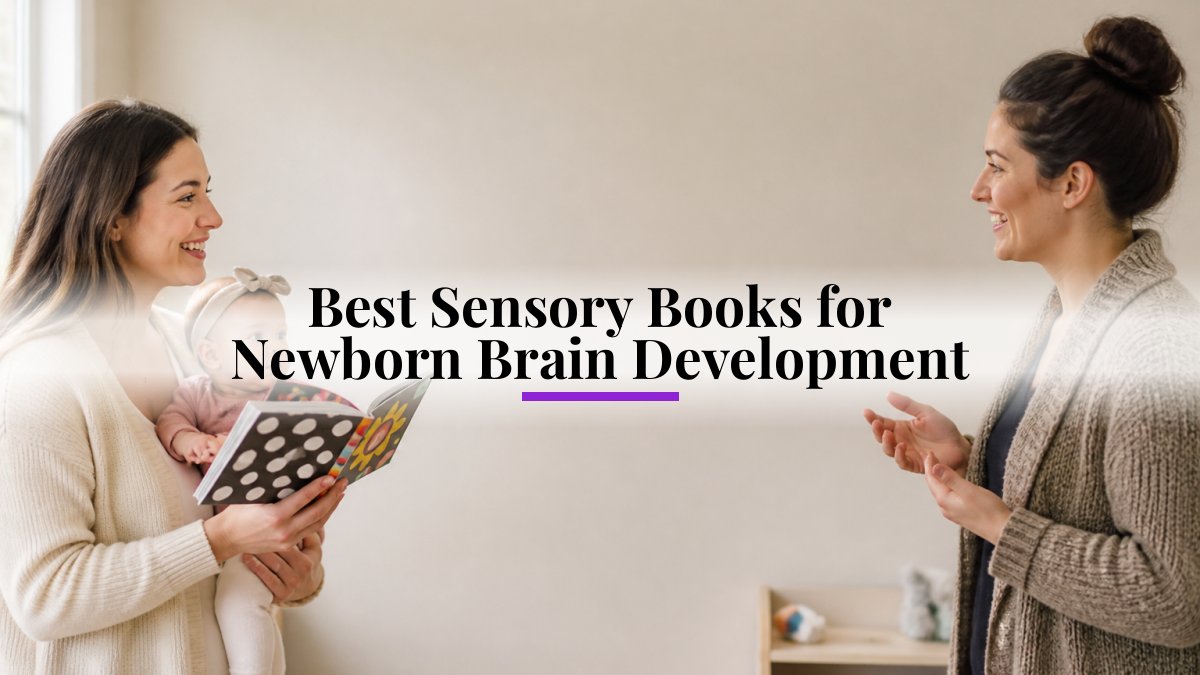
Best Sensory Books for Newborn Brain Development
Table of Contents
- Quick Comparison: Best Sensory Books for Newborns
- How to Read to a Newborn (Yes, Really)
- High-Contrast Books for Newborns: Why Black and White Works
- Baby Books with Textures That Hold Up to Grabbing
- Building a Newborn Reading Routine That Fits Real Life
- Safety Checklist for Newborn Books
- What Sensory Books Can and Can't Do for Newborn Brain Development
- Conclusion
- Frequently Asked Questions
Last Updated: October 18, 2026
Quick Comparison: Best Sensory Books for Newborns
You're three weeks in, running on broken sleep, and someone just handed you a black-and-white board book. It looks more like a test pattern than a story.
You've probably wondered if reading to a newborn even counts. It does. The best sensory books for newborn brain development are simple, sturdy, and built for eyes that can barely focus yet.
Quick Picks:
- Best overall: Black on White by Tana Hoban, for pure high-contrast focus
- Best for grabbing: Pat the Bunny, the classic touch-and-feel pick
- Best soft option: Fisher-Price Sensory Seasons Soft Book
- Best first sensory set: See, Touch, Feel: A First Sensory Book
| Book | Type | Best For | Price |
|---|---|---|---|
| Black on White | High-contrast board book | Newborn focus practice | Not listed in our research |
| Look Look! | High-contrast board book | Early face and shape recognition | Not listed in our research |
| Pat the Bunny | Touch-and-feel classic | Texture exploration | Not listed in our research |
| See, Touch, Feel | First sensory book | Sight and touch together | Not listed in our research |
| Fisher-Price Sensory Seasons | Soft cloth book | Tummy time and grasping | Not listed in our research |
| Sally at the Farm | Board book | Simple read-aloud rhythm | Not listed in our research |
Prices change constantly, so check current listings before you buy.
How to Read to a Newborn (Yes, Really)
Reading to a newborn means holding a book close, talking about what's on the page, and letting your baby look for a few seconds at a time.
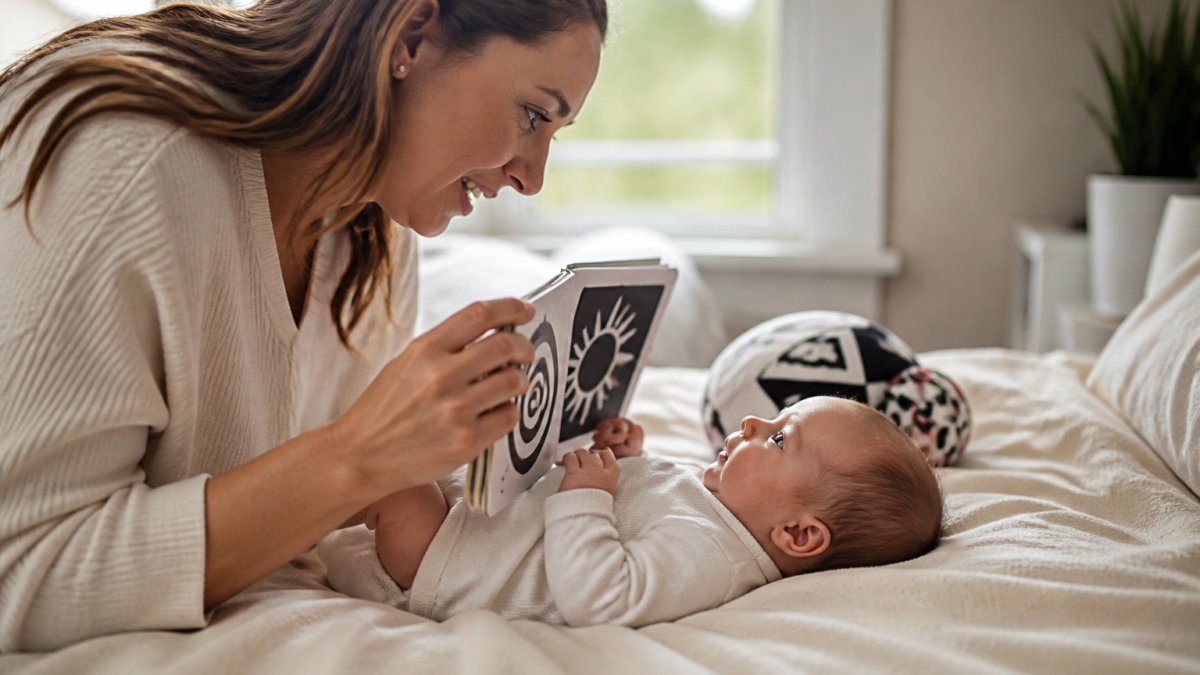
Newborns see best at close range, so bring the book within about a foot of their face. Watch their eyes. If they lock on for five seconds, that's a win.
Try this tonight:
- Narrate the page. "This is a circle. A big black circle."
- Follow their gaze. Whatever they look at, name it.
- Stop when they fuss. Short, happy sessions beat long, tearful ones.
Lauren's book Literacy Roots covers this in Chapter 2, "Parents as First Teachers," where she explains that everyday talk is "language nutrition." Reading aloud is just one more way to feed it.
High-Contrast Books for Newborns: Why Black and White Works
Here's a moment you'll recognize: you hold up a colorful picture book, and your newborn stares past it at the curtain. Then you try a plain black-and-white board book, and those little eyes lock on. That's not a coincidence.
High-contrast books work because a newborn's visual system is still coming online. Sharp black-and-white edges give those developing eyes something clear to grab onto, while soft pastels and busy scenes blur together.
What's actually happening in those first weeks
Newborns see best at close range, roughly 8 to 12 inches, about the distance from your face to theirs during a feed. Their color vision is still developing, so bold black-and-white shapes are easier to process than muted tones.
That timeline matters when you're choosing books. A high-contrast title isn't a forever book. It's a right-now book, and that's exactly why it earns a spot on the shelf.
Titles built for this stage
Black on White by Tana Hoban and Look Look! by Peter Linenthal keep showing up on newborn lists for good reason: simple shapes, strong edges, and nothing to distract from the contrast. Montessori-style guides often group these for ages 0 to 6 months, which lines up with what you'll see in practice.
How to use a contrast book tonight
You don't need a lesson plan. Try this:
- Hold the book 8 to 12 inches from your baby's face. That's the sweet spot for newborn focus.
- Give one page a few seconds. If those eyes lock on for five seconds, that's a win.
- Follow their gaze. Whatever shape they look at, name it: "That's a circle. A big black circle."
- Stop when they turn away. Turning away is your baby saying "I'm full." That's a good thing.
When to move on
Watch for the shift. When your baby starts batting at pages, tracking across the book, or showing interest in brighter colors, it's time to layer in more complex books.
Lauren's book Literacy Roots covers this in Chapter 2, "Parents as First Teachers," where she explains that everyday talk is "language nutrition." A contrast book is just one more way to feed it, and your voice is doing most of the work.
Baby Books with Textures That Hold Up to Grabbing
Around three or four months, something shifts. Your baby stops just looking at the book and starts grabbing it, mouthing it, and giving those textures a serious tug. That's when a flimsy book reveals itself.
Texture books turn reading into a hands-on activity, and that's the point. Touch pairs with your voice, and your baby starts connecting words to sensations. But not every touch-and-feel book survives a determined grabber. Here's how to pick one that does.
A simple selection rubric
Before you buy, run any texture book through these five questions:
- Durability: Are the textures stitched or reinforced, or just glued on? Glued pieces are the first to go.
- Washability: Can you wipe the pages down? Board books usually can. Cloth books usually go in the wash.
- Age fit: Is it labeled for newborns, or does it assume a baby who can already sit and reach?
- Sensory load: Does it offer one clear texture per page, or a busy mix that overwhelms?
- Value: Will it survive three months of daily use, or will you be replacing it by month two?
That last question matters more than the price tag. A book that lasts is the better deal.
Titles that earn their spot
Pat the Bunny is the classic here, a touch-and-feel staple for generations and still listed among sensory book picks today. See, Touch, Feel: A First Sensory Book takes a similar approach, pairing textures with bold images. For a soft option, the Fisher-Price Sensory Seasons Soft Book is labeled for newborns. Cloth books like this one handle mouthing and tugging better than board books.
What to look for in the store or online
- Stitched or reinforced textures that won't pull loose
- Wipeable surfaces on board books
- Soft, flexible edges on cloth books
- No loose parts that could come off
- Rounded corners on board books
A note for babies with sensory differences
Not every baby loves texture. Some arch away from scratchy fabrics or startle at crinkly pages. That's not a problem to fix. It's information.
If your baby seems overwhelmed, try one texture at a time and let them set the pace. A soft cloth book with one smooth page may land better than a busy touch-and-feel title. You can also model the touch yourself first: run your finger across the page and narrate it. "Soft.
The takeaway
You don't need a shelf of texture books. One sturdy touch-and-feel title and one soft cloth book cover this stage well. Rotate them, check them for wear, and let your baby lead. The grabbing phase is short. Enjoy the mess.
Lauren's book Literacy Roots covers this in Chapter 3, "Home Literacy Environment," where she points out that book access and a parent who reads for fun matter more than any fancy setup. A basket of sturdy board books on the floor counts.
Building a Newborn Reading Routine That Fits Real Life
A newborn reading routine doesn't need a schedule or a special chair. It needs a repeated moment you'll actually keep. For most families, that's the last feed of the night or a quiet stretch after a diaper change.
Keep it to two or three minutes. One book. Same time each day if you can.
Lauren writes about this in Chapter 3, "Home Literacy Environment," where she points out that book access and a parent who reads for fun matter more than any fancy setup. A basket of board books on the floor counts.
If you're moving soon or short on space, keep it portable. A soft book in the diaper bag means reading happens anywhere.
Safety Checklist for Newborn Books
Safety comes down to materials and supervision. A newborn explores with their mouth, so every book near them needs to hold up to that.
- Check for loose threads, buttons, or glued-on pieces
- Confirm the book is labeled non-toxic and baby-safe
- Look for rounded corners on board books
- Skip any book with small detachable parts
- Supervise cloth books during mouthing
- Wipe board books down regularly
- Inspect textures for wear before each use
Board books and cloth books are the two safest formats for this age. Skip anything with batteries or sound chips until your baby is older.
What Sensory Books Can and Can't Do for Newborn Brain Development
Sensory books support newborn brain development by giving your baby something to look at, touch, and hear alongside your voice. They don't fast-track anything.
The research Lauren draws on in Chapter 2 notes that a baby's brain is about 80% adult size by age 3 and nearly 90% by age 5.
What sensory books can do:
- Build visual tracking with high-contrast images
- Encourage reaching and grabbing, which supports fine motor skills
- Pair touch and sound with language development through your narration
What they can't do:
- Replace daily talk, play, and cuddling
- Guarantee a reading outcome
- Make up for a lack of interaction
If you ever notice your baby not tracking objects or not responding to sound, bring it up with your pediatrician. That's a conversation, not a diagnosis.
Conclusion
Here's the honest truth: you don't need a shelf full of books to give your newborn a strong start.
Literacy Roots: Nurturing Your Child's Reading Journey from Birth to Brilliance walks you through this stage and every one after it, chapter by chapter, with research, real family stories, and simple exercises you can try the same night.
Get the book on Amazon for $14.99 and start with Chapter 2, "Parents as First Teachers." If you're feeling overwhelmed and want to talk it through, book a free 1:1 chat with Lauren.
Frequently Asked Questions
Do sensory books actually help newborn brain development?
They support it, but they don't turbocharge it. A newborn's brain is already wiring itself fast, and what it needs most is you talking, making eye contact, and offering simple things to look at and touch. Sensory books give you an easy way to do that in the same few minutes every day. Think of them as a tool for interaction, not a shortcut. The snuggling and your voice are doing as much work as the pages.
What should I look for in the best sensory books for newborns?
Start with contrast, safety, and durability. Look for bold black-and-white or high-contrast images, rounded corners, and baby-safe, non-toxic materials. Cloth and soft books work well because they survive grabbing and mouthing. Check that any mirror is plastic rather than glass, and that there are no loose parts or long strings. Beyond that, pick titles you won't mind repeating, since repetition is how newborns learn.
Are high-contrast books good for newborns?
Yes, and they're often the best first choice. Newborns see bold shapes and strong contrast more clearly than soft pastels in those early weeks. High-contrast books for newborns give their eyes something clear to settle on while you talk. You don't need a stack of them. Two or three well-made black-and-white books, rotated through the week, are plenty for the first few months.
How often should I read to my newborn?
A few short sessions a day beats one long one. Two to five minutes at a time, a couple of times daily, is realistic for most families. Tie it to something you already do, like after a diaper change or before a nap, so it becomes a newborn reading routine without extra planning. If your baby turns away or fusses, stop and try again later. Follow their cues and keep it warm rather than scheduled to the minute.
Are cloth books safe for newborns?
Cloth books are a good fit when they're made for babies: soft fabric, securely stitched edges, no loose buttons or ribbons, and no long strings that could wrap around a neck. Check the label for non-toxic materials and washability, since these books end up in mouths. Skip anything with small detachable pieces or glass mirrors. Always supervise, even with soft books, and give fabric books a wash according to the care label.