How-to
Are Early Literacy Best Practices Worth Trying at Home?
Last Updated: November 18, 2026
Quick Summary
Early literacy is everything a child learns about reading and writing before they can read, including singing, talking, looking at books, scribbling, and playing with sounds. The habits you build at home now shape how your child reads later. You don't need a teaching degree or flashcards, just a few warm, repeated moments each day.
- Sing, talk, read, write, and play in everyday life, and pick just one practice to start tonight.
- Five-minute routine: one minute of rhyme, one minute of letters, two minutes of shared reading, one minute of talk.
- Let your child pick the book, reread favorites, and stop when reading stops being fun.
- Watch for everyday signals like turning toward sounds, holding books right side up, and clapping syllables in a name.
- Don't compare your child to siblings or neighbors, since the range of normal is wide and pressure makes kids dislike reading.
Table of Contents
- Why Early Literacy Starts Before Your Child Can Read
- Five Early Literacy Practices You Can Use Every Day
- Building the Early Literacy Skills Your Child Needs
- Early Literacy Tips for Storytime That Feel Natural
- How to Teach Reading at Home Without Pressure
- Adapting Early Literacy for Your Family's Language, Schedule, and Budget
- Your First Easy Step Toward Early Literacy Tonight
- Frequently Asked Questions
Why Early Literacy Starts Before Your Child Can Read
Early literacy is everything a child learns about reading and writing before they actually read. That includes singing, talking, looking at books, scribbling, and playing with sounds.
Good news: you don't need a teaching degree or a stack of flashcards. Our parent's guide to getting started with early literacy walks you through the basics one step at a time. You need a few warm, repeated moments each day.
Think about the running commentary you do in the grocery store. "Let's grab the apples. Oh, these are red! Red like a fire truck." That counts. Your child is hearing new words, learning how sentences work, and connecting language to the real world.
Five Early Literacy Practices You Can Use Every Day
These five practices fit into normal family life. For more simple games, browse these reading readiness games for home. You don't have to do all five. Pick one and start tonight.
Sing, Talk, Read, Write, and Play in Real Life
- Sing: Nursery rhymes and silly songs teach rhythm and sounds. Sing while you wash hands or buckle car seats.
- Talk: Narrate your day. Ask open questions like "What do you think happens next?"
- Read: Share books every day, even just one short story at bedtime.
- Write: Let your child scribble, draw, and "write" a grocery list. Scribbles count.
- Play: Blocks, pretend play, and board games all build language and thinking.
Each of these is free to try. Your own voice and a library card are all you need.
Building the Early Literacy Skills Your Child Needs
Early literacy is made of several skills that grow together, and they don't arrive on the same schedule. Knowing the rough order helps you notice what your child is working on and what to try next. The sequence below gives you a rough order to watch for, with plenty of wiggle room. For sound-level practice, try these phonemic awareness activities for kindergarteners.
- Oral language: the words and sentences your child understands and uses. This is the foundation everything else sits on.
- Print awareness: knowing that print carries meaning, that we read left to right, and that a book has a front and a back.
- Phonological awareness: hearing rhymes, syllables, and the sounds inside words.
- Alphabet knowledge: recognizing letters, then their names, then their sounds.
- Writing and mark-making: scribbles, then letter-like shapes, then real letters, then words.
What This Looks Like by Age
Babies (birth to about 12 months). Oral language leads. Your baby coos, you coo back, and that back-and-forth is the whole lesson.
Toddlers (about 1 to 3). Print awareness and phonological awareness wake up. Your toddler grabs the book, turns pages (sometimes backward), and points at pictures. They start finishing lines in a favorite rhyme.
Preschoolers (about 3 to 5). Alphabet knowledge and writing take off. Your child may recognize the first letter of their name, sing the alphabet, and scribble something they call "writing." Point out letters on signs and cereal boxes.
Early elementary (about 5 to 7). The skills start connecting. Your child blends sounds to read simple words, writes their name, and retells a story.
A Simple Way to Check In
You don't need a test. Watch for these everyday signals and use them as your guide, not a scorecard.
- Does your child turn toward sounds and voices? (oral language)
- Do they hold a book the right way up and turn pages? (print awareness)
- Can they clap the syllables in their name, like "El-iz-a-beth"? (phonological awareness)
- Do they spot their name's first letter on a sign? (alphabet knowledge)
- Do they make marks and tell you what they mean? (writing)
If a child seems stuck on one skill for a long stretch while the others move along, that's worth a friendly note to a teacher or pediatrician.
Watch out: Don't turn this into a checklist you run through in one sitting.
Want a deeper starting point? Rhyming games, like naming words that rhyme with "cat" during a car ride, build the same skill with zero materials.
Here is a quick look at the five early literacy skills and what each one looks like across the early years.
| Skill | What it looks like | Age to watch |
|---|---|---|
| Oral language | Turns toward sounds, coos back, uses words | Babies, birth to about 12 months |
| Print awareness | Holds a book right way up, turns pages | Toddlers, about 1 to 3 |
| Phonological awareness | Hears rhymes, claps syllables in a name | Toddlers, about 1 to 3 |
| Alphabet knowledge | Spots the first letter of their name | Preschoolers, about 3 to 5 |
| Writing and mark-making | Scribbles and tells you what it means | Preschoolers, about 3 to 5 |
Early Literacy Tips for Storytime That Feel Natural
Storytime doesn't have to be a performance. Keep it relaxed and let your child lead.

- Let them pick the book. Interest matters more than level.
- Reread favorites. Repetition helps young children learn words and patterns. Chapter 2 of Literacy Roots explores why reading the same book 40 times is brilliant.
- Point and name. Touch a picture and say, "Dog! The dog is running."
- Pause and wonder. Ask, "Why do you think she's sad?"
- Stop when it stops being fun. Five minutes of joy beats twenty minutes of struggle.
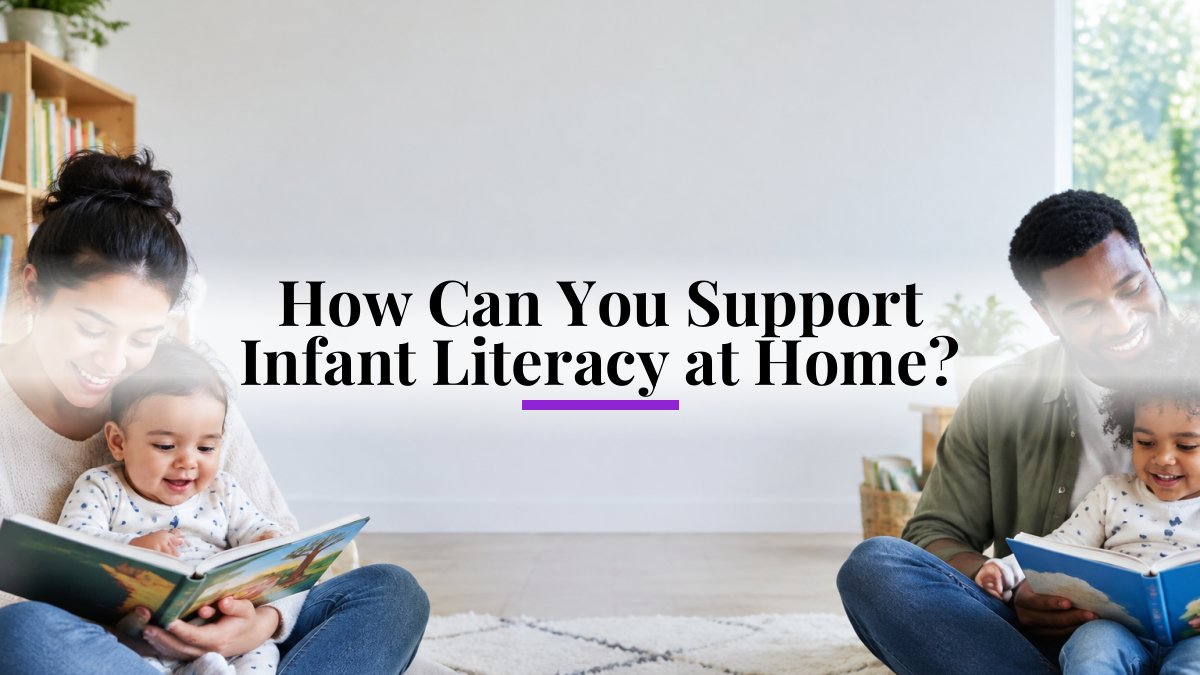
Picture this: A parent and toddler sit close on the living room rug, sharing a picture book. The child points at a bunny, and the parent says, "Bunny! Where's the bunny going?" Nothing fancy, just connection.
How to Teach Reading at Home Without Pressure
Many parents worry they should start formal reading lessons early. If you're ready to begin, this step-by-step guide to teaching reading at home shows you how to do it gently. For most young children, the better move is to keep things playful and let skills build. The research in Chapter 2 of Literacy Roots is clear that everyday talk is the real fuel, and that repetition does the heavy lifting. You're not running a lesson. You're stacking up small, warm moments.
Start Where Your Child Already Is
- Start with letters that matter to your child. For a clear sequence, see this step-by-step phonics guide for parents. Their name is a great first target. Write it on a card, put it on their bedroom door, and point to the first letter when you say it.
- Connect sounds to objects. Show "s" with a snake drawing and say "ssss." Trace the letter in sand, shaving cream, or on a foggy bathroom mirror.
- Keep sessions short. Three to five minutes, a few times a day, works well. A quick game in the car beats a twenty-minute sit-down.
- Celebrate effort. "You tried hard on that one!" goes further than "Good job," because it names what they did.
A Five-Minute Try-It-Tonight Routine
You don't need a curriculum. Try this once and see how it feels.
- One minute of rhyme. Say "cat, hat, bat" and ask your child for another.
- One minute of letters. Find the first letter of their name on a book cover or a cereal box.
- Two minutes of shared reading. Let them pick the book and turn the pages.
- One minute of talk. Ask, "What was your favorite part?" and listen.
That's a full early literacy session, and it cost nothing. Doing it a few times a week is a simple way to build a habit.
When It Feels Hard
Some kids click with letters early. Others need more time, and that's normal. Chapter 6 of Literacy Roots covers signs worth watching, such as trouble with rhyming, letter reversals past age 7, slow reading, and avoidance of books. Dr. Sally Shaywitz's work makes the point that dyslexia is unrelated to intelligence, so a bright kid who avoids reading is worth a conversation, not a conclusion. Bring your observations to a teacher or pediatrician and ask what they see.
Watch out: Don't compare your child to a sibling or a neighbor's kid. The range of normal is wide, and pressure is the fastest way to make a child dislike reading.
Adapting Early Literacy for Your Family's Language, Schedule, and Budget
Early literacy works in every language and every home. Chapter 7 of Literacy Roots makes this point clearly: strong home languages support learning English, not compete with it. Tell stories in the language you know best. Sing songs from your family's culture.
Busy schedule? Try reading during bath time or while waiting at appointments. Military families who move often can keep the same routines, like the same bedtime book, in every new home. Chapter 10 of Literacy Roots covers how community and book swaps can fill the shelves.
Tight budget? Public libraries, free library boxes, and a bag of rhymes cost nothing. Free ideas are where to start, and the best one is the one you'll actually do.
Your First Easy Step Toward Early Literacy Tonight
Pick one thing for tonight. Read one short book. Sing one song in the bath. Let your child scribble a grocery list next to you. That's it.
Reassurance first: you don't have to get it perfect. Consistency and joy matter more than any single activity. Your child is already learning from you every day.
If you want a fuller plan, Literacy Roots by Lauren Daugherty offers 12 chapters of research, family stories, and practical exercises you can use at your own pace. Find it on Amazon for $14.99 at Literacy Roots on Amazon. It's a friendly place to start.
Frequently Asked Questions
What are the five early literacy practices?
The five early literacy practices are singing, talking, reading, writing, and playing. They work best woven into daily routines rather than set apart as lessons. Singing builds sound awareness through nursery rhymes and songs in the car. Talking builds vocabulary during meals, bath time, and errands. Reading together, even for a few minutes, helps children get ready to read. Writing can start with scribbles and mark-making, and playing with blocks, dress-up, or pretend store gives children chances to use new words. You do not need special materials for any of these. Your everyday conversations and your child's curiosity are enough to start.
How can parents support early literacy at home?
Start with the routines you already have. Talk through what you are doing, like narrating a grocery run or naming colors on a walk. Read together daily, and let your child pick books, including the same one many times. Sing songs and rhymes, since they help children hear the sounds in words. Keep paper and crayons within reach so your child can scribble and draw. Praise effort rather than correct answers. Consistency matters more than perfection, so a few warm minutes most days can build real skills over time.
What are examples of early literacy skills?
Early literacy skills include oral language, vocabulary, listening, phonological awareness such as noticing rhymes, print awareness such as knowing that text runs left to right, alphabet knowledge, and early mark-making. Your child builds these through conversation, shared reading, songs, and play. For example, asking your toddler what they think will happen next in a story builds comprehension. Pointing out letters on a cereal box builds alphabet knowledge. If you have questions about how your child is developing, a pediatrician or child's teacher can help you think through next steps.
How do home languages support early literacy?
Children who grow up hearing a home language often build strong language skills that transfer to learning English. Reading and talking in the language you are most comfortable with gives your child a rich base of vocabulary and stories. You do not need to choose one language over another. Sing songs, tell family stories, and read books in whichever language feels natural. Lauren Daugherty's book Literacy Roots explores how home languages and culture strengthen literacy, and the approach fits multilingual families of every background.