How-to
Is Rereading Books Good for Toddlers? A Parent's Guide
Last Updated: November 22, 2026
Quick Summary
Yes, rereading books is good for toddlers. Repetition gives young children repeated exposure to words, rhythm, and story structure, which builds vocabulary, memory, comprehension, and confidence. The second, fifth, and fortieth reading are where mastery happens, so that worn-out favorite is doing real work.
- Rereading builds vocabulary as toddlers move from hearing a word to knowing and using it.
- The peak again-again phase often lands around 18 to 24 months, when toddlers finish your sentences.
- Mix familiar favorites with new books: old books steady a child, new books stretch them.
- Pause before the last word of a line and let your toddler fill it in.
- If your child avoids all new books or struggles to rhyme, talk with a teacher or pediatrician.
Table of Contents
- Why Do Kids Read the Same Book Over and Over?
- The Real Benefits of Rereading Books to Children
- Reading New Books vs. Repeating Old Books
- How to Make Reading Fun for Toddlers (Without Losing Your Mind)
- When Repetition Might Signal a Concern
- Picture This: A Real-Life Rereading Moment
- Build Your Family's Reading Routine with Literacy Roots
- Frequently Asked Questions
Why Do Kids Read the Same Book Over and Over?
You know the drill. You close the book, and your toddler holds it up again. Same book. Again.
Is rereading books good for toddlers? Yes. Rereading gives young children repeated exposure to words, rhythm, and story structure, and that repetition is a big part of how early literacy and language development take root.
Many parents feel a little guilty about reading the same story night after night. Please don't. That worn-out copy of Goodnight Moon is doing more work than a shelf full of untouched books.
The Brain-Building Power of a Familiar Story
Repetition is language nutrition. In Chapter 2 of Literacy Roots, Lauren Daugherty explains that a young child's brain grows fast in the early years, and everyday talk plus repeated stories feed it. Researcher Patricia Kuhl's work on how babies tune into language supports the same idea: young children learn through serve-and-return exchanges, and repetition strengthens those connections.
The second, fifth, and fortieth reading aren't wasted. They're where mastery happens.
The Real Benefits of Rereading Books to Children
The benefits of rereading books to children show up in vocabulary, memory, confidence, and comprehension. But here's what most benefit lists skip: the payoff changes as your toddler grows. The same worn copy of Goodnight Moon does different work at 12 months than it does at 30 months, and knowing which work is happening helps you stop feeling guilty about the fortieth read.
When you read aloud the same picture book, your child gets:
- Word exposure on repeat, which builds vocabulary. A toddler who hears "enormous" in the same funny voice every night starts to recognize it, then use it. That shift from heard word to known word is a real early literacy milestone, and it happens through repetition, not variety.
- Language patterns, rhythm, and phrasing they start to predict. Rhyme and repeated sentence frames are easier for a toddler's brain to hold onto than brand-new prose.
- Memory and recall practice as they anticipate the next line. That pause before the page turn is your child retrieving, not just listening.
- Story comprehension and sequencing as the plot becomes familiar. Knowing what comes next frees up brain power to notice why it happened.
- Confidence and mastery from knowing what comes next. That proud little face when they "read" the last word is the feeling of being good at something.
What Rereading Looks Like at Different Toddler Ages
Repetition is not one thing. Here is how it tends to show up as your child moves through the toddler years.
Around 12 to 18 months: Your child may want the same book at every nap and bedtime, and may pat the cover before you even open it. At this stage, repetition is mostly about comfort and sound.
Around 18 to 24 months: This is often the peak "again, again" phase. Your toddler may finish your sentences or correct you if you skip a word. That is memory and sequencing at work.
Around 2 to 3 years: Rereading starts to look more like storytelling. Your child may retell the book to a stuffed animal, act out a page, or ask "why" about a character's choice. This is where comprehension deepens, because the plot is no longer a mystery and they can think about it.
Around 3 to 4 years: You may notice them making connections between the book and their own life ("That bear is scared, like me at the doctor"). That is emotional connection and critical thinking, and it is built on the familiarity of many rereadings.
Everyday read-alouds matter here too. If you want the broader case for making reading aloud a daily habit, our guide on why reading aloud to toddlers every day is worth it walks through it.
Why the Second Read Is Not the Same as the First
Here is the part most parents miss. The second, fifth, and fortieth reading are not wasted repeats. They are where mastery happens. On the first read, your child is just keeping up. On the tenth, they can notice a detail in the background, predict a turn, or feel the joke coming. That layered learning is hard to get from a book read once.
In Chapter 2 of Literacy Roots, Lauren Daugherty calls everyday talk and repeated stories "language nutrition." Researcher Patricia Kuhl's work on how babies tune into language supports the same idea: young children learn through serve-and-return exchanges, and repetition strengthens those connections. You say the line, your child responds, and the loop gets stronger each time.
If you want to go deeper on the vocabulary side, this article on the impact of early reading on child vocabulary breaks down how repeated reading feeds word learning.
Reading New Books vs. Repeating Old Books
You don't have to choose. The healthiest home reading routine mixes familiar stories with new books, and most families land somewhere around a comfortable split without ever counting.
Here's a simple way to think about it:
| Reading Choice | What It Builds | Best Moment to Use It |
|---|---|---|
| Rereading a favorite book | Mastery, memory, confidence | Bedtime, wind-down, anxious days |
| Trying a new book | Curiosity, new vocabulary | Weekend mornings, library day |
| Reading a familiar story in a new voice | Listening, humor, attention | When energy is high |
| Letting your child "read" it to you | Sequencing, storytelling | After several rereadings |
New books stretch a child. Old books steady them. Both belong in the rotation.
How to Make Reading Fun for Toddlers (Without Losing Your Mind)
Reading the same book again can feel dull for you. It doesn't have to be dull for your toddler. A few small tweaks keep the shared reading experience fresh for both of you.
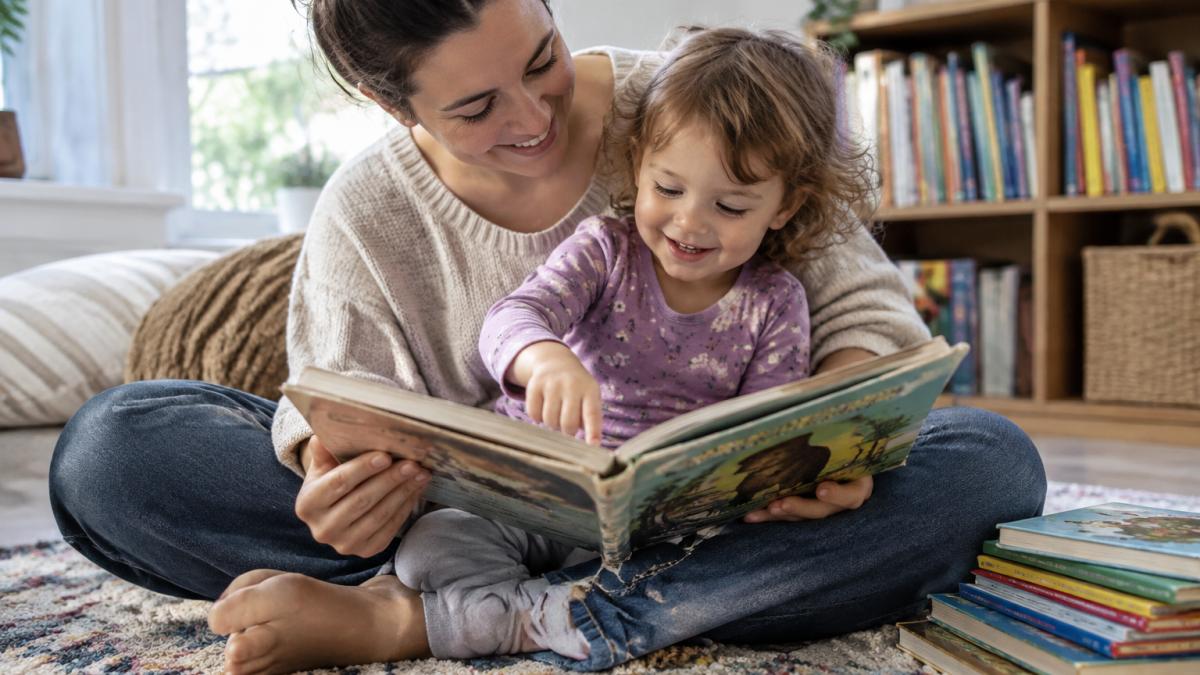
If your little one is squirmy or resistant, these ideas on how to make reading fun for reluctant toddlers give you more to try.
Practical Read-Aloud Techniques That Work
Try one of these tonight. None of them cost a thing.
- Change your voice. Give each character a silly accent and watch attention snap back.
- Pause and let them fill in. Stop before the last word of a line and wait.
- Ask one question per page. "Where's the bear?" beats a quiz.
- Point to words as you read. This builds print awareness.
- Let them turn the pages. Control builds engagement.
- Act it out. Stomp, whisper, or yawn along with the story.
- Retell it together. After the book, ask, "What happened first?"
These are read-aloud techniques you can use with any picture book, no prep required.
When Repetition Might Signal a Concern
Rereading is normal and healthy. So when should a parent pause and ask a question?
Repetition alone is rarely a red flag. But if your child avoids all new books, struggles to rhyme, or seems stuck in ways that worry you, that's a good reason to talk with a teacher or pediatrician. It is not a diagnosis, and it's not a reason to panic.
In Chapter 6 of Literacy Roots, Lauren covers gentle signs worth watching, including rhyming trouble, reversals past age 7, slow reading, and avoidance. The book's chapter on challenges draws on Dr. Sally Shaywitz's work, which notes that dyslexia is unrelated to intelligence and that early intervention works best.
If you're wondering whether your child's habits are typical, this guide to early literacy milestones for toddlers can help you see what's expected at this age. When in doubt, ask. Teachers and pediatricians are there for exactly this.
Picture This: A Real-Life Rereading Moment
Picture a mom in a military family, reading the same taped-together board book to her son in yet another new bedroom. The furniture changes. The book doesn't. That familiar story is the thing that makes the new place feel like home.
That's the quiet power of shared reading. It's not just literacy development. It's comfort, emotional connection, and a routine a child can count on, no matter what else shifts.
Build Your Family's Reading Routine with Literacy Roots
You don't need a teaching background to raise a reader. You need a few minutes, a familiar book, and permission to read it for the hundredth time.
Literacy Roots: Nurturing Your Child's Reading Journey from Birth to Brilliance by Lauren Daugherty pulls the research, real family stories, and simple exercises into one 12-chapter guide, endorsed by Dr. Susan Neuman of NYU. Chapter 2 covers repetition and language nutrition. Chapter 6 covers the gentle signs worth watching. Every chapter includes reflection questions you can actually use.
If you're ready to build a steady habit, our post on daily reading routines and why little and often wins is a good next step.
Your child asking for the same book again isn't a stall tactic. It's a request for mastery, comfort, and one more round of language nutrition. Literacy Roots gives you the tools to meet that request with confidence, from the toddler years through the school years, with strategies that fit your culture, language, schedule, and budget. Get the book and turn tonight's rereading into your family's easiest literacy win.
Frequently Asked Questions
Why do toddlers like to read the same book over and over?
Toddlers crave predictability. A familiar story feels safe and comforting, and they know what's coming next, which builds confidence. Each rereading also lets them focus on something new, like a character's expression or a repeated phrase, without the effort of following a brand-new plot. In Literacy Roots, chapter 2 explains that this repetition is a form of 'language nutrition' that strengthens brain connections for vocabulary and comprehension.
What are the benefits of rereading books to children?
Rereading builds vocabulary through repeated word exposure, helps children recognize language patterns and rhythm, and deepens story comprehension as they notice new details. It also supports memory and recall, and the sense of mastery boosts confidence and emotional connection with the book and with you. Research highlighted in Literacy Roots shows that this kind of serve-and-return interaction, where you talk about the story together, is what makes shared reading so powerful for early literacy.
Should toddlers read new books as well as familiar favorites?
Yes, a balance is ideal. Familiar favorites offer comfort and deep learning, while new books introduce fresh vocabulary and experiences. Try following your child's lead: if they ask for the same book again, go with it. Then sprinkle in a new title during a different part of the day, like after nap or at the library. The goal is a steady diet of both, without pressure. Chapter 3 of Literacy Roots has tips for building a home literacy environment that makes variety feel natural.
How can I make rereading a book more engaging for my toddler?
Change up how you read it. Use different voices for characters, pause and let your toddler fill in a familiar word, or ask simple questions like 'Where is the bear?' Point to pictures and talk about what you see. You can also act out a page or use a prop. These small shifts keep the story fresh and turn rereading into a back-and-forth conversation, which is exactly the kind of interaction that builds language skills.
Is it ever a sign of a problem if my toddler only wants the same book?
Usually, no. A strong preference for one book is common and healthy for toddlers. But if your child shows no interest in any new books over a long period, or if you notice other concerns like trouble with rhyming or avoiding books altogether, it's worth mentioning to your pediatrician or teacher. Literacy Roots chapter 6 covers gentle signs that a child might need extra reading support, and reminds parents that early conversation is key.