 Ultimate guide
How to Teach Reading at Home: A Step-by-Step Guide
Table of Contents
- How to Teach Reading at Home: Identifying Reading Readiness First
- Structured Literacy: The Evidence-Based Foundation
- Phonics Activities for Preschoolers: Multisensory Methods That Work
- How to Teach Sight Words at Home Without Flashcard Burnout
- Building a Daily Reading Routine for Kids That Actually Sticks
- Troubleshooting Reading Plateaus and Child Frustration
- How to Teach Reading at Home When You're Not a Teacher
- Frequently Asked Questions
Last Updated: August 25, 2026
How to Teach Reading at Home: Identifying Reading Readiness First
Learning how to teach reading at home starts well before a child picks up their first book. Reading readiness develops gradually from birth through a predictable sequence of emergent literacy milestones. Emergent literacy is the collection of skills, knowledge, and attitudes about reading and writing that children develop before formal instruction begins. Identifying where your child falls on that continuum is the first step to teaching effectively at home.
Signs of Emergent Literacy in Infants and Toddlers
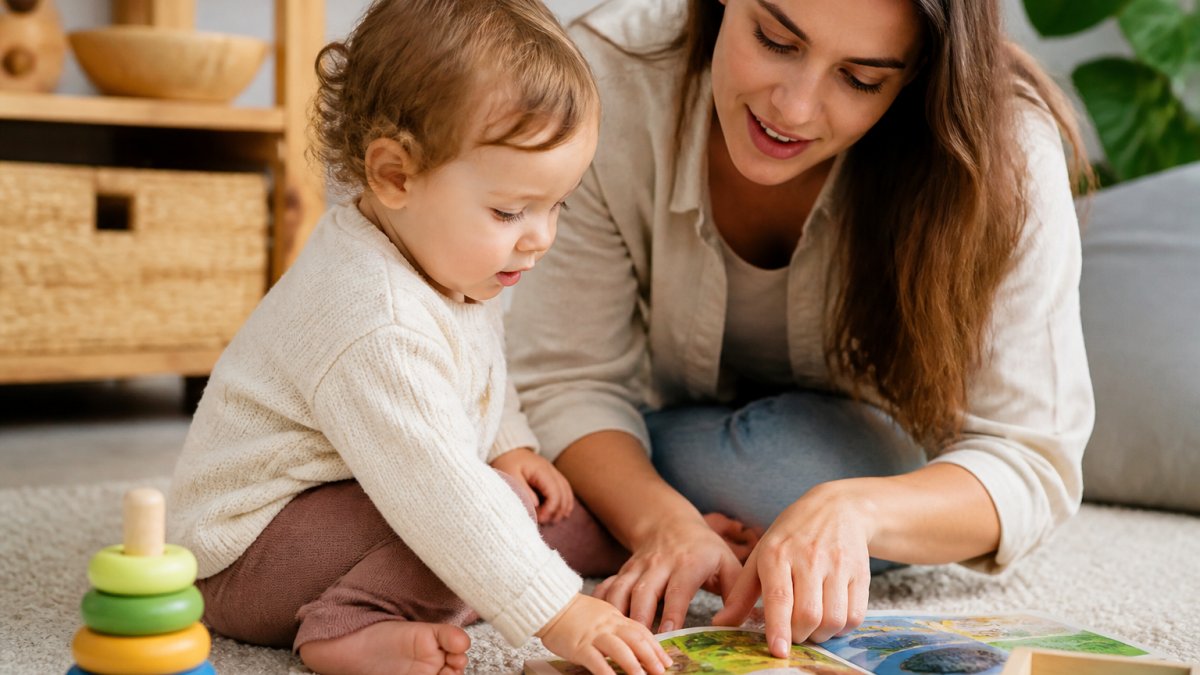
Infants as young as six months show print awareness when they reach for books, respond to your voice reading aloud, or track pictures with their eyes. Toddlers demonstrate narrative skills when they retell a familiar story, even in garbled two-word sentences.
Watch for these early signals:
- Pretending to "read" a book by turning pages and babbling
- Pointing to pictures and naming objects
- Recognizing familiar logos or signs in the environment
- Requesting the same book repeatedly
That last one is orthographic mapping in its earliest form: the brain building a reliable visual and auditory memory for text.
Letter Recognition and Print Awareness Milestones
Letter recognition typically develops between ages three and five. Print awareness, the understanding that text carries meaning and moves left to right, often precedes letter knowledge. Before drilling the alphabet, ensure your child understands that those marks on the page say something. Point to words as you read them aloud and run your finger under the text. These simple habits build the conceptual foundation that formal phonics instruction later depends on.
Structured Literacy: The Evidence-Based Foundation
Structured literacy is the approach most strongly supported by reading science and the backbone of effective home teaching. The International Dyslexia Association's overview of structured literacy describes it as explicit, systematic instruction in phonology, sound-symbol relationships, syllabication, morphology, syntax, and semantics. In practice, this means teaching reading skills in a deliberate sequence, not hoping children absorb them by exposure alone.
Phonological Awareness and Phonemic Awareness Explained
Phonological awareness is the broad ability to hear and manipulate the sound structure of language, including words, syllables, and rhymes. Phonemic awareness is the more specific skill of identifying and manipulating individual phonemes, the smallest units of sound in a word.
These are auditory skills requiring no print. A child who can clap syllables in "but-ter-fly," identify that "cat" and "bat" rhyme, or blend three sounds into a word is building the cognitive scaffolding that decoding later depends on. According to the National Institute for Literacy's findings on early reading, phonemic awareness is one of the strongest predictors of reading success in early childhood education.
Decodable Texts and Orthographic Mapping
Decodable texts are books written specifically to match a child's current phonics knowledge. Every word can be sounded out using patterns the child has already been taught. Orthographic mapping is the mental process by which readers store words as sight words in long-term memory. When a child successfully decodes "ship" multiple times, the brain eventually maps that word automatically. That is how fluency develops, through repeated successful decoding, not rote memorization.
Phonics Activities for Preschoolers: Multisensory Methods That Work
Phonics activities for preschoolers work best when they engage more than one sense at a time. Multisensory learning, combining visual, auditory, and kinesthetic input simultaneously, is particularly effective for young children with short attention spans.
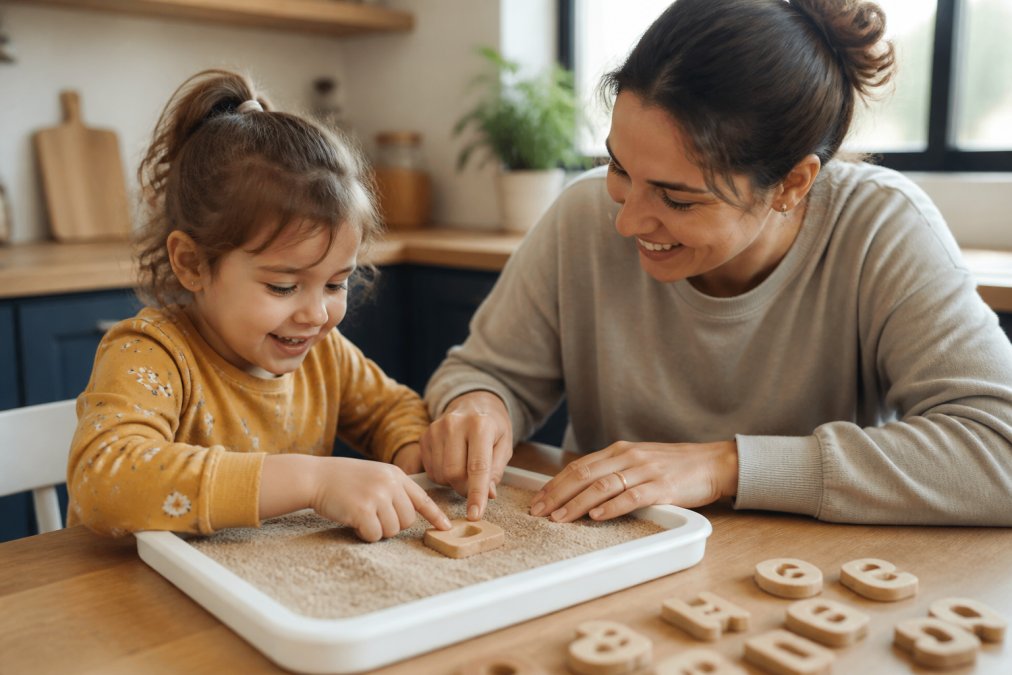
Sand trays, clay letters, and finger painting graphemes create stronger memory traces by activating multiple neural pathways at once.
Blending and Segmenting Games You Can Do Today
Blending is pushing sounds together to form a word. Segmenting is pulling a word apart into its individual phonemes. Both skills are essential for decoding and encoding.
Try these today:
- Sound Stretch: Say a word in slow motion, stretching each phoneme: "ssss-aaa-t." Ask your child to blend it back into a word.
- Tap It Out: Have your child tap their finger on the table for each sound in a word.
- Robot Talk: Speak in "robot voice," separating phonemes, and have your child translate back to normal speech.
- First Sound Hunt: Walk through the house naming objects and identifying the first phoneme in each word.
Done consistently, these five-minute activities build phonemic awareness faster than most workbooks.
Multisensory Learning Activities for Letter-Sound Correspondence
Letter-sound correspondence is the understanding that specific letters and letter combinations represent specific sounds. Teaching this explicitly and multisensorially is the core of phonics instruction.
| Activity | Sense Engaged | Best Age Range |
|---|---|---|
| Sand tray letter tracing | Tactile + visual | 2-5 years |
| Letter sound sorting with objects | Visual + auditory | 3-5 years |
| Playdough letter formation | Tactile + kinesthetic | 3-6 years |
| Clapping syllable games | Auditory + kinesthetic | 2-5 years |
| Letter sound hopscotch | Kinesthetic + auditory | 4-6 years |
How to Teach Sight Words at Home Without Flashcard Burnout
Knowing how to teach sight words at home without turning it into a dreaded daily drill is one of the most common challenges parents face. Sight words are high-frequency words that appear often in text. Some are decodable ("and," "in," "it"). Others contain irregular patterns ("said," "the," "was"). Both benefit from repeated exposure in context, not just recognition in isolation.
Better approaches than flashcard drills alone:
- Sentence building: Write sight words on cards and have your child arrange them into sentences
- Word hunts: Find target words in books you are already reading together
- Environmental labeling: Post sticky notes with sight words on common household objects
- Repeated reading: Read the same simple text multiple times across a week; sight words become automatic through repeated successful encounters
The goal is orthographic mapping, not memorization through pressure. Children who are stressed do not map words efficiently.
Building a Daily Reading Routine for Kids That Actually Sticks
A daily reading routine for kids does not need to be long to be effective. Consistency beats duration every time. Fifteen minutes of focused, joyful reading every day produces better outcomes than an hour of grudging effort twice a week.
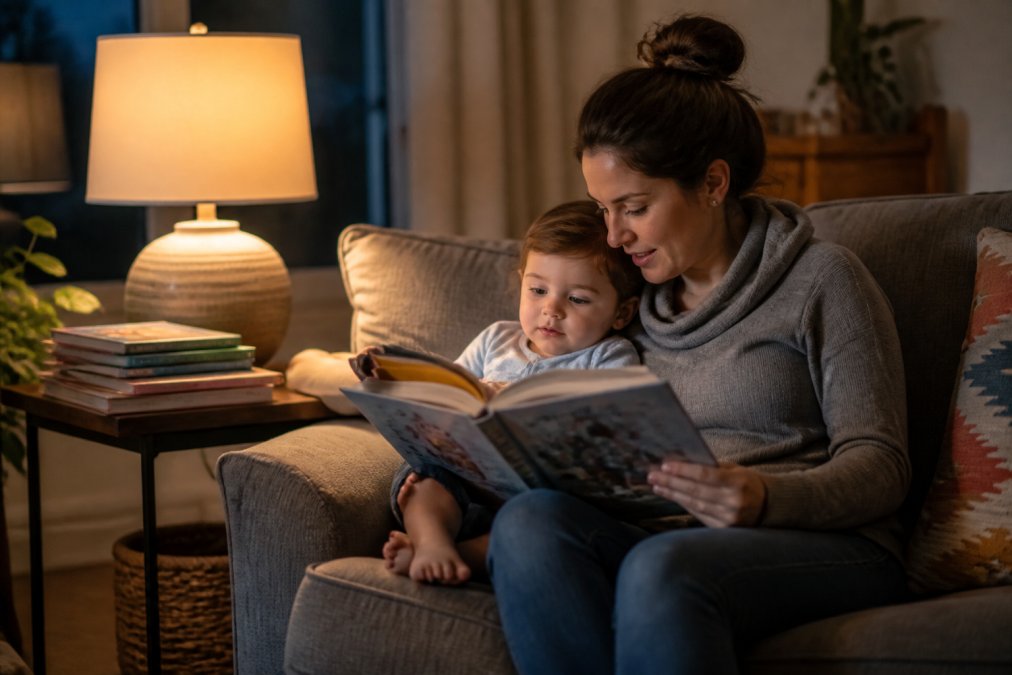
The most effective routines are anchored to an existing habit: after breakfast, before bath, at bedtime. The anchor removes decision-making friction.
Selecting Age-Appropriate Books and Decodable Readers
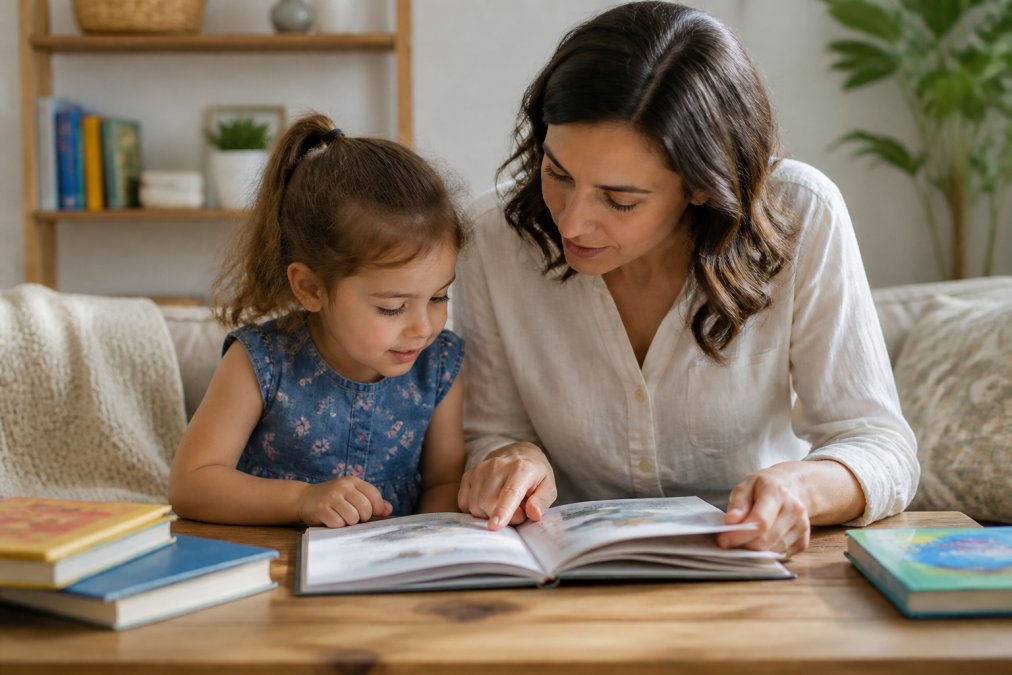
For children learning to decode, the right book is one they can read with roughly ninety percent accuracy. Too easy and there is no growth. Too hard and frustration sets in. For independent reading practice, use decodable readers matched to your child's current phonics level. For read-alouds, choose books well above their independent level to build vocabulary and narrative skills without the cognitive load of decoding.
Digital vs. Physical Books: What the Research Suggests
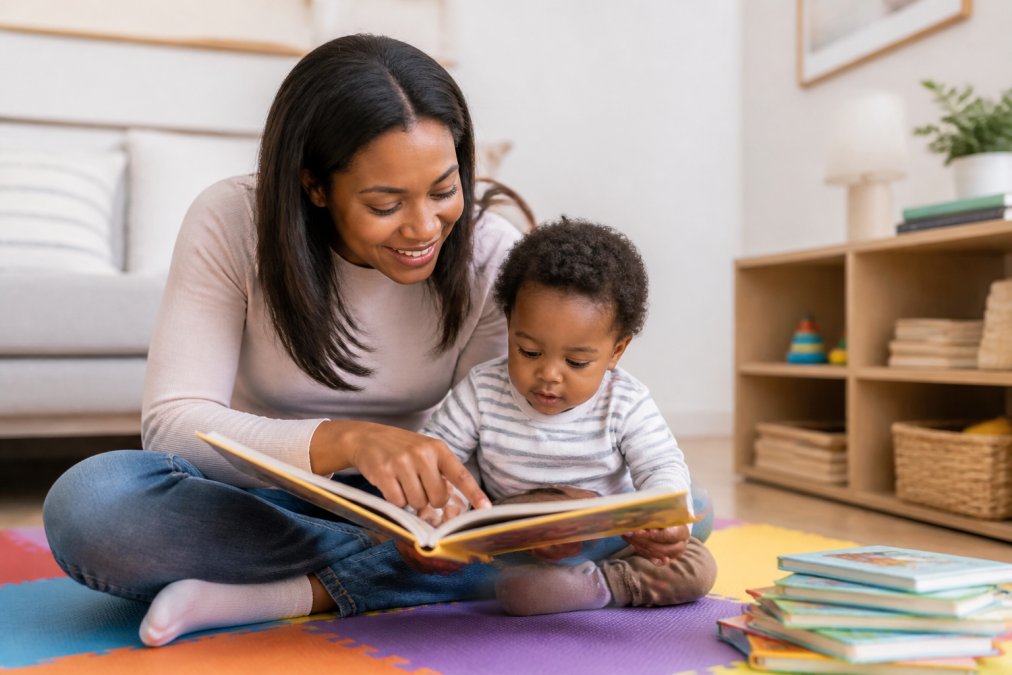
For young children learning to read, physical books have meaningful advantages. According to research published by the American Academy of Pediatrics, shared reading with physical books tends to produce more parent-child dialogue and richer language interaction than e-book reading. High-quality digital texts without distracting animations can support reading fluency practice, but the key distinction is whether the digital format supports or competes with the act of reading itself.
Troubleshooting Reading Plateaus and Child Frustration
Reading plateaus are normal and signal that the child is consolidating skills before the next leap forward. The mistake most parents make is interpreting a plateau as a reason to push harder. Pushing harder into frustration rarely works.
Identify where the plateau is occurring:
- Decoding plateau: Return to phonemic awareness activities. The auditory skill may need more development before decoding clicks.
- Fluency plateau: Increase repeated reading of familiar texts. Reading the same decodable book multiple times in a week builds fluency faster than always introducing new material.
- Comprehension plateau: Focus on vocabulary acquisition and narrative skills through read-alouds and conversation about books.
Bilingual and Multilingual Reading Support at Home
Bilingual and multilingual children are not behind. With the right scaffolding, they develop stronger phonological awareness than monolingual peers over time. Support literacy in the home language first. A strong foundation in one language transfers to additional languages.
Practical strategies for multilingual households:
- Read books in both languages during the same week, not the same session
- Use the home language for storytelling and narrative building
- Choose decodable texts in both languages when possible
- Do not correct code-switching during reading; it is a sign of sophisticated language processing
How to Teach Reading at Home When You're Not a Teacher
The most common objection from parents is: "I don't have a teaching background. What if I do this wrong?" You will not do it perfectly. What matters is consistency, warmth, and a basic understanding of the sequence of skills.
The structured literacy sequence is straightforward:
- Build phonological awareness through play and song
- Introduce letter-sound correspondence explicitly, one or two graphemes at a time
- Practice blending and segmenting with decodable words
- Read decodable texts matched to current phonics knowledge
- Build sight word recognition through repeated reading in context
- Read aloud books well above the child's independent level every day
Lauren's Literacy Lounge sells Literacy Roots Nurturing Your Child's Reading Journey from Birth to Brilliance to empower parents to be the best first teachers. The program translates evidence-based structured literacy into a format parents can actually use at home, from birth through early reading.
As documented in the National Reading Panel's report on effective reading instruction, the most effective reading instruction is explicit, systematic, and cumulative. Parents who follow that sequence at home give their children a measurable advantage in literacy development.
| Skill Stage | Key Activities | When to Move Forward |
|---|---|---|
| Emergent literacy | Read-alouds, print pointing, rhyme play | When child shows interest in letters and text |
| Phonological awareness | Rhyming, syllable clapping, sound games | When child can identify and manipulate phonemes |
| Letter-sound correspondence | Multisensory phonics, grapheme introduction | When child knows 5-10 sounds reliably |
| Decoding with decodable texts | Blending practice, decodable readers | When child reads with 90%+ accuracy |
| Fluency and sight words | Repeated reading, word hunts in context | When reading feels automatic and enjoyable |
Frequently Asked Questions
How can I tell if my child is ready to start reading?
Reading readiness shows up in small but clear ways: your child notices print on signs and labels, pretends to read books, asks what words say, and can rhyme or clap out syllables in words. These are signs of emergent literacy and phonological awareness developing naturally. You don't need to wait for a specific age. If your child is curious about letters and sounds, that curiosity is your green light to begin structured, playful literacy activities at home.
What is the most effective sequence for teaching a child to read?
A structured literacy sequence starts with phonological awareness, hearing and playing with sounds, before moving to letter-sound correspondence (phonics), then blending and segmenting words, then reading decodable texts, and finally building reading fluency and comprehension. Sight words are woven in alongside phonics, not taught in isolation. This sequence mirrors what reading science supports and is the same foundation used in evidence-based programs across early childhood education.
How much time should I spend teaching reading at home each day?
For toddlers and preschoolers, 10 to 15 focused minutes per day is enough, short sessions prevent frustration and build reading stamina gradually. Add a shared read-aloud of 15 to 20 minutes separately, and you've created a complete daily reading routine for kids without overwhelming anyone. Consistency matters far more than session length. Five days a week of short, intentional practice produces stronger literacy development than one long weekend session.
How do I support a child who is struggling with reading at home?
First, back up to where reading felt easy and rebuild confidence there. Struggling often signals a gap in phonemic awareness or a specific phonics skill, not a broader problem. Use multisensory activities, tracing letters, tapping out phonemes, using manipulatives, to reinforce decoding from a different angle. If plateaus persist for several weeks despite consistent practice, a reading intervention checklist or a consultation with a literacy specialist can help pinpoint exactly where the breakdown is happening.
Knowing where to start is the hardest part of teaching reading at home. Lauren's Literacy Lounge removes that barrier with a structured, birth-to-brilliance framework that walks parents through every stage, from emergent literacy through early fluency, without requiring any prior teaching experience. Visit Lauren's Literacy Lounge to explore how the program supports parents as their child's most important first teacher.
This article was written using GrandRanker