 Ultimate guide
Get Started With Early Literacy: A Parent's Guide
Table of Contents
- What Is Early Literacy and Why It Matters
- The Six Early Literacy Skills You Need to Know
- Early Literacy Activities for Toddlers: Practical Starting Points
- How Long Should I Read to My Child Daily
- Print Awareness Activities for Preschoolers
- Phonological Awareness Exercises to Build Sound Skills
- Building a Literacy-Rich Home Environment From Birth
- Conclusion: Start Your Child's Literacy Journey Today
- Frequently Asked Questions
Last Updated: September 3, 2026
What Is Early Literacy and Why It Matters
Early literacy refers to the skills, knowledge, and attitudes about reading and writing that children develop from birth through age five. It's not about teaching a toddler to read fluently, but building foundational competencies that make reading possible later. The journey starts at birth, hearing language, seeing print, and experiencing stories create neural pathways that support reading development. These early experiences matter far more than formal instruction or expensive programs.
Children who develop strong early literacy skills enter kindergarten with significant advantages: larger vocabularies, better phonological awareness, and stronger motivation to read (peer-reviewed research). The foundation you build at home is the most powerful predictor of your child's future reading success.
The Six Early Literacy Skills You Need to Know
The six early literacy skills form the cornerstone of reading development.
Phonological awareness is the ability to recognize and work with sounds in spoken language, identifying rhymes, recognizing that words are made of smaller sound units, and clapping syllables. A child might notice that "cat" and "bat" sound similar at the end.
Phonemic awareness, a subset of phonological awareness, focuses on individual phonemes. It's recognizing that "mat" starts with the /m/ sound or that "dog" ends with /g/. This skill directly supports decoding when children learn letter-sound relationships.
Print awareness is understanding that print carries meaning and follows conventions. Young children learn that we read left to right, top to bottom, that spaces separate words, and that letters differ from numbers.
Letter knowledge involves recognizing letter shapes and understanding that letters have names and corresponding sounds. Familiarity with common letters, especially those in their own name, supports later reading development.
Vocabulary development is the growth of word knowledge. Children with larger vocabularies find reading comprehension easier because they understand more of the words they encounter.
Narrative skills are the ability to understand and tell stories. Strong narrative skills support reading comprehension because stories follow predictable structures that help readers anticipate what comes next.
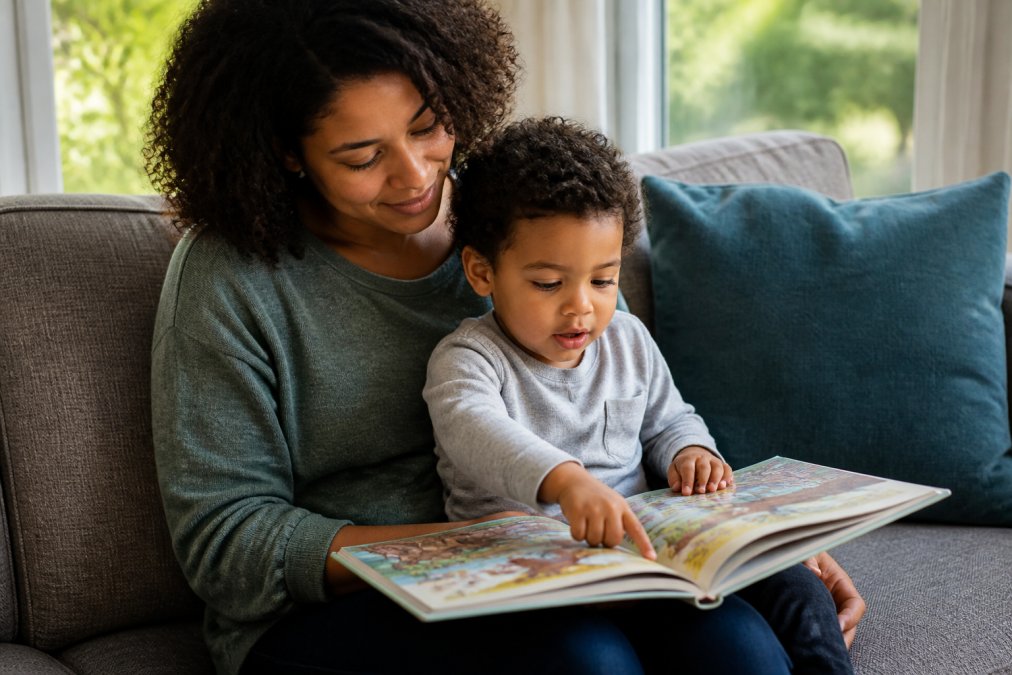
Early Literacy Activities for Toddlers: Practical Starting Points
Starting early literacy activities with toddlers doesn't require special materials or scheduled lessons. These practical starting points work for children from infancy through age three.
Read aloud daily. This is the single most impactful activity you can do. Reading aloud exposes your child to language patterns, new vocabulary, and the connection between print and meaning. Choose books with repetitive text, bright illustrations, and sturdy pages. Let your child choose books, turn pages, and point to pictures. Short, frequent reading sessions beat longer sessions that feel like a chore.
Talk about everything. Narrate your day as you move through it. When changing a diaper, describe what you're doing. When cooking, talk about ingredients and actions. This constant language exposure builds vocabulary and helps children understand that words describe their world.
Sing songs and recite nursery rhymes. Songs and rhymes develop phonological awareness and make language playful. Repetition helps children learn and anticipate what comes next.
Play with sounds. Make animal sounds together, exaggerate mouth movements, and encourage your child to imitate. This playful sound exploration builds phonemic awareness naturally.
Point to print. As you move through your day, point out words on signs, labels, and clothing. Simply drawing attention to print shows your child that written symbols carry meaning.
Create opportunities for emergent writing. Give your toddler chunky crayons and paper. Scribbling is emergent writing, your child's early attempt to represent meaning through marks on paper. Ask what they've drawn and write down what they tell you.
How Long Should I Read to My Child Daily
Consistency matters more than duration. For infants, even five to ten minutes of shared reading is valuable (aap.org). Toddlers typically engage with books for ten to twenty minutes, though this varies widely. Watch your child's cues, if they're losing interest, wrap up. A positive, brief reading experience is better than forcing a longer session.
The key is daily reading, even if sessions are short. Reading five minutes every single day builds stronger literacy skills than reading thirty minutes once a week (peer-reviewed research). Many parents find that reading before bedtime works well because it's already part of the routine. Don't stress about completing every page; repetition strengthens understanding of language patterns and builds familiarity with print.
Print Awareness Activities for Preschoolers
Preschoolers are developing stronger understanding of how print works. They're beginning to recognize letters, understand directionality, and see connections between spoken and written words.
Point out environmental print. Take walks and notice words around your neighborhood: store signs, street signs, logos. Ask your preschooler to find specific letters or words.
Create a print-rich home. Label items in your home with words and pictures. Your preschooler sees that objects have written names.
Play with magnetic letters. Magnetic letters on the refrigerator let children manipulate letter forms and experiment with arranging letters.
Read alphabet books. Alphabet books connect letters with pictures and words. Talk about the letter shape, the sound it makes, and the picture that represents it.
Write together. Help your preschooler write simple words or messages. Celebrate their attempts; invented spelling and letter reversals are normal parts of development.
Play rhyming games. Ask your child to think of words that rhyme with common words. This playful approach builds phonological awareness.
Phonological Awareness Exercises to Build Sound Skills
Phonological awareness is foundational for later reading success. These exercises are playful, require no materials, and fit easily into daily routines.
Clap syllables. Say a word and clap once for each syllable. "El-e-phant" gets three claps. Start with familiar words: your child's name, common animals, favorite foods.
Identify rhymes. Read books with obvious rhyming patterns. Pause before the rhyming word and let your child predict it.
Play I-Spy with sounds. Listen for sounds instead of looking for objects. "I spy something that starts with the /s/ sound. What is it?" This builds phonemic awareness.
Sing sound songs. Sing songs that emphasize particular sounds. Traditional songs like "Apples and Bananas" change vowel sounds throughout, making sound manipulation fun.
Create sound effects. Read books with sound words and encourage your child to make the sounds. This makes reading interactive.
Play rhyming riddles. Give clues about a word that rhymes with another word. "I'm thinking of something that rhymes with cat. It's an animal that barks. What is it?"
Building a Literacy-Rich Home Environment From Birth
A literacy-rich environment means surrounding your child with books, language, and opportunities to engage with print throughout their day.
Stock accessible books. Keep books within your child's reach on low shelves or in baskets. Include books about familiar topics and books with diverse characters. Rotate books regularly to maintain interest.
Make reading visible. Let your child see you reading. Children learn that reading is valued when they see adults doing it.
Limit screen time intentionally. Screens shouldn't replace interactive literacy activities. When you do use screens, choose high-quality programming and watch together.
Create conversation opportunities. Talk during routines. Ask open-ended questions: "What do you notice about this picture?" These conversations build vocabulary and narrative skills.
Visit the library regularly. Libraries offer free books, storytimes, and community. Regular library visits show your child that books are accessible and valued.
Use books to explore emotions and experiences. When your child experiences something new, find books about that experience. Reading about characters in similar situations helps children process emotions.
Build a home library gradually. A modest collection of well-loved, frequently-read books is more valuable than a large collection gathering dust.
Conclusion: Start Your Child's Literacy Journey Today
Early literacy development is fundamentally about connection. When you read with your child, talk about their day, sing songs together, and point out words in your world, you're showing your child that language, stories, and reading are valuable parts of life.
The strategies in this guide work because they're built on how children actually learn: through play, repetition, and meaningful interaction with caring adults. You don't need to be a teacher or have a background in education. You simply need to be present and intentional about the language and literacy experiences you create.
Lauren's Literacy Lounge's Literacy Roots program provides structured guidance, age-specific activities, and support for parents who want to deepen these foundational practices. Whether you're starting from birth or catching up with an older toddler, the same principles apply: consistency, playfulness, and genuine engagement with your child build the strongest literacy foundation.
Start where you are. If you're not currently reading aloud, begin with five minutes a day. If your child doesn't have many books, visit your library this week. Your child's literacy journey begins with you. The conversations you have, the books you share, and the language-rich environment you create are the most powerful tools available. Begin today, be consistent, and watch your child's love of language and reading flourish.
Early literacy development doesn't require expensive programs or complicated systems. At Lauren's Literacy Lounge, we believe that parents are their child's most important educators, and the everyday moments you share, reading together, talking about your day, singing songs, build the strongest foundation for reading success. Get started with Literacy Roots and access guided activities, expert support, and a community of parents committed to nurturing their child's reading journey from birth forward.
Frequently Asked Questions
Q: What are the five basic early literacy skills?
A: The five foundational early literacy skills are phonological awareness (hearing and playing with sounds), print awareness (understanding how print works), letter knowledge (recognizing letters and their sounds), vocabulary development (building word knowledge), and narrative skills (understanding and telling stories). These skills develop across infancy and the preschool years and form the foundation for reading success. They overlap and develop simultaneously rather than in strict sequence.
Q: How long should I read to my child daily?
A: Consistency and engagement are key. For infants, even 5-10 minutes of shared reading counts. Many families find success with multiple shorter reading sessions throughout the day, during meals, before naps, and at bedtime, rather than one long session.
Q: At what age should I start early literacy activities?
A: You can begin early literacy practices from birth. Newborns benefit from hearing your voice, being read to, and experiencing language-rich interactions. Even infants who cannot yet understand words are building phonological awareness and developing a love of books. Starting early creates strong neural pathways for language and literacy development.
Q: What if my child doesn't seem interested in books yet?
A: Lack of interest is common and normal at young ages. Try different approaches: choose books with textures, bright colors, or sounds; keep sessions short; let your child lead by pointing or turning pages; read during naturally engaging times like after meals; and model enthusiasm yourself. Print motivation, the desire to engage with books, develops gradually through positive, pressure-free exposure to reading and storytelling.
This article was written using GrandRanker