 Ultimate guide
Early Literacy Milestones for Toddlers: A Parent Guide
Table of Contents
- What Are Early Literacy Milestones (and Why They Matter)
- Literacy Milestones by Age: 0-6 Months, 6-12 Months, 1-3 Years
- Signs of Reading Readiness in Toddlers
- Early Literacy Activities for Toddlers You Can Start Today
- Screen Time and the Modern Literacy Journey
- How to Teach Reading at Home Without the Stress
- Supporting Every Learner: Bilingual and Neurodivergent Kids
- Common Mistakes Parents Make (and What to Do Instead)
- A Parent's Guide to the Journey Ahead
- Frequently Asked Questions
Last Updated: September 9, 2026
What Are Early Literacy Milestones (and Why They Matter)
Early literacy milestones are the predictable developmental stages through which children acquire pre-reading skills, from their first reactions to your voice through their earliest attempts at storytelling. These markers of early literacy milestones are not about formal teaching; they are about the foundational abilities that make reading possible later. At Lauren's Literacy Lounge, we believe you do not need a teaching degree to nurture these skills.
Literacy development begins at birth, not when a child starts school. The brain wires itself for language from the very first moments of life, responding to your voice and speech rhythm. Understanding these early literacy milestones helps you recognize what your child is ready to learn next, transforming everyday moments into learning opportunities.
Below, we'll walk through what to expect at each stage, the signs that your toddler is ready to read, and practical activities for your daily routine, plus modern challenges from screen time to bilingual and neurodivergent learners.
Literacy Milestones by Age: 0-6 Months, 6-12 Months, 1-3 Years
Tracking early literacy milestones by age helps you meet your child where they are developmentally rather than pushing them toward skills they are not ready for. These stages are fluid; children often bounce between them, and that is perfectly normal. What matters is providing a steady stream of language, books, and conversation.
0-6 Months: Building Receptive Language
During these first months, your baby is building receptive language, the ability to understand words before they can speak them. Your baby is absorbing the melody of your voice, distinguishing between speech patterns, and turning toward familiar sounds. This is the foundation of phonological awareness, the ability to hear and manipulate the sounds of language.
Your primary job is to talk, sing, and read constantly. Narrate your day as you change diapers or prepare bottles. The content matters less than the quantity and warmth of your language. Board books with high-contrast images are ideal, but the real value is in the closeness and the sound of your voice.
6-12 Months: Turning Pages and Babbling
Around six months, babies begin showing print awareness by grabbing at books and mouthing them, a legitimate form of exploration. They start babbling with varied intonation, mimicking the rise and fall of your conversational speech. This is the beginning of conversational turn-taking, even though the words are not there yet.
Let your baby handle sturdy board books and chew on them. Point to pictures and name objects with clear, simple words. You will notice your child starting to look at the book when you say a familiar word, a sign that their receptive language is growing rapidly. This is also the perfect time to introduce nursery rhymes, as the rhythm and rhyme build auditory discrimination skills.
1-3 Years: Vocabulary Explosion and Storytelling
The toddler years bring a dramatic vocabulary explosion, often jumping from a handful of words to several hundred by age three. This is when expressive language takes off, and you will hear your child begin to string two and three words together into simple sentences. They are also developing narrative skills, the ability to describe events and, eventually, to tell simple stories.
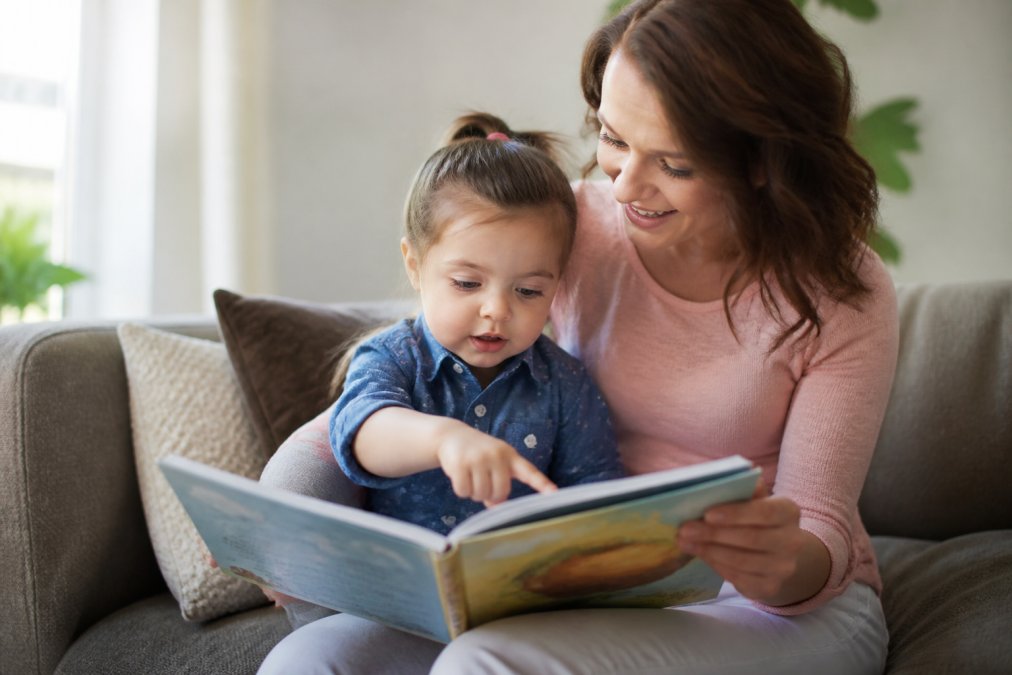
This is the most active phase of early literacy milestones for toddlers. Your child may demand the same book repeatedly, which builds alphabet knowledge and book handling skills. Encourage them to "read" the book to you, turning pages and reciting familiar phrases from memory. Ask questions like "What do you think happens next?" to stretch their storytelling abilities and build comprehension.
Signs of Reading Readiness in Toddlers
Recognizing the signs of reading readiness in toddlers helps you know when to introduce more structured pre-reading activities. These signs are not about pushing academics early; they are about noticing when your child's natural curiosity is pointing toward letters and words.
Watch for these key indicators that your toddler is ready for more deliberate literacy work:
- Pretend reading: Your child flips through a book and "reads" the story aloud from memory, demonstrating narrative skills and print awareness.
- Letter recognition: They point to letters in their environment, like the "M" on a McDonald's sign or the first letter of their name.
- Rhyming play: They laugh at or attempt to complete rhymes in familiar books and songs, showing developing phonemic awareness.
- Questions about print: They ask "What does that say?" or "What letter is that?" which signals a readiness for explicit alphabet knowledge.
A common mistake is to interpret a lack of these signs as a problem. Children develop at different rates, and a toddler who is more interested in climbing than in books is not behind. Early intervention is valuable, but so is patience. Continue providing a literacy-rich environment and let your child set the pace. Reading readiness is not a single switch; it is a gradual process of accumulating pre-reading skills across many domains.
Early Literacy Activities for Toddlers You Can Start Today
The best early literacy activities for toddlers are woven into your existing routine rather than treated as separate lesson times. These activities require no special materials, just your attention and a willingness to follow your child's lead.
Try these five activities that build multiple literacy skills at once:
- Name everything on a walk. Point to trees, dogs, trucks, and clouds. This builds vocabulary acquisition and connects words to real-world objects.
- Sing nursery rhymes with actions. The movements reinforce the rhythm of language and build phonological awareness through rhyming and alliteration.
- Let your child "write." Give them crayons and paper and let them scribble. This develops fine motor skills and the understanding that marks carry meaning.
- Make books interactive. Ask "Where is the dog?" and let them point. This builds joint attention and comprehension.
- Tell stories about your day. "First we went to the store, then we came home." This models narrative skills and sequencing.
These activities are most effective when brief and playful. A toddler's attention span is short, and forcing a reluctant child to sit through a book creates negative associations. The goal is to make language and books a source of joy, not pressure.
Screen Time and the Modern Literacy Journey
Screen time is an unavoidable consideration for modern parents, and its impact on early literacy milestones for toddlers is a source of genuine concern. The research is still evolving, but the consensus among child development experts is that passive screen time does not build the same language skills as live, interactive conversation.
The problem is not the screen itself; it is the lack of conversational turn-taking that screens often encourage. When you read a book with your child, you pause, ask questions, and respond to their babbles. Most screen content, even educational programming, does not offer this back-and-forth. According to guidance from the American Academy of Pediatrics on digital media use, the quality of interaction matters more than the quantity of time spent with media.
If you do use screens, watch together and talk about what you see. Treat the screen as a prompt for conversation rather than a babysitter. Pause the video to ask questions and connect the content to your child's real-world experiences. This transforms passive viewing into an interactive learning opportunity that supports oral language development.
How to Teach Reading at Home Without the Stress
Learning how to teach reading at home does not require a formal curriculum or a strict daily schedule. The most effective approach is to embed literacy instruction into your natural interactions, making it a seamless part of your family's life rather than another task on your to-do list.
The first step in how to teach reading at home is to abandon the idea that you are "teaching" at all. You are modeling, narrating, and playing. Your child learns more from watching you read a book for pleasure than from any flashcard drill. Your enthusiasm is contagious, and your attitude toward reading shapes theirs more than any specific activity.
Building a Literacy-Rich Environment
A literacy-rich environment surrounds your child with print and books at every turn. This does not mean an expensive home library; it means making reading materials accessible and visible. Keep a basket of board books in the living room, a few in the car, and some in the nursery.
Label common objects in your home with simple words, like "door," "chair," and "bed." This builds print awareness by showing that written words carry meaning. Keep magnetic letters on the refrigerator and point out letters on cereal boxes and street signs. The goal is to make alphabet knowledge a natural part of your child's environment, not a subject to be studied.
The Power of Interactive Reading
Interactive reading is the single most powerful tool you have for building early literacy milestones. This technique, sometimes called dialogic reading, involves asking questions and encouraging your child to become an active participant in the story rather than a passive listener.
Instead of simply reading the words on the page, try the PEER sequence:
- Prompt your child to say something about the book ("What is the bear doing?")
- Evaluate their response ("Yes, he is eating honey!")
- Expand on their answer ("He is eating honey from a big yellow pot.")
- Repeat the expanded phrase to reinforce the new vocabulary
This approach builds vocabulary acquisition, comprehension, and expressive language far more effectively than straight reading. It also strengthens your bond with your child, making reading a time of connection rather than instruction.
Supporting Every Learner: Bilingual and Neurodivergent Kids
The standard timeline for early literacy milestones for toddlers assumes a monolingual, neurotypical child, but many families do not fit that mold. For bilingual households, the milestones look different, and that is not a cause for concern. A child learning two languages may have a smaller vocabulary in each language individually, but their combined vocabulary is typically on par with a monolingual peer.
The key for bilingual families is consistency and exposure. The American Speech-Language-Hearing Association on bilingual language development notes that children can learn two languages without confusion or delay when they receive adequate exposure to both. Do not abandon your home language in favor of English, as this can weaken the receptive language foundation you have already built.
For neurodivergent children, particularly those on the autism spectrum, literacy development may follow a different path. Some children develop decoding skills early but struggle with comprehension or joint attention. Others may show intense interest in letters and numbers before they are verbally fluent. The most important principle is to follow your child's interests and strengths.
If your child does not respond to typical read-aloud strategies, adapt them. Some children prefer books about their special interests, while others respond better to audiobooks or apps that highlight text as it is spoken. The goal is not to force a particular method but to find the entry point that engages your child. Trust your instincts, and if you have concerns about your child's development, seek guidance from a pediatrician or a speech-language pathologist who can assess whether early intervention is warranted.
Common Mistakes Parents Make (and What to Do Instead)
Even well-intentioned parents make predictable errors when trying to support early literacy milestones. The good news is that these common mistakes are easy to correct once you recognize them.
The most frequent error is pushing too hard, too early. Drilling flashcards with a 15-month-old or becoming frustrated when a toddler will not sit still for a full book creates stress for both of you. This stress undermines the positive associations that are the foundation of a lifelong reading habit. Instead, follow your child's cues and keep sessions short and joyful.
A second common mistake is stopping reading aloud once a child can read independently. This is a missed opportunity. Reading books that are slightly above your child's level exposes them to richer vocabulary and more complex narratives than they can access on their own. The National Institute for Literacy on shared reading emphasizes that shared reading continues to build comprehension and vocabulary well into the elementary years.
A third mistake is neglecting the connection between fine motor skills and literacy. Writing requires hand strength and coordination. A child who spends all their time on screens and never colors, scribbles, or plays with playdough may struggle with handwriting later. Encourage plenty of hands-on play to build the muscles your child will need for writing.
A Parent's Guide to the Journey Ahead
Tracking early literacy milestones for toddlers is less about checking boxes and more about being present and responsive. Your role is not to be a teacher in the formal sense but to be a companion on your child's journey toward literacy, pointing out the wonders of language along the way.
The most effective parents are not the ones with the most elaborate lesson plans; they are the ones who talk, sing, and read with their children every day. They create a home where books are loved and language is celebrated. They trust their instincts and follow their child's lead.
At Lauren's Literacy Lounge, we believe that parents are the best first teachers their children will ever have. Our program, Literacy Roots Nurturing Your Child's Reading Journey from Birth to Brilliance, is designed to empower parents to be the best first teachers. We understand the challenges of busy family life, including the unique stresses faced by military families who move frequently and want to maintain consistent educational routines for their children.
If you are ready to become your child's most effective literacy partner without adding stress or screen time to your day, explore how Lauren's Literacy Lounge can support you. Get started with our approach and discover the joy of watching your child fall in love with reading.
Frequently Asked Questions
What are the 5 basic early literacy skills?
The five core early literacy skills are print awareness (noticing and handling books), phonological awareness (hearing and playing with sounds), letter knowledge (recognizing the alphabet), vocabulary (knowing word meanings), and narrative skills (telling stories and describing events). These skills develop from birth through everyday conversations, songs, and shared reading. You don't need formal lessons to build them. Simple actions like pointing to words as you read or singing nursery rhymes during bath time naturally lay the foundation for these early literacy milestones for toddlers.
My toddler isn't talking yet. Does that mean they're not hitting literacy milestones?
Not at all. Receptive language, what your child understands, develops before expressive language, which is spoken words. An 8-month-old who turns toward your voice, babbles back during conversations, or reaches for a board book is showing strong emergent literacy signs. At 12 months, many children understand 50 or more words while only speaking a few. If your child is meeting nonverbal milestones like joint attention, pointing to request, and responding to their name, they are on track. Talk to your pediatrician if you have concerns, but a quiet toddler is often still a rapid learner.
How many words should a 2-3 year old be saying?
Most 2-year-olds have a vocabulary of about 50 to 300 words and begin combining two words like "more milk" or "daddy go." By age 3, that range typically expands to 300 to 1,000 words, and children start speaking in short sentences of three to four words. Focus less on exact counts and more on growth. A child who adds new words weekly and uses language to request or comment is progressing well. If your child's vocabulary seems stalled or they lose words they once used, ask your pediatrician about an early intervention evaluation.
When should a toddler start recognizing letters?
Letter recognition typically begins between 18 months and 3 years, but it's a gradual process. Many toddlers first recognize the first letter of their own name, often around age 2. By age 3, some children can identify several uppercase letters, especially ones they see frequently. Alphabet knowledge is one of the strongest predictors of later reading success, but you don't need flashcards. Point out letters on cereal boxes, road signs, and in books. Make it playful: "That's a 'S' for Sam! Can you find another 'S'?" This builds reading readiness naturally without pressure.
How can I support my toddler's literacy development at home?
The most effective early literacy activities for toddlers take less than 15 minutes a day. Read aloud daily, even if your toddler only sits still for one page. Narrate your day to build vocabulary: "I'm folding the blue towel." Sing nursery rhymes, which build phonological awareness and auditory discrimination. Encourage storytelling by asking open questions like "What did you see at the park?" Keep board books in every room and in the car. The goal is a literacy-rich environment where books are a normal, fun part of life, not a structured lesson.
Is screen time harmful to early literacy development?
The American Academy of Pediatrics advises avoiding screens for children under 18 months, except for video chatting, and limiting high-quality programming to one hour per day for ages 2 to 5. The bigger concern is what screen time replaces. If a child watches a show alone, they lose conversational turn-taking and back-and-forth interaction, which are critical for language development. When screens are used, watch together and talk about what you see. A 10-minute video with a parent is far more valuable than 30 minutes of solo viewing.