 How-to
When to Start Reading to Your Newborn
Last Updated: November 3, 2026
Quick Summary
The answer to when to start reading to your newborn is simple: today. You do not need to wait until your baby can sit up or stop chewing pages, and short sessions of two to five minutes are plenty. Start on day one and stop whenever your baby is done.
- Aim for two to five minutes per reading session and stop when your baby turns away or arches their back.
- Start a bedtime reading habit in the first few weeks using the same short book each night.
- Choose board books with high-contrast images, simple faces, and textures to touch.
- Read during calm, fed moments and narrate your day even when you skip the book.
- Read in the language you are most comfortable with, since a home language strengthens English learning later.
Table of Contents
- The First Chapter Begins on Day One
- The Benefits of Reading to Babies: Building a Brain and a Bond
- How Long to Read to a Newborn (Hint: It's Shorter Than You Think)
- When to Start Reading to Baby at Bedtime
- The Best Books for Newborns: High Contrast and High Cuddles
- Making It Work: Practical Tips for Fussy Babies and Tired Parents
- Your Next Step: Start Your Baby's Literacy Story Tonight
- Frequently Asked Questions
The First Chapter Begins on Day One
You're home with a newborn. The car seat is finally empty, the coffee has gone cold twice, and someone handed you a stack of board books at the baby shower. Now what?
Here's the short answer on when to start reading to your newborn: today. Not when they can sit up. Not when they stop chewing the pages. Today.
This guide from Lauren's Literacy Lounge walks you through when to start reading to your newborn, what it actually looks like at this age, and how to make it stick without adding one more thing to your plate. Lauren Daugherty makes the case in Literacy Roots that parents are a child's first and most enduring teachers, and that literacy grows in small, warm, daily moments.
No flashcards required. No perfect setup. Just you, a book, and a baby who mostly wants to be held.
The Benefits of Reading to Babies: Building a Brain and a Bond
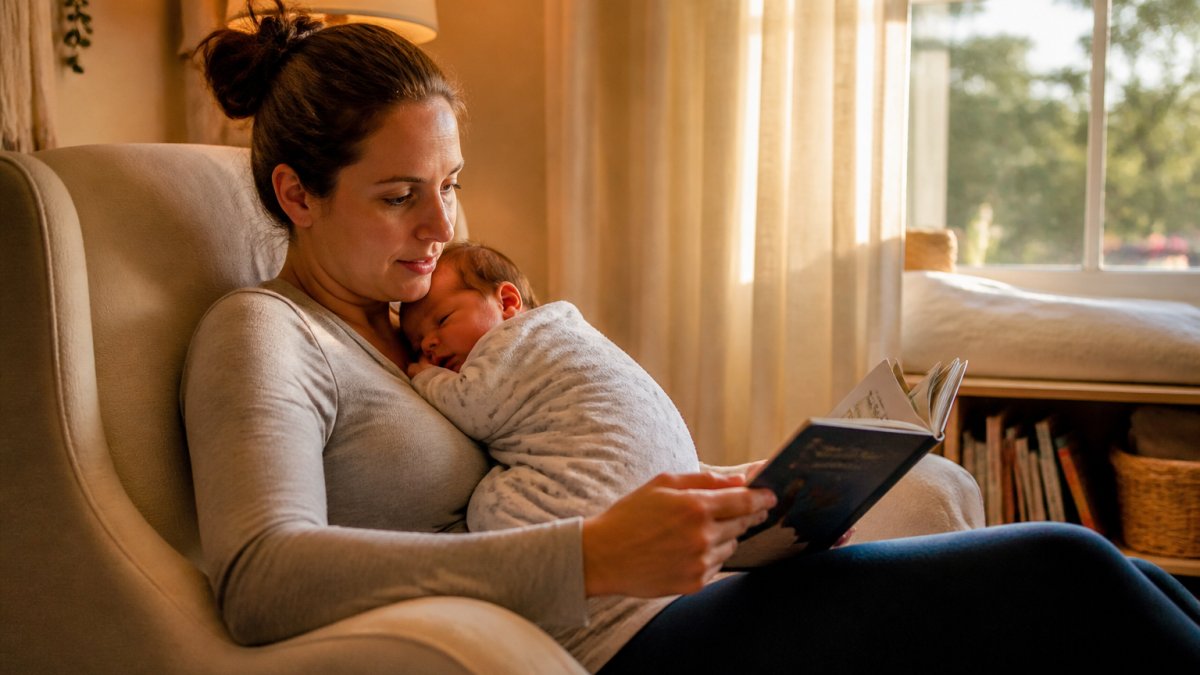
Reading to a newborn does two jobs at once: it feeds brain growth and it builds your bond. Your voice is the first language lesson your child ever gets.
Language Nutrition and Brain Growth
Think of talk, songs, and stories as "language nutrition." A baby's brain grows fast in these early months, and every word you say feeds it. Chapter 2 of Literacy Roots explains that the brain is about 80% adult size by age 3, and nearly 90% by age 5.
That's why everyday talk matters so much. Reading aloud adds rich words to that diet, even when your baby has no idea what a "hippopotamus" is yet.
Serve and Return: The Back-and-Forth That Builds Language
Here's the mechanism most guides skip. Language grows through what researchers call serve-and-return: your baby coos, you coo back; they look at the dog, you say "dog." Chapter 2 leans on Patricia Kuhl's work to make this point. Babies are tuning in to the sounds and rhythms of your voice, and every back-and-forth exchange is a rep. Reading aloud is just a structured way to serve and return. You read a line, your baby gurgles, you pause and answer. That pause is the lesson.
Why Repetition Is Not a Waste
The same book forty times? That's the point. Chapter 2 calls out repetition as a core tool, not a sign you're stuck. Each reread lets your baby hear the same sounds and patterns again.
The Calming Power of Your Voice
Your voice is familiar. Your baby heard it for months before birth. Reading aloud can be a comforting presence during fussy stretches. For a deeper look at how this works, see our guide on how to teach reading to infants.
Watch out: if you rush through pages to "finish," you skip the pauses where serve-and-return happens. Slow down and leave room for your baby's response, even if that response is just a wiggle.
How Long to Read to a Newborn (Hint: It's Shorter Than You Think)
Aim for two to five minutes at a time, and stop whenever your baby is done. That's it. Newborns can't focus on much, so short and frequent beats long and perfect.
Try these easy lengths:
- 2 minutes: one quick board book during a diaper change
- 5 minutes: a slow read while your baby is calm and fed
- 10 minutes: a bedtime story if your baby is alert and happy
Watch your baby, not the clock. If they turn away or arch their back, you're done for now. That's not failure. That's reading to a newborn.
Here's how short a newborn reading session can be, and when to stop.
| Reading length | When it fits |
|---|---|
| 2 minutes | One quick board book during a diaper change |
| 5 minutes | A slow read while your baby is calm and fed |
| 10 minutes | A bedtime story if your baby is alert and happy |
| Stop anytime | If they turn away or arch their back |
When to Start Reading to Baby at Bedtime
Start a bedtime reading habit in the first few weeks, even before your baby has any idea what a schedule is. The point isn't the story. It's the pattern: bath, pajamas, book, bed.
Pick one short book and read it the same way each night. Your baby will start to link your voice and the routine with winding down. Chapter 2 calls this the power of repetition, and it's why the same book forty times is not a waste.
You can fold songs and rhymes into the routine too. Our post on nursery rhymes in daily routines shows how small songs fit into the moments you already have.
The Best Books for Newborns: High Contrast and High Cuddles
The best books for newborns are board books with high-contrast images, simple faces, and textures to touch. Skip the long stories for now. Your baby's eyes and hands are the real audience.
Why High-Contrast Images Work
Bold patterns and simple faces grab a newborn's attention.
Tactile Books and Textures
Touch matters too. Board books with crinkly pages, fuzzy patches, or soft corners give your baby sensory stimulation while you read. They also survive a good chew, which is half the battle.
For specific picks, browse our list of sensory books for newborn brain development.
Making It Work: Practical Tips for Fussy Babies and Tired Parents
Some babies love storytime from day one. Most don't, and that's normal. Here's how to keep reading going when your baby is fussy and you're running on three hours of sleep.
- Read during calm, fed moments. A full, sleepy baby is your best audience.
- Narrate your day. Reading a book is optional; talking is not. Describe the dishes, the dog, the diaper.
- Keep books within reach. A basket by the chair means you'll actually grab one.
- Let your baby set the pace. Skipping pages is fine. So is closing the book early.
- Use your voice as the toy. Silly sounds and slow, sing-song reading count as reading.
If your baby is sensitive to sound or touch, go gentler. Our article on helping neurodivergent kids enjoy reading has more ideas that work from the very first months.
Reading for Neurodivergent or Sensory-Sensitive Infants
Most newborn reading guides assume a baby who settles into storytime. Plenty of babies don't, and that's where a few small adjustments help. Some babies startle at loud sounds or dislike certain textures. Try a quiet voice, one book at a time, and let your baby look away when they need a break. Reading still counts when it's short and calm.
A few things that help sensory-sensitive babies:
- Pick fabric or soft vinyl books over stiff board books if edges seem to bother your baby.
- Read in a dim, quiet room instead of a bright, busy one.
- Follow their gaze. If they're locked on the ceiling fan, narrate the ceiling fan. That's still serve-and-return.
- Skip the sing-song if it revs them up. A flat, calm voice can be more settling.
If you have concerns about your baby's responses to sound, touch, or eye contact, talk with your pediatrician. That's a conversation, not a diagnosis.
Multilingual Reading Strategies
You don't have to read in English to build a reader. Read in the language you're most comfortable with. A home language can strengthen English learning later, a point Literacy Roots makes in Chapter 7, drawing on Dr. Gloria Ladson-Billings and Dr. Jim Cummins.
You can read the same book in two languages, or make up the words as you go. Your baby just wants your voice. If grandparents or caregivers speak another language, invite them to read too. Two languages in one house isn't a complication. It's a head start.
Watch out: don't drop your home language because you're worried it will confuse your baby. The research in Chapter 7 points the other way, and a home language is a bridge, not a barrier.
Your Next Step: Start Your Baby's Literacy Story Tonight
You don't need a plan, a shelf, or a degree. You need one book and five minutes tonight. That's how a literacy foundation gets built, one small, warm moment at a time.
Literacy Roots walks through all of this in Chapter 2, "Parents as First Teachers," with research, real family stories, and simple exercises you can try the same day. It's endorsed by Dr. Susan Neuman of NYU, and it's available for $14.99 on Amazon.
Want a free place to start? Try these early literacy activities for infants tonight.
Frequently Asked Questions
How soon should I start reading to my newborn?
You can start reading to your newborn on the very first day you bring them home. Even though they don't understand the words, your voice is familiar and comforting. The goal isn't comprehension but building a warm, positive association with books and language. Just a few minutes of reading to your newborn each day is enough to start. As your baby grows, you can gradually increase the time based on their cues and attention span.
What are the benefits of reading to babies who can't even talk yet?
The benefits of reading to babies go far beyond understanding words. Hearing your voice builds language acquisition and vocabulary, even before they can speak. The rhythm and repetition of stories make language familiar and fun. Reading also creates a powerful bonding time and helps establish a calming bedtime ritual. This early exposure builds the literacy foundation they will use for the rest of their lives.
Is it okay if my baby cries or turns away during storytime?
Yes, this is completely normal. A newborn's attention span is very short, and they can get overstimulated easily. If your baby is fussy, try a shorter session or a calmer book. For sensory-sensitive infants, you might try reading in a low-stimulation environment. The key is to follow your baby's cues. A few minutes of positive interaction is far better than forcing a longer session. The goal is connection, not completion.
Can I read to my baby while they're sleeping?
Reading to your sleeping baby is a lovely way to expose them to language and the sound of your voice. While they may not be actively processing the story, they still hear your voice. It can also be a peaceful bonding time for you. However, the most important reading happens when they are awake and can interact with you, even if that interaction is just cooing and babbling.
Your baby won't remember these first pages, but their brain will. Grab a board book, settle into your chair, and read one page out loud. Get Literacy Roots today and turn those five minutes into a habit that lasts for years.



