 How-to
How to Teach Reading to Infants: A Parent's Guide
Table of Contents
- What Teaching Reading to Infants Actually Means
- Benefits of Reading to Infants: What the Science Shows
- How to Read to a Newborn: Step-by-Step
- Early Literacy Activities for Babies at Every Stage
- Best Books for Infants: What to Look for and Why
- Teach Reading to Infants Without Pressure or Screens
- Building a Daily Reading Routine That Sticks
- Frequently Asked Questions
Last Updated: August 28, 2026
What Teaching Reading to Infants Actually Means
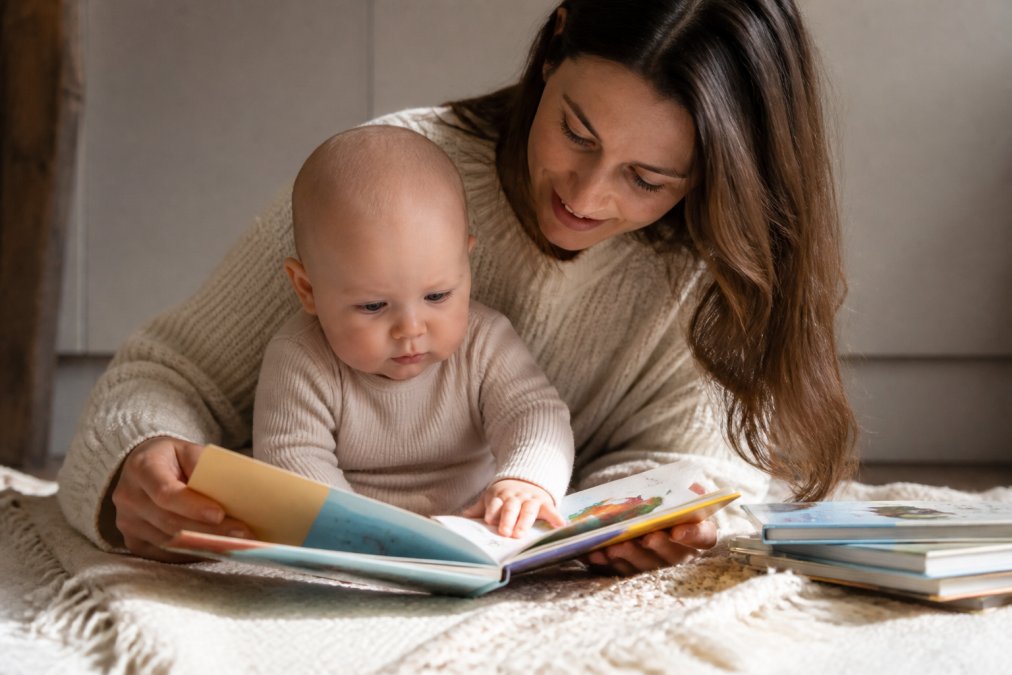
Teaching reading to infants is not about flashcards at two months old or drilling letter sounds before your baby can sit up. It is the intentional, consistent practice of exposing infants to language, print, rhythm, and story from the earliest days of life, building the neurological foundation that formal reading instruction will later build upon.
Emergent literacy is the term early childhood educators use to describe the skills, knowledge, and attitudes that develop before a child reads independently. It includes print awareness, narrative skills, phonemic awareness, vocabulary acquisition, and the understanding that symbols on a page carry meaning. All of these begin in infancy.
The distinction matters because it changes how you approach the work. Parents who understand that every song, every story, every pointed finger at a page is building cognitive architecture tend to stick with it.
Benefits of Reading to Infants: What the Science Shows
Early and consistent exposure to language shapes how a child's brain develops, how large their vocabulary becomes, and how well they understand the world around them.
Brain Development and Auditory Stimulation
Auditory stimulation through spoken language and reading aloud activates neural pathways that support cognitive development. Infants' brains are extraordinarily receptive in the first year of life. Every word they hear, every variation in intonation, every repeated rhyme strengthens synaptic connections. According to the American Academy of Pediatrics' early literacy guidance, reading aloud to children from birth supports brain development and is one of the most effective ways parents can prepare children for school.
When an infant hears the same story repeatedly, their brain begins to predict patterns, which is the same cognitive process underlying decoding and comprehension later in life.
Language Development and Vocabulary Acquisition
Children who are read to from infancy tend to enter kindergarten with significantly larger vocabularies than children who are not. Books expose infants to vocabulary that rarely appears in everyday conversation, which is why reading and talking together are not interchangeable.
Narrative skills, the ability to understand that events have sequence and that stories have structure, also begin forming in infancy through repeated exposure to storytelling. These skills directly predict later reading comprehension.
How to Read to a Newborn: Step-by-Step
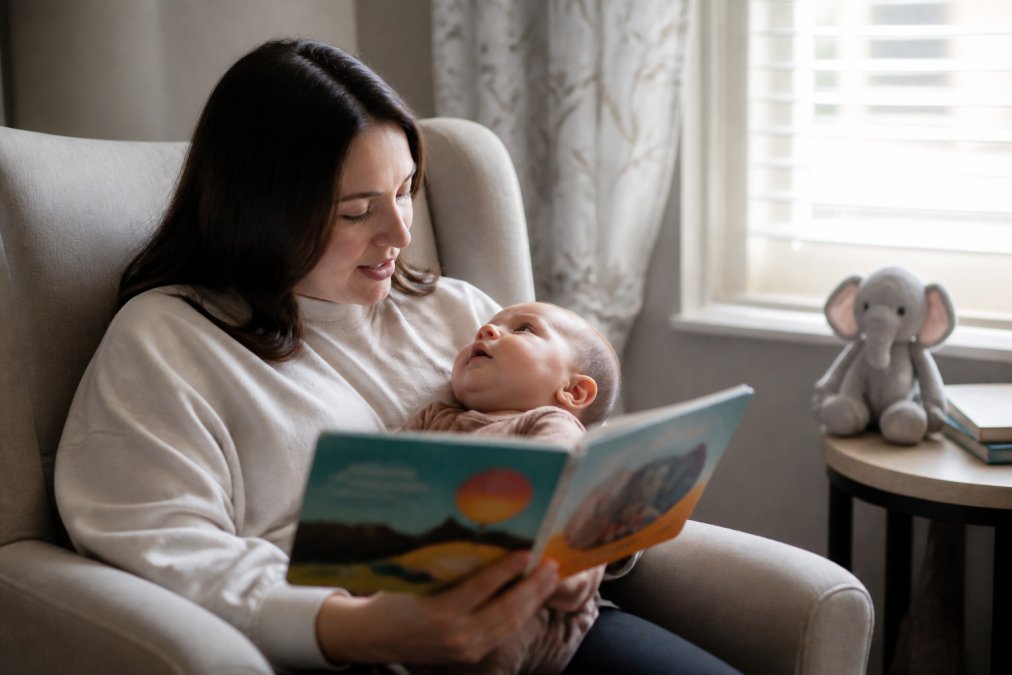
Reading to a newborn is simpler than most parents expect. A newborn will not track the page or show obvious engagement, but that does not mean the reading isn't working.
Step 1: Set the Scene and Minimize Distractions
Choose a quiet, comfortable spot where you and your baby can settle without interruption. Infants associate sensory cues with experiences. Over time, the familiar chair, soft light, and closeness of your body become signals that reading time is beginning. Turn off background television and set your phone aside.
Step 2: Use Voice, Rhythm, and Intonation
Your voice is the most sophisticated literacy tool your baby has access to. Vary your pitch, slow down for dramatic moments, and exaggerate the rhythm of rhyming lines. Infants respond to intonation long before they understand words, and varied speech patterns build the auditory scaffolding for phonemic awareness.
Read the same books repeatedly. Repetition is the mechanism by which language patterns become familiar and predictable, which is exactly how the brain prepares for blending sounds and decoding later.
Step 3: Follow Your Baby's Cues
A newborn who looks away, fusses, or falls asleep is not rejecting reading. They are regulating. Keep sessions short: two to five minutes is plenty for a newborn. The goal is a positive association with books and your voice, not a completed chapter.
Early Literacy Activities for Babies at Every Stage
Early literacy activities for babies should match where a child is developmentally, not where you wish they were.
| Stage | Key Literacy Focus | Activity Examples |
|---|---|---|
| 0-3 months | Auditory stimulation, voice recognition | Read aloud, sing rhymes, narrate daily tasks |
| 3-6 months | Sensory engagement, tracking | High-contrast books, pointing at images, rhythmic reading |
| 6-9 months | Print awareness, object permanence | Board books with single images, turning pages together |
| 9-12 months | Interactive reading, early phonemic awareness | Name pictures, imitate sounds, repeat simple phrases |
0-6 Months: Sensory Engagement and Repetition
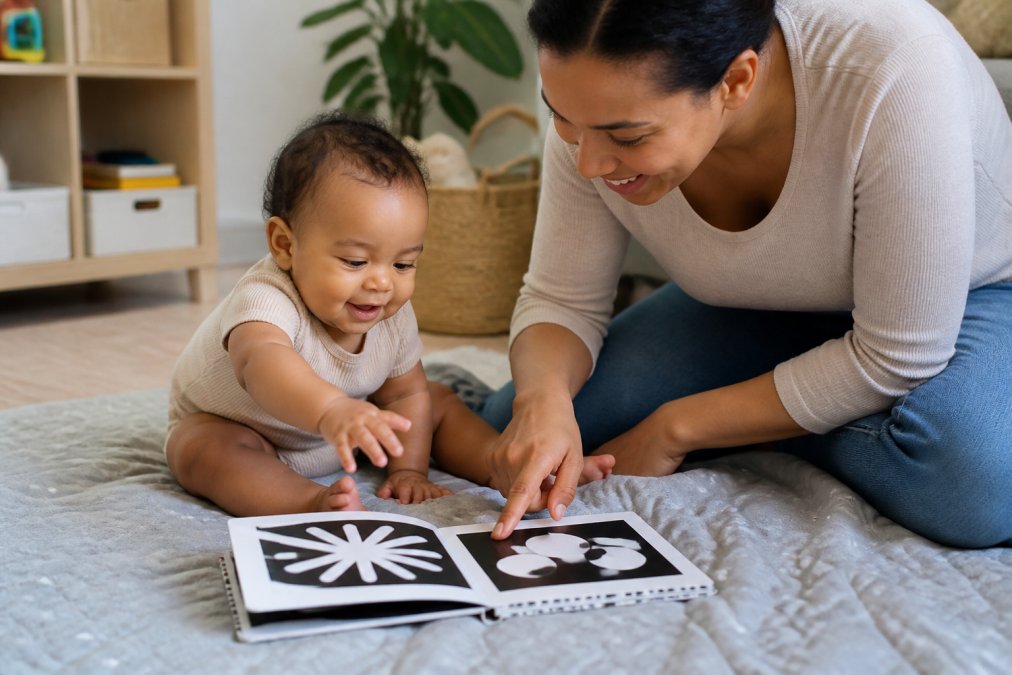
For the first six months, your primary tools are your voice, rhythm, and high-contrast visuals. Newborns can only see clearly at a distance of roughly 8 to 12 inches. High-contrast black-and-white board books are particularly effective because they match an infant's visual acuity and hold attention longer than pastel illustrations.
Rhyming books are especially valuable. The rhythmic patterns of nursery rhymes and simple verse build phonemic awareness at a neurological level, familiarizing the auditory system with the sound units that phonics instruction will later formalize.
6-12 Months: Print Awareness and Interactive Reading
Print awareness is the understanding that text on a page is meaningful and distinct from images. Between six and twelve months, babies begin to develop this concept when caregivers point to words while reading and name what they see on the page.
Interactive reading becomes possible around seven to eight months, when babies can intentionally reach for objects. Let them touch the page. Point to the dog in the illustration and say "dog." Pause and wait. You are building the conversational framework that supports verbal communication and, eventually, reading comprehension.
Best Books for Infants: What to Look for and Why
The best books for infants are not necessarily the most beautifully illustrated or the most award-winning. They are the ones that match your baby's developmental stage and hold up to being chewed, dropped, and read fifty times in a row.
For the first six months, prioritize board books with high-contrast images, minimal text, and durable construction. Books with simple rhymes or repeated phrases outperform complex narratives at this age.
From six to twelve months, look for:
- Single, clear images per page with large, simple labels
- Tactile elements such as textured surfaces that support sensory engagement
- Familiar subjects such as faces, animals, and everyday objects
- Sturdy board construction that survives mouthing and grabbing
Books that invite interaction, with lift-the-flap elements or simple questions embedded in the text, support the interactive reading style that builds comprehension and attention span. According to the National Institute for Literacy's early reading resources, repeated shared reading of the same books is one of the most evidence-supported practices for building early vocabulary and print awareness.
Alphabet books become useful around nine to twelve months, not for alphabet recognition specifically, but because they introduce the concept that letters are distinct, meaningful symbols.
Teach Reading to Infants Without Pressure or Screens
The biggest mistake parents make when they decide to teach reading to infants is importing anxiety into the process. Reading with a baby should feel connective and calm, not like a performance review.
According to the American Academy of Pediatrics' screen time policy, digital media for children under 18 months should be limited to video chatting. Physical books win.
Multilingual Households: Reading in More Than One Language
Parents in multilingual households sometimes worry that reading in two languages will confuse their baby or slow language development. The opposite is true. Exposure to multiple languages from birth builds phonemic awareness across a broader range of sounds and strengthens cognitive flexibility.
Read in whatever language feels most natural and expressive to you. Consistency of exposure matters more than consistency of language. Infants can track and distinguish multiple phonological systems simultaneously.
Accessibility and Inclusive Reading Approaches
Not every infant has the same sensory or developmental profile. For infants with visual impairments, tactile books with raised textures, fabric elements, and strong auditory input carry the full weight of the experience. For families with deaf or hard-of-hearing members, signed reading builds the same narrative skills and print awareness through a different modality.
The core principle is the same across all approaches: consistent, warm exposure to language and print, in whatever form that takes for your family.
Building a Daily Reading Routine That Sticks
A reading routine is the infrastructure that makes everything else in early literacy work. The most sustainable reading routines are attached to existing daily anchors. Bedtime is the most common, but morning feeding, post-nap settling, and bath time are all natural attachment points.
Three practical principles for building a routine that lasts:
- Start with one anchor, not three. Pick one consistent time and make that non-negotiable before adding more reading sessions.
- Keep a small book basket accessible. If the books are in a basket next to the feeding chair, you will read. If they are in a box in the closet, you probably will not.
- Count weeks, not days. Routines take time to solidify. Give yourself a full month before evaluating whether the routine is working.
Lauren's Literacy Lounge built its approach around exactly this reality: parents who are the primary constant in their child's educational life, regardless of what school, city, or program surrounds them. The Literacy Roots program gives parents the structured, stage-by-stage framework to teach reading to infants and toddlers without needing a teaching degree or a stable school environment to lean on.
For more on how developmental milestones connect to reading readiness, the Zero to Three early literacy development resources offer parent-accessible guidance grounded in developmental science.
Early literacy does not begin in kindergarten. It begins the first time you hold your baby close and read aloud. The challenge is knowing what to do at each stage and doing it consistently enough that the cumulative effect compounds into real reading readiness. Lauren's Literacy Lounge's Literacy Roots program gives parents a structured, stage-by-stage path from birth through early reading, designed for regular parents without a teaching background. Start where you are, use what you have, and trust that every session counts.
Frequently Asked Questions
At what age can babies start learning to read?
Babies absorb language and print awareness from birth, so there is no minimum age to begin reading aloud. Formal decoding and phonics come later, typically around ages 4 to 6, but the foundation, hearing speech patterns, rhyming, and vocabulary, builds from the very first weeks. Parents who read to infants consistently are giving their child a head start on emergent literacy long before a child can hold a book independently.
How much time should parents spend reading to infants each day?
Even 10 to 15 minutes of reading aloud daily makes a measurable difference in language development. Multiple short sessions work better than one long stretch, especially for newborns whose attention span is brief. A morning routine, a pre-nap story, and a bedtime book add up quickly. Consistency matters more than duration, a predictable reading routine signals that books are a normal, enjoyable part of daily life.
What role does phonemic awareness play in early infancy?
Phonemic awareness, the ability to hear and distinguish individual sounds in words, begins developing before birth. Infants respond to the rhythm and intonation of speech from the womb. During the first year, reading rhyming books and singing songs with repeated sound patterns trains the ear to detect phonemes. This early auditory work directly supports later phonics skills, making it one of the most important early literacy activities for babies you can do at home.
Are digital books as effective as physical board books for infants?
Physical board books generally support better parent-child bonding and more interactive reading than screen-based alternatives for infants under 18 months. Screens can distract from the back-and-forth conversation that builds comprehension and vocabulary. The American Academy of Pediatrics recommends avoiding screen media other than video chatting for children under 18 months. That said, a parent reading aloud from any format matters more than the format itself, engagement and narration are the active ingredients.
This article was written using GrandRanker


