 Comparison
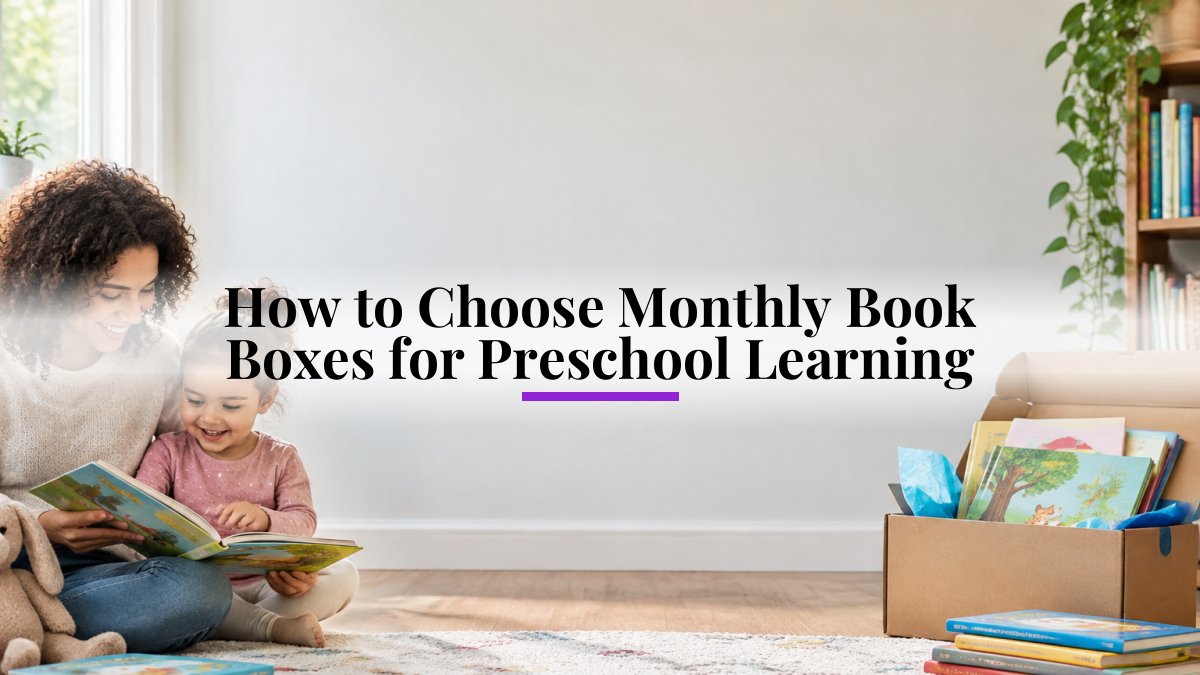
How to Choose Monthly Book Boxes for Preschool Learning
Quick Summary
Monthly book boxes for preschool learning deliver new picture books to your door, which helps when you're short on time or live far from a library. Choose a box that sends real, full-length stories and activities touching more than one early literacy skill, and check the age range before subscribing.
- Look for real, full-length picture books with a clear beginning, problem, and ending.
- Check that activities hit more than one skill, such as talking, writing, or listening.
- Ask whether you can skip a month or swap a book you already own.
- Read the full contents list, since some preschool boxes rely mostly on activity sheets.
- Compare total yearly cost, including shipping and any higher renewal price after a promotion.
Table of Contents
- Why a Monthly Book Box Can Feel Like a Lifeline
- What a Preschool Book Box Should Include
- Interactive Books for Preschoolers: Picking Titles Your Child Will Reuse
- Reading Activities for Preschoolers That Go Beyond the Page
- Comparing Monthly Options: Cost, Shipping, and Cancellation Terms
- Library Books for Preschoolers: The Free Alternative
- Picking the Right Box for Your Family and Starting Tonight
- Frequently Asked Questions
Why a Monthly Book Box Can Feel Like a Lifeline
Picture this: it's 7 a.m., the coffee is cold, and your three-year-old just asked for "the one with the truck" for the fourth time this week. A monthly book box for preschool learning can take some of that daily scramble off your plate. A monthly box can deliver new stories to your door, so you're not hunting for something fresh at the library at the last minute. If you're building a home library on a budget first, see how to build a home library for preschoolers.
Here's the honest part: a box is a tool, not a teacher. You are still the one reading aloud, asking questions, and turning the page together. That's the work that builds reading skills, and no box can do it for you. Chapter 2 of Literacy Roots makes the same point: repetition and warm conversation do most of the heavy lifting. Rereading a favorite story is not a waste of time.
We think a monthly box makes the most sense when it fills a gap in your routine. If you already visit the library every week, you may not need one. If you live far from a library, or your schedule makes trips hard, a box can keep new books flowing. Either way, the goal is the same: more time with books you both enjoy.
What a Preschool Book Box Should Include
Before you pay for any subscription, look at what actually arrives in the box. A good monthly book box for preschool learning should contain real picture books, not just a pile of activity sheets.
Here is the angle most roundups skip. Instead of asking only "is this age-appropriate," map what arrives to the four early literacy buckets your child is growing right now. Chapter 4 of Literacy Roots calls this the literacy mosaic: reading, writing, speaking, and listening, with listening the most overlooked piece.
Reading and language. Look for real, full-length picture books with clear story structure (a beginning, a problem, an ending). Preschoolers need plots they can retell, because retelling is comprehension practice in disguise. A box that sends three thin titles with no story arc is thinner than it looks.
Speaking and vocabulary. The best titles invite talk. A book that asks "Where is the dog hiding?" gives you a natural reason to name objects, describe positions, and stretch sentences.
Writing and fine motor. Preschool writing is scribbling, tracing, and gripping a crayon, not penmanship. Simple activity cards, sticker scenes, or draw-your-own-ending pages count. Skip boxes where the extras are mostly screens or passive coloring sheets with no open-ended choice.
Listening and social-emotional skills. Stories about feelings, friendship, and daily routines give you a low-pressure way to talk about big emotions. A box that includes one feeling-focused title a month is doing quiet social-emotional work alongside the reading.
Ask a few direct questions before you commit:
- Does it name the age range? Look for a clear range, such as ages 3 to 5, rather than a vague "for kids."
- Are the books real, full-length titles? You want stories you can reread, not filler.
- Do the activities hit more than one bucket? A craft that also sparks talk beats a worksheet that only fills time.
- Can you see a sample box or past titles? Many providers show photos or a list of previous months.
- Can you set preferences or swap a book? If your child already owns a title, a duplicate policy saves money and frustration.
Watch out: a box marketed as "preschool" can still lean heavily on activity sheets with one thin booklet. Read the contents list, not just the cover photo.
Pricing depends on the provider, the subscription length, and whether shipping is included, so check each provider's website for current prices. The learning fit matters more than the sticker price, though.
Interactive Books for Preschoolers: Picking Titles Your Child Will Reuse
Interactive books, like lift-the-flap or touch-and-feel titles, can keep a preschooler engaged. For a curated shortlist, see the best interactive board books for toddlers. Pointing, pulling, and predicting what comes next are hands-on ways to take part in a story.
When you judge a title, try a simple test. Read the first two pages aloud and watch your child's face. If they lean in and start asking questions, you have a keeper. If they wander off after one page, set it aside for a few months and try again.
Look for books that invite talk. A story that asks "Where is the dog hiding?" gives you a natural reason to name objects, describe positions, and build vocabulary. Repeat readings are where the learning happens, so favor titles your child will want to hear again and again.
Reading Activities for Preschoolers That Go Beyond the Page
A book box is only one piece of a literacy routine. Simple activities that extend a story help your child connect words to real life. For more on keeping it going, see why little and often wins with daily reading routines. You don't need supplies beyond paper and a pencil.
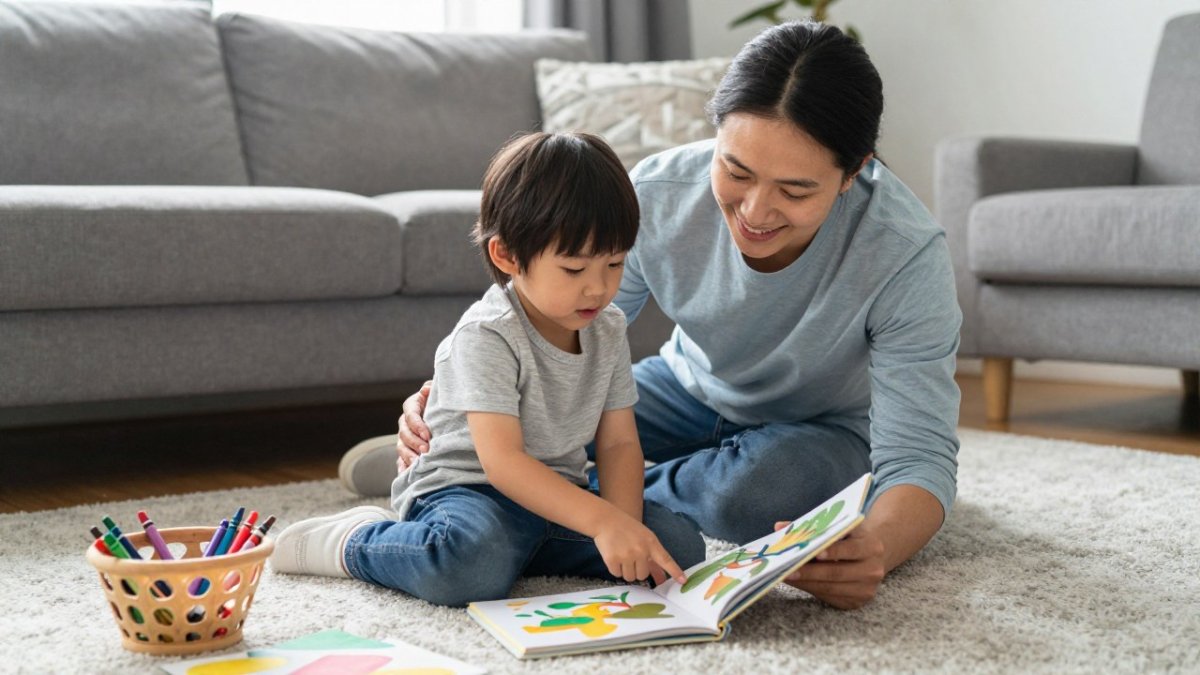
Try these ideas after reading:
- Retell the story with toys. Use stuffed animals to act out the plot in your own words.
- Hunt for letters. Point out the letter that starts a character's name and say its sound.
- Draw the ending. Ask your child to draw what happens next, then talk about it.
- Narrate the grocery run. Name items and colors out loud. That running commentary counts as literacy practice.
Most of these take less than five minutes. The point is consistent, low-pressure talk, not perfect worksheets. Mistakes are part of the process, and a silly retelling is still a win.
Comparing Monthly Options: Cost, Shipping, and Cancellation Terms
Monthly book boxes differ in more than price. When you compare options, look at the cost per box, shipping timing, how easily you can cancel, how many books arrive each month, and whether you can steer the book selection.
| Option | Books per Month | Age Range Stated | Pricing Shown | Cancellation Terms | Selection Control |
|---|---|---|---|---|---|
| Bookroo | Book subscription (count not verified) | Toddlers | Not verified | Check provider site | Not verified |
| Lil Readers Book Club | Not verified | Ages 3 to 7 | Not verified | Can be canceled anytime | Not verified |
| The Preschool Box | Activity box (books not verified) | Preschool | Not verified | Can be canceled anytime | Not verified |
| I Can Read! Kids Book Club | 5 books | Not verified | 12 issues for $36 with a promotional code | Check provider site | Not verified |
Prices and terms change, so verify them directly with each provider before you buy.
How we judged these.
The total-cost question. A monthly sticker price is not the whole story. Add shipping if it is not included, multiply by the number of months in the plan, and check whether the plan auto-renews at a higher rate after a promotional period.
Personalization and duplicates. This is where preschool subscriptions quietly disappoint. Ask three questions before you commit: Can I set reading preferences or a child profile? Can I skip a month? What happens if a book arrives that we already own? Some providers let you pause or swap, while others send a fixed selection.
Cancellation and renewal. "Cancel anytime" is good, but read the fine print on when the cancellation takes effect. A plan that cancels at the end of the current billing cycle is different from one that refunds the unused months.
Diverse and inclusive books. Ask whether the provider shows a range of characters, cultures, and family types across the year, and whether any titles are available in Spanish or other home languages. Chapter 7 of Literacy Roots makes the case that home languages strengthen English learning, so a box that includes bilingual titles is doing double duty for multilingual families.
Packaging and waste. Recurring boxes mean recurring cardboard. If that matters to your family, check whether a provider uses recyclable or minimal packaging, and whether books are new or gently used. A few providers publish this; most do not, so ask.
Watch out: a promotional first-month price can hide a higher renewal rate. Screenshot the checkout page before you pay so you have the terms in writing.
Library Books for Preschoolers: The Free Alternative
Your local public library is one of the best literacy resources you have, and it costs nothing. Most libraries offer children's sections, story times, and borrowing without a subscription. If you're deciding between a monthly box and the library, the library wins on cost every time.
Libraries also give your child control. Let them pick their own books, bring home a stack, and return what they don't love. Many branches run free programs for preschoolers, too. Ask a librarian what's available near you.
Pairing both works well. Use a monthly box for a few new, personally chosen titles, and rely on the library for variety and free access.
Picking the Right Box for Your Family and Starting Tonight
Choosing the right box comes down to your family's situation. If you have a tight budget, start with the library and add a box later. If you move often, a box that ships monthly can keep reading steady even when your address changes. If your child loves hands-on activities, look for a box that includes them.
You don't need to decide everything tonight. Pick one thing you can do before bed: read one story together, then ask your child one question about it. That small habit does more than any box alone.
Literacy Roots covers this in more depth, especially in Chapter 3 on building a home literacy environment and Chapter 12 on creating a family literacy plan. If you want help building a routine that fits your life, you can book a free one-on-one chat with Lauren through her website. You're already doing the important part by looking for ways to support your child.
UNESCO literacy statistics
Reading Rockets early literacy guidance
American Library Association children's services resources
Frequently Asked Questions
What should a preschool book subscription include?
A good preschool book subscription sends a few age-appropriate picture books each month. Look for books at your child's stage, with a mix of familiar themes and new vocabulary. Pricing varies widely and depends on the provider, the number of books, shipping, and whether you pay month to month or prepay. Check the provider's website for current prices and cancellation terms before you sign up.
Are monthly book boxes good for preschool learning?
They can be, as long as the books are read and reread rather than stacked on a shelf. Repetition is one of the most useful things a preschooler gets from a book, because hearing the same story again builds vocabulary and comfort with the rhythm of language. A monthly box gives you a steady supply of new material, which helps if you don't have time to visit a library every week. The box works best as a supplement to everyday talking, singing, and reading together, not as a replacement for them.
Are library books a good alternative to book subscription boxes?
Yes, and for many families they are the most affordable option. Public libraries typically let children borrow picture books at no cost, and many run story times for preschoolers. The trade-off is that you have to make the trip and return books on time, which can be hard with a busy schedule. Many families use both: library books for variety and a subscription box for titles they want to keep and reread at home.
How often should I read to my preschooler?
Daily reading is a good target, but a short session counts. Five minutes of reading before naps or bedtime is more useful than one long session you can't keep up. Let your child choose some of the books, and don't worry if they want the same title every night. That repetition is how young children learn words, sentence patterns, and the joy of stories. Fit reading into routines you already have, like breakfast, car rides, or waiting rooms.