 Comparison
Family Read Aloud Books for Different Ages: Which to Pick
Last Updated: November 18, 2026
Quick Summary
The best family read aloud books work for every age at once, so you don't need a different book for each child. Pick stories with layers: a simple surface plot for little ones and richer themes beneath for older kids. Picture books like Brown Bear, Brown Bear and Goodnight Moon suit toddlers, while short chapter books work for elementary ages.
- Choose one story with layers so toddlers and older kids both stay engaged.
- Picture books with repeated refrains let toddlers join in on the second read.
- Five-year-olds enjoy pausing to guess what happens next in the story.
- Give the youngest listener a job, like turning pages or making animal sounds.
Table of Contents
- Why One Read-Aloud Can Work for the Whole Family
- Best Read Aloud Picture Books for Toddlers and Preschoolers
- Family Read Aloud Books for 5-Year-Olds
- Chapter Books to Read as a Family for Elementary Ages
- How to Keep Everyone Engaged When Ages Are Mixed
- Your Next Read-Aloud Night Starts With One Book
- Frequently Asked Questions
Why One Read-Aloud Can Work for the Whole Family
You don't need a different book for every kid at the table. One good story can work for a toddler, a preschooler, and a teen all at once, so pick some of the best family read aloud books with the whole room in mind. At Lauren's Literacy Lounge, we've built this guide around one idea from Lauren Daugherty's Literacy Roots: parents are a child's first and most enduring teachers, and shared reading is one of the easiest places to show up.
Lauren's core point is that literacy grows in small, warm, daily moments. A shared story at bedtime counts just as much as a planned reading session. The younger kids take in rhythm, pictures, and your voice. The older ones follow the plot, pick up new vocabulary, and get a reason to talk with you about what happens.
Here's the trick: choose books with layers. A good read-aloud has a simple surface story and a richer one underneath. Even when the younger child drifts off, the older one stays hooked, and the adults enjoy it too.
Best Read Aloud Picture Books for Toddlers and Preschoolers
Picture books are where most families start, and for good reason. Little ones need rhythm, repetition, and bright illustrations to stay engaged. Repetition is powerful here. Your toddler may ask for the same book forty times, and that repetition is exactly how language sticks. (Ch. 2 of Literacy Roots calls everyday talk "language nutrition," and repeated read-alouds are a big serving of it.)
Look for books with:
- Predictable refrains that invite your child to join in on the second read.
- Clear, detailed pictures that let your child point and name things.
- Simple plots with a satisfying ending.
- A short, sturdy page count so a wiggly listener can make it to the end.
Here are titles that hit those marks and hold up to the fortieth reread:
- Brown Bear, Brown Bear, What Do You See? by Bill Martin Jr. and Eric Carle. The call-and-response pattern means your toddler can "read" it back to you before they know a single letter.
- The Very Hungry Caterpillar by Eric Carle. Counting, days of the week, and a hole to poke on every page. The poke is the engagement trick.
- Goodnight Moon by Margaret Wise Brown. The slow, rhyming goodnight list is basically a bedtime routine in book form.
- Chicka Chicka Boom Boom by Bill Martin Jr. and John Archambault. Letters as characters, with a chant that sticks in your head all day.
- We're Going on a Bear Hunt by Michael Rosen. Sound effects built in, so the whole room can join the swish and the splash.
- Press Here by Hervé Tullet. Your child physically interacts with the page, which is gold for kids who won't sit still.
Read the words, then let your child narrate the pictures in their own way. If you're wondering whether a daily read-aloud habit is worth the effort, see why daily reading really pays off. A toddler saying "dog!" while you read about a dog is building vocabulary. That running commentary you do in the grocery store counts too.
Watch out: if your child flips ahead or loses interest, that's not a reading problem. Shorten the session, follow their lead to the page they want, and come back tomorrow.
For free options, check your local library. Many picture books are available for borrowing, so you can test-drive a title before you buy.
Here is a quick look at the picture books mentioned in this section and why each one works.
| Book | Why it works | Key feature |
|---|---|---|
| Brown Bear, Brown Bear, What Do You See? | Call-and-response pattern | Toddler can read it back |
| The Very Hungry Caterpillar | Counting and days of the week | A hole to poke on every page |
| Goodnight Moon | Slow, rhyming goodnight list | Works as a bedtime routine |
| Chicka Chicka Boom Boom | Letters as characters | Chant that sticks in your head |
| We're Going on a Bear Hunt | Sound effects built in | Whole room can join in |
| Press Here | Child interacts with the page | Great for kids who won't sit still |
Family Read Aloud Books for 5-Year-Olds
Five-year-olds sit in a sweet spot. They can follow a longer story, hold a character in their head, and start predicting what comes next. This is a great age to slow down and ask questions like "What do you think she'll do now?"
Pick stories with a little more plot than a basic picture book, but keep the chapters short enough that the story doesn't drag. For a quick way to judge whether a book fits your child's stage, learn how to choose age-appropriate picture books. Stories with humor, animal characters, or a clear problem to solve tend to land well at this age.
Try a few simple routines:
- Pause before the big moment and let your child guess what happens.
- Ask one open question per page rather than quizzing them.
- Act out a favorite line together. Acting builds comprehension and memory.
This is also the age when a child may start noticing letters and words on signs. Point them out during your reading. A reluctant listener often comes around when the book feels like a game.
Chapter Books to Read as a Family for Elementary Ages
Once your child is in elementary school, chapter books become the main event. A chapter a night turns into a family ritual, and the anticipation builds over the week. This is a good time to lean into series, since kids who love one book often want the next.
Here's how to choose: look at the story's length, the vocabulary, and whether the themes match what your family wants to talk about. Some families pick classics with richer language. Others go for contemporary adventures or animal friendship stories that keep everyone engaged.
Read a few pages of a new chapter book before you commit. For a step-by-step way to judge whether a book suits your child's reading level, follow this parent's guide to age-appropriate books. If you stumble over words or your child's eyes glaze over, try a different title. You're looking for a book that stretches your child without shutting them down.
Free options work well here too. Library holds on popular series can be a real budget saver.
How to Keep Everyone Engaged When Ages Are Mixed
Mixed ages are where many families get stuck. The toddler wants to flip pages, the older kid wants to race ahead, and the adult is losing their voice halfway through the chapter. Here's the good news: a few simple moves make a big difference, and most of them cost nothing.
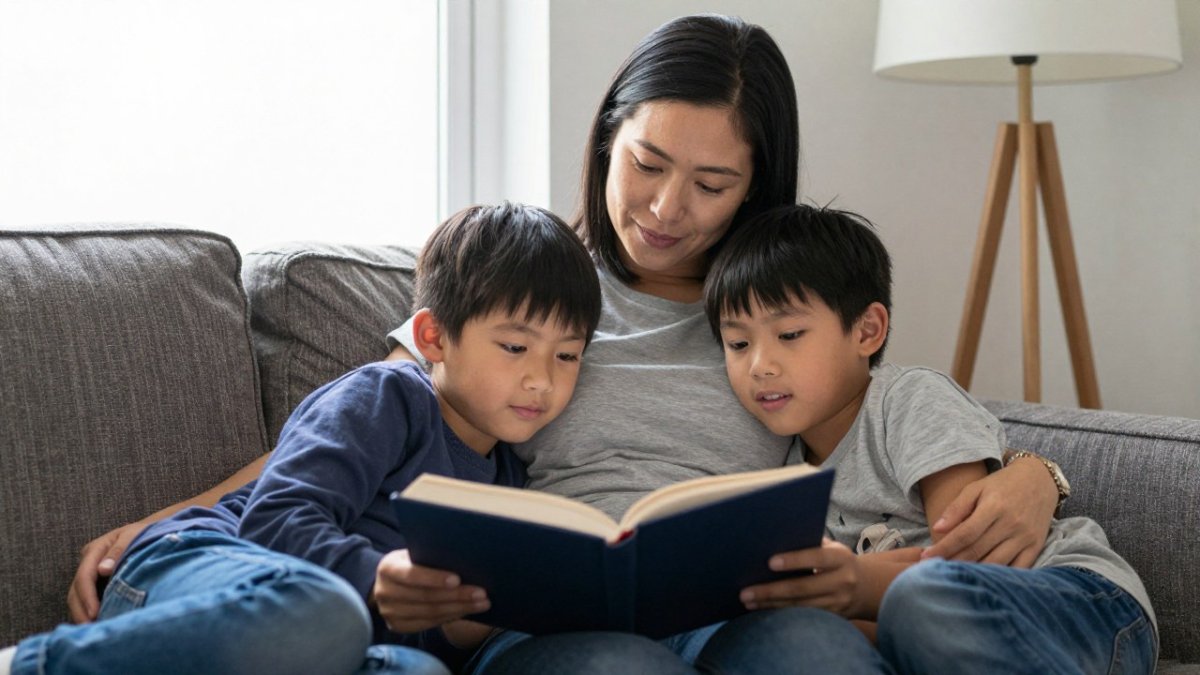
Give the youngest child a job. Let them turn the pages, find the bunny in each picture, or make the animal sounds. A job turns a passive listener into a participant.
Ask the older kids to predict the next event or retell the last chapter. This keeps them invested and sharpens their listening. (Ch. 4 of Literacy Roots makes the case that listening is the most overlooked piece of the literacy puzzle, and mixed-age read-alouds are listening practice disguised as fun.)
Use a "story circle." Everyone sits together, and each person gets a turn to share their favorite part. It's an old-school ritual that still wins, and it gives every age a voice.
Keep sessions short if the youngest is restless. Ten minutes of full attention beats thirty minutes of distracted reading.
Now for the part most book lists skip: how you read matters as much as what you read.
- Use different voices for characters. It feels silly the first time. Do it anyway. A growly bear voice tells your toddler who's talking and gives your older kid a reason to listen.
- Stop for one discussion question per chapter, not per page. Ask "What would you have done?" and let the answers run. This is comprehension work without the worksheet.
- Pair the book with a tiny activity. Draw the main character, act out the ending, or cook something the characters ate. Low-prep, high-payoff.
- Let the older kid read a line or two aloud to the younger one. It builds fluency and makes the big kid feel like a helper instead of a captive audience.
Some kids need a different on-ramp, and that's worth naming. If your child has ADHD, sensory processing needs, or just a hard time sitting still, a few adjustments help:
- Try a low-stimulation setup. Dim lights, one book, no screens nearby. Fewer things to look at means more attention for the story.
- Offer something to do with their hands. A squeeze ball, a blanket to fidget with, or a snack can free up attention for listening.
- Pick high-engagement books with short chapters, humor, and frequent dialogue. Long descriptive passages are where attention tends to slide.
- Let them move. Some kids listen better while pacing or building with blocks. Sitting still is not the same as paying attention.
Watch out: if reading time regularly ends in tears or a power struggle, that's a signal to change the setup, not to push harder. Shorter, calmer sessions usually work better than longer ones with a reluctant listener.
Lauren's book talks about the value of routines that feel warm rather than forced. When reading time feels like connection rather than a chore, kids of every age tend to lean in.
Your Next Read-Aloud Night Starts With One Book
You don't need a perfect plan. Pick one book from this guide that fits the youngest and oldest kids you're reading with, and read it tonight. If you're ready to grow a collection, this practical plan for building a home library of read-aloud books walks you through it. If it lands, great. If it doesn't, try a different one next week. That's the whole method.
If you want a bit more structure, Lauren's Literacy Roots walks through how to build a family literacy plan in about fifteen minutes, and it's a practical way to keep reading steady even when life gets busy. Find the book on Amazon for $14.99, or book a casual chat with Lauren at calendly.com/laurendaugherty19/casual-talk.
Frequently Asked Questions
What are some good family read alouds for mixed ages?
Choose books with layered humor and rich pictures, like many classic picture books, so younger listeners enjoy the story while older kids catch the jokes and themes. Chapter books with short sections work well for elementary ages, and longer series suit older kids and teens. The Literacy Roots approach, drawn from Lauren Daugherty's book, reminds parents that shared reading builds connection at every level.
What are some good read-aloud books for 5-year-olds?
Five-year-olds often love predictable rhymes, repeated phrases, and simple plots they can predict along with you. Picture books with bold illustrations invite them to point, name objects, and retell the story in their own words. Pause to ask what they think will happen next, which builds listening comprehension and vocabulary.
How long should a family read-aloud session last?
Keep sessions short enough that everyone stays engaged, often 10 to 20 minutes for younger children and somewhat longer for older kids. If attention drifts, stop and pick up another night. Consistency matters more than length, and a short nightly habit beats one long weekend marathon.