 Listicle
Best Decodable Books for Beginning Readers
Table of Contents
- What Are Decodable Books and Why They Matter
- Decodable Books vs Leveled Readers: Key Differences
- How to Use Decodable Books for Phonics Instruction
- Tips for Reading With Beginning Readers
- Top Decodable Book Series for Early Learners
- Choosing Decodable Books by Reading Stage
- Building a Home Library: Library vs Purchase
- Frequently Asked Questions
Last Updated: September 18, 2026
What Are Decodable Books and Why They Matter
Decodable books are carefully designed reading materials where nearly every word follows phonics rules the child has already learned. Unlike traditional picture books that rely on memorization or context clues, best decodable books for beginning readers use explicit letter-sound relationships to build confidence and fluency. A child who knows the /c/ sound and /a/ sound can decode "cat" independently, that's the power of this approach.
Beginning readers need predictable patterns. When a book introduces only one or two new sounds per story, children focus on blending rather than guessing. This systematic phonics instruction aligns with the Science of Reading, an evidence-based framework showing explicit phonics instruction drives reading achievement far more effectively than incidental learning (Explicit Instruction as the Essential Tool for Executing the Science of Reading).
Decodable books work. They build orthographic mapping, the brain's ability to recognize written words automatically, faster than books relying on sight word memorization alone. Decodable books for beginning readers represent the most direct path to confident, independent reading.
Decodable Books vs Leveled Readers: Key Differences
The confusion between decodable books and leveled readers stops many parents cold. Both are "easy" books, but they work differently, and the distinction changes everything about how your child learns to read.
Leveled readers prioritize story engagement and vocabulary breadth, including words like "beautiful" or "although" that don't follow phonics patterns. A child reads by using pictures, context, and memorized sight words. Decodable books restrict vocabulary to words following taught phonics patterns. A beginning decodable book uses only CVC words (consonant-vowel-consonant: cat, sit, run) plus a handful of sight words. The child reads by decoding, sounding out and blending letters into words.
A child using leveled readers becomes dependent on guessing strategies; a child using decodable books develops true decoding skills. Once decoding becomes automatic, reading comprehension improves because the brain isn't exhausted by word recognition.
Research from the International Dyslexia Association on structured literacy approaches confirms that systematic phonics instruction with decodable text produces stronger early readers than meaning-first or balanced literacy approaches. For struggling readers especially, the shift from leveled readers to decodable books often marks the turning point where reading clicks.
How to Use Decodable Books for Phonics Instruction
Using decodable books for phonics instruction requires a deliberate approach. They're tools for practicing specific skills, not meant to be skimmed.
Identify where your child is in their phonics progression: Can they blend CVC words? Know consonant blends like /st/ or /bl/? Learned vowel teams like /ea/ or /oa/? Your child's current phonics stage determines which series to start with. Many series are organized by phonics scope and sequence. Bob Books, for example, starts with CVC patterns and gradually adds consonant blends, digraphs, and vowel teams.
When reading together: preview the book and point out the phonics pattern ("This book has lots of /oa/ words like boat and coat"). Let your child read aloud, sounding out each word. Wait a few seconds before helping so they can blend the sounds. After reading, ask simple comprehension questions ("Where did the cat go?") to reinforce that reading is about meaning.
The goal is automaticity. As your child reads the same pattern repeatedly across different books, letter-sound correspondence becomes automatic. Once a word is mapped, your child recognizes it instantly on sight. This is how decodable books build fluency and reading comprehension.
Tips for Reading With Beginning Readers
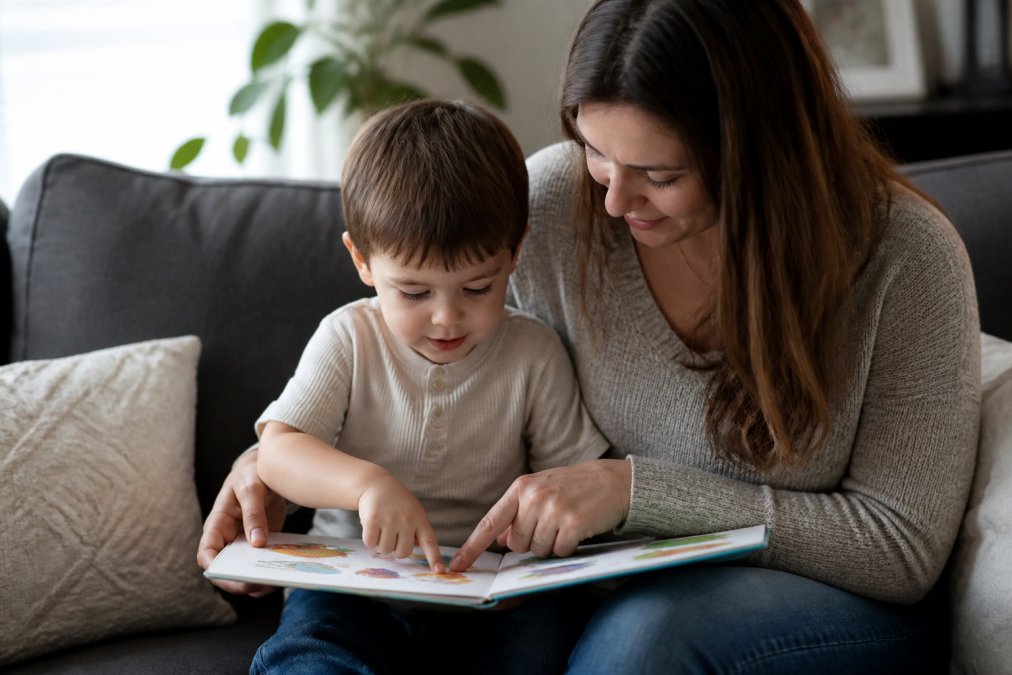
Reading aloud with your beginning reader isn't passive. Your role shapes whether the experience builds confidence or frustration.
Let your child do the work. Resist the urge to supply words instantly. Give them 5-10 seconds to attempt a word. If stuck, ask them to sound it out. If they still can't blend, supply the word and have them repeat it. Repetition builds automaticity.
Choose a calm moment when your child is rested and focused. Consistency matters more than length. Daily 10-minute sessions beat weekly 30-minute marathons.
Celebrate effort, not perfection. When your child sounds out a difficult word, that's a win. Say so. "You figured that out by blending the sounds, that's exactly how readers work." This builds the belief that reading is a skill they can control, not a mysterious talent they either have or don't.
Watch for signs of frustration. If your child is guessing wildly, refusing to try, or shutting down, stop. A frustrated reader learns to avoid reading. Better to end on a success and try again tomorrow.
Top Decodable Book Series for Early Learners
Bob Books: The Gold Standard for CVC Words
Bob Books remain the most widely recognized decodable series. They introduce one or two new letter sounds per book using strictly decodable CVC words and a small set of sight words. The format is simple: small, thin books with minimal illustrations and large text.
Bob Books excel at building confidence. A child who finishes the first set (12 books) has decoded hundreds of CVC patterns. The series progresses logically from simple CVC words through consonant blends, digraphs, and vowel teams.
The main limitation is narrative simplicity. Bob Books prioritize decoding practice over entertainment. Parents often pair them with more engaging picture books for story time.
Best for: Children ages 4-7 just starting phonics; families wanting a proven, widely available option.
Flyleaf Publishing: Science of Reading Alignment
Flyleaf Publishing Emergent Readers stand out for explicit alignment with Science of Reading principles. Every book is designed with systematic phonics in mind. Illustrations are high-quality and supportive without giving away the word.
What separates Flyleaf is pedagogical intentionality. The publisher consulted literacy researchers to ensure phonics progression matches how the brain learns to read. Vowel teams are introduced with explicit instruction. Consonant blends appear after sufficient practice with individual consonants.
The trade-off is availability. Flyleaf books are less common in libraries and retail stores than Bob Books. Many classroom teachers and literacy specialists recommend them because of Science of Reading alignment.
Best for: Parents following structured literacy programs; teachers implementing explicit phonics; families wanting research-backed materials.
Sizzy Books: Free Digital Resources
Sizzy Books offers free, downloadable decodable books organized by phonics pattern. You can print them at home or read digitally on a tablet.
The main draw is accessibility. No subscription required, no shipping delays. Download and start reading within minutes.
Free digital resources require intentional effort and a printer or tablet. Some children prefer holding a real book. But for families testing whether decodable books work before investing, Sizzy is worth trying.
Best for: Families on tight budgets; parents wanting to trial decodable books before purchasing; digital-native households.
Charge Mommy Books: Affordable Multi-Stage Sets
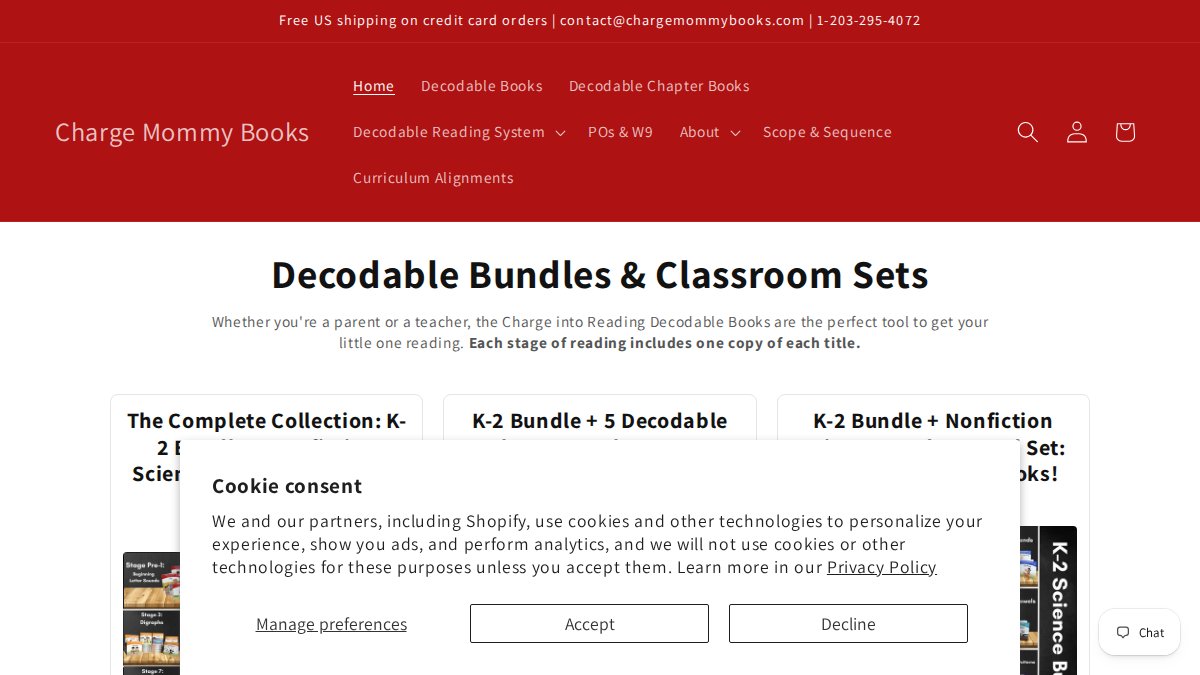
Charge Mommy Books offer progressive stages designed to move children through phonics systematically. Bulk purchasing reduces per-book cost significantly, making a full set cheaper per book than buying Bob Books individually.
The progression is clear: Stage 1 uses CVC words, Stage 2 adds consonant blends, Stage 3 introduces vowel teams.
Choosing Decodable Books by Reading Stage
The phonics progression matters enormously. Choosing a book that's too advanced frustrates your child; choosing one that's too easy wastes reading time.
| Reading Stage | Phonics Focus | Book Examples | Typical Age |
|---|---|---|---|
| Emergent | CVC words, basic sight words | Bob Books Set 1, Flyleaf Level 1 | 3-4 years |
| Early Phonics | Consonant blends, digraphs | Bob Books Sets 2-3, Flyleaf Level 2-3 | 4-5 years |
| Developing Phonics | Vowel teams, longer patterns | Bob Books Sets 4-5, Charge Mommy Stage 3 | 5-6 years |
| Fluent Decoding | Multi-syllable words, chapter format | Progressive Decodable Chapter Books | 6+ years |
Building a Home Library: Library vs Purchase
The library vs. purchase question comes down to your child's reading speed and your family's budget. Both approaches work; the right choice depends on your situation.
Frequently Asked Questions
What phonics skills should I look for when selecting decodable books for beginning readers?
Look for books that introduce letter-sound correspondence, CVC words, and phonemic awareness in a systematic sequence. Early decodable books should focus on single consonant-vowel-consonant patterns before progressing to consonant blends, digraphs, and vowel teams. The Science of Reading emphasizes explicit, systematic phonics instruction, so choose books with a clear scope and sequence that matches your child's current phonics level. Books that include one or two new sounds per book allow children to practice blending and segmenting skills without overwhelming them.
How do decodable books differ from leveled readers?
Decodable books are specifically designed around phonics instruction, introducing letter sounds in a controlled, systematic sequence so children can decode words using taught skills. Leveled readers prioritize comprehension and story engagement across multiple reading levels but may include sight words and words children cannot yet decode. For beginning readers learning to blend sounds, decodable books provide the explicit phonics progression needed for orthographic mapping and reading fluency. Leveled readers work better once decoding skills are established.
At what age should children start reading decodable books?
Most children benefit from decodable books once they've developed phonemic awareness and begun learning letter-sound correspondence, typically around ages 4-6. However, the right time depends on your child's individual readiness. Some children show interest earlier; others need more time with pre-reading activities. Emergent readers benefit from exposure to books from infancy through picture reading and oral language development, but structured decodable reading typically begins when phonemic awareness and early letter knowledge are present.
Are decodable books necessary for teaching reading at home?
Decodable books are highly effective for systematic phonics instruction and reading intervention, but they're one tool among many in early literacy development. Evidence-based approaches combine phonemic awareness, explicit phonics instruction, and meaningful reading practice. While free resources like Reading Rockets and Reach Out and Read offer valuable guidance, decodable books provide the structured phonics practice that supports reading achievement and fluency. For parents committed to evidence-based literacy instruction at home, decodable books aligned with the Science of Reading offer targeted, measurable progress.