 How-to
What Age to Start Reading Games With Children
Table of Contents
- The Right Age to Start Reading Games With Children
- Why Play-Based Reading Games Work for Toddlers
- Simple Literacy Activities for Preschoolers at Home
- Phonological Awareness Games for Kids
- Early Literacy Activities at Home for Busy Families
- What to Do When Your Child Isn't Interested
- Frequently Asked Questions
Last Updated: October 12, 2026
The Right Age to Start Reading Games With Children
Most parents want a single number. The honest answer is that what age to start reading games with children depends on what you mean by "reading games." If you mean playful back-and-forth interaction with books, sounds, and words, you can start at birth. If you mean formal lessons that teach letter sounds and decoding, most children are not ready until around age five.
This guide breaks down what actually helps at each stage. It's for parents who want to be their child's first teacher, without turning the living room into a classroom.
The American Academy of Pediatrics recommends reading aloud to children from birth, and the guidance from the National Institute for Literacy on early language development points the same direction. Talk, sing, point, and read together. The "game" part is just the wrapper.
Here is the short version, then we will walk through each stage.
| Age | What It Looks Like | Your Main Job |
|---|---|---|
| Birth to 12 months | Songs, board books, face-to-face talk | Build sound and voice awareness |
| 12 to 24 months | Point-and-name, lift-the-flap books | Grow vocabulary through play |
| 2 to 3 years | Rhyming, clapping, silly voices | Play with sounds, not letters |
| 3 to 5 years | Letter hunts, storytelling, print awareness | Connect sounds to print |
Birth to 12 Months: Building the Foundation
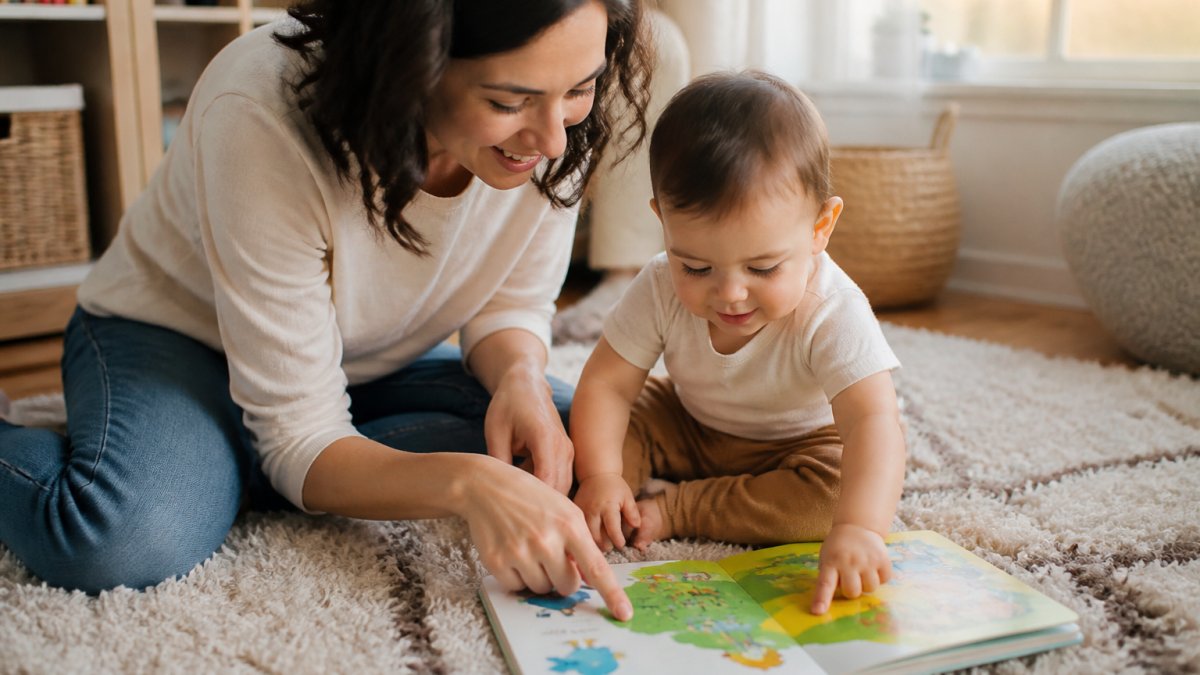
At this stage, reading games are really listening games. Your baby is learning the rhythm of language, not letters.
Try these:
- Sing the same three songs every day
- Read board books with high-contrast pictures
- Pause and let your baby "answer" with a coo
- Name objects as you touch them
A common mistake is rushing past this stage. Babies who hear lots of talk and song build stronger sound awareness later. Keep sessions short. Two minutes counts.
12 to 24 Months: First Interactive Games
Toddlers learn best when they can move, grab, and point. So make the book the toy.
- Ask "Where's the duck?" and wait
- Let your child turn the pages, even if it is messy
- Use lift-the-flap and touch-and-feel books
- Copy the sounds your child makes, then add one
The back-and-forth matters more than the book itself. That turn-taking is the engine of language growth.
2 to 3 Years: Expanding Vocabulary and Sounds
Now the fun starts. Your child can hold a simple rhyme in their head and play with it.
- Clap out the beats in a word
- Make up silly rhymes that are not real words
- Read the same book ten times if they ask
- Ask open questions: "What do you think happens next?"
Repetition is not a bug. It is how toddlers lock in new words.
Why Play-Based Reading Games Work for Toddlers
Play-based reading games work because toddlers learn through action, not instruction. A two-year-old cannot sit still for a phonics lesson, but they will happily hunt for a hidden letter for ten minutes. The play is doing the teaching.
The Science Behind Play and Literacy
The science of reading describes how children connect spoken sounds to printed letters. Long before that happens, children need strong oral language. They need to hear thousands of words, in many contexts, from people who talk with them.
Play delivers that. When you narrate a block tower or sing a bath-time song, you are feeding the same system that later supports decoding and reading comprehension.
How to Keep Games Pressure-Free
Pressure kills the fun, and without the fun, the game stops working.
- Follow your child's lead, even if it means reading the same page five times
- Stop while they are still happy, not after they are bored
- Never quiz a toddler on letters they have not learned
- Skip the game entirely on hard days
If you feel yourself pushing, back off. A toddler who loves books will learn to read. A toddler who dreads them will fight you for years.
Simple Literacy Activities for Preschoolers at Home
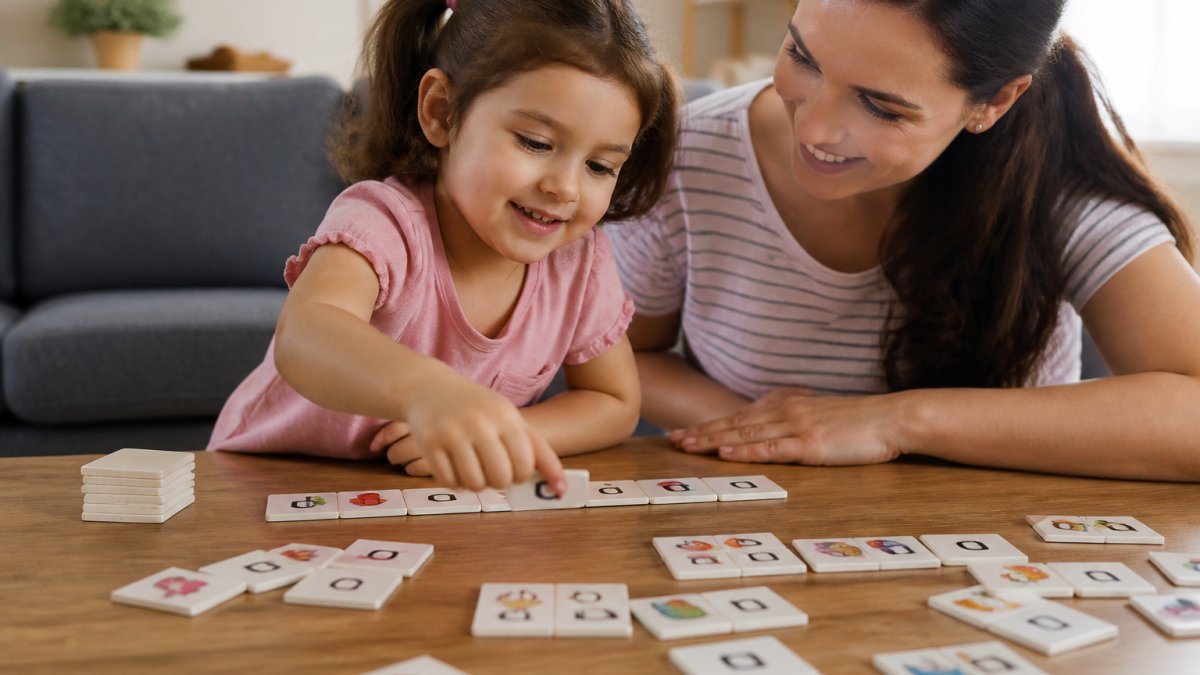
Literacy activities for preschoolers should feel like play, not school. The best ones use things you already have: a cereal box, a grocery list, a stack of library books.
Alphabet and Print Awareness Games
Print awareness is the understanding that words on a page carry meaning. You can teach it without a single flashcard.
- Run your finger under words as you read
- Point out the first letter of your child's name everywhere you see it
- Let your child "read" a restaurant menu to you
- Label a few things in the house together
Storytelling and Comprehension Activities
Comprehension starts with talking about stories, not testing them.
- Ask "What would you do?" during a book
- Retell a favorite story with stuffed animals
- Make up a new ending together
- Draw a picture of the best part
Phonological Awareness Games for Kids
Phonological awareness games for kids build the ability to hear and play with sounds in words. This skill predicts later reading success more reliably than almost anything else you can teach at home. The good news: it is all done out loud, with no materials.
Rhyming and Sound Matching
- "Cat, hat, bat. Which one does not belong?"
- "I spy something that rhymes with 'floor.'"
- Sing songs with rhyming endings and pause for your child to fill in
Syllable Clapping and Blending
- Clap the beats in names: "El-iz-a-beth"
- Stretch a word slowly: "ssss-uuuu-nnnn" and ask what it is
- Count the syllables in snack words at lunch
Early Literacy Activities at Home for Busy Families
Early literacy activities at home do not require a curriculum, a schedule, or a single dollar. They fit into the routines you already have.
Using Everyday Routines
- Narrate your cooking: "I am chopping the carrots. Carrot starts with /k/."
- Read labels at the store
- Sing during diaper changes
- Tell stories at bedtime instead of reading one
Choosing Books for Toddlers
Pick books your child can handle and enjoy.
- Board books with sturdy pages
- Simple, repeating text
- Clear pictures of real things
- Books about your child's daily life
Let your child pick too, even if it is the same book again.
What to Do When Your Child Isn't Interested
Some toddlers ignore books. That is normal, and it is not a sign of a problem. Change the approach, not the child.
- Try audiobooks or songs instead of sitting still
- Read to a stuffed animal while your child plays nearby
- Move the books to where your child already plays
- Let your child "read" to you, upside down and all
If your child is older and still shows no interest in sounds or print, talk with your pediatrician or a speech-language pathologist. Some children need extra support, and getting it early helps.
Every parent wonders whether they are doing enough. The truth is that the small, daily moments, a song in the car, a book before bed, a silly rhyme at lunch, do more for early literacy than any program or worksheet. That belief is why we built Literacy Roots, our guide for nurturing your child's reading journey from birth to brilliance. It gives you simple, evidence-based routines that fit real family life, whether you are home every night or moving to a new base every 18 months. You do not need a teaching background. You just need to start. Get started with Lauren's Literacy Lounge.
Frequently Asked Questions
What age should children start playing reading games?
You can start reading games from birth with simple back-and-forth interactions like peek-a-boo and naming objects. By 12 to 18 months, toddlers enjoy games such as "I spy" and sound matching. Formal instruction isn't necessary until age 5 or 6, but playful reading games at any age build early literacy skills naturally.
Can babies benefit from reading games?
Yes. Babies benefit from hearing your voice, watching your face, and being exposed to books. Games like pat-a-cake, pointing to pictures, and imitating sounds help develop oral language, attention, and print awareness. These early interactions set the stage for later reading success, even before your baby can talk.
What reading games can I play with a toddler?
Try rhyming games ("cat, hat, bat"), syllable clapping ("but-ter-fly"), and letter hunts around the house. Board books with flaps, touch-and-feel textures, and repetitive phrases keep toddlers engaged. Keep sessions short (2-5 minutes) and follow your child's interest. These reading games for toddlers build phonological awareness and vocabulary.
How long should reading games last for young children?
For toddlers, 2 to 5 minutes is plenty. Preschoolers can handle 5 to 10 minutes. Watch for signs of fatigue or boredom and stop while it's still fun. Short, frequent sessions (daily if possible) are more effective than one long session. The goal is positive association with books and language.


