 How-to
Teaching Toddler to Read Without Screens: 7 Steps
Table of Contents
- Why Screen-Free Reading Instruction Works Better for Toddlers
- Toddler Reading Readiness Signs: When to Start
- Step 1: Build a Print-Rich Environment at Home
- Step 2: Early Literacy Activities for Babies and Toddlers
- Step 3: Phonics Games for Toddlers That Need No Screen
- Step 4: Troubleshooting Resistance and Building Daily Habits
- Step 5: Budget-Friendly DIY Resources for Teaching Toddler to Read Without Screens
- Conclusion
- Frequently Asked Questions
Last Updated: September 27, 2026
Why Screen-Free Reading Instruction Works Better for Toddlers
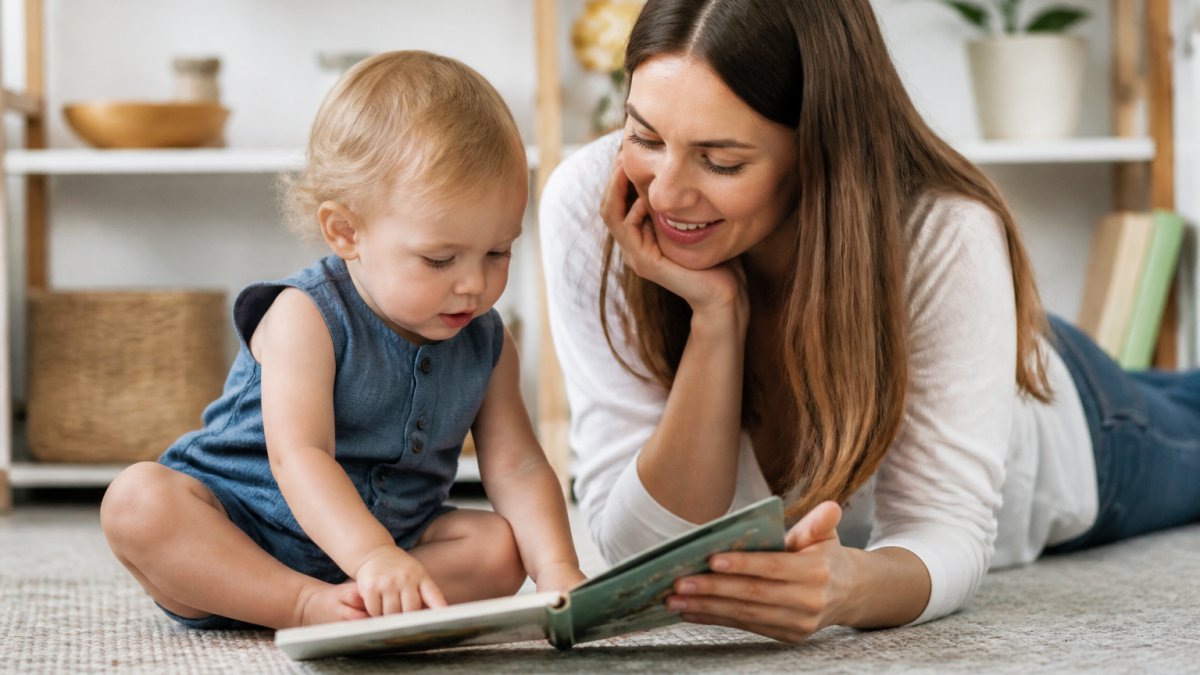
Teaching toddler to read without screens works better because toddlers learn language through human interaction, not digital input. The American Academy of Pediatrics recommends no screen time before 18 months and very limited use after, which means the most effective early literacy tools are already in your home: your voice, your lap, and a few good books.
Toddler Reading Readiness Signs: When to Start
Toddler reading readiness signs show up earlier than most parents expect. Don't wait for letter recognition, watch for interest, imitation, and sound play, which often appear between 12 and 24 months.
Here's what to look for:
- Your child turns pages or points at pictures
- They hum or sing along with rhymes
- They hand you a book and climb into your lap
- They repeat sounds or word endings back to you
Developmental Milestones That Signal Readiness
Most toddlers aren't ready to decode words, and that's fine. Reading readiness is a set of pre-reading skills, not the act of reading itself. The CDC's developmental milestones for toddlers outline the language and motor skills that support this stage. Watch for your child babbling in sentence-like patterns, following simple directions, and showing interest in scribbling. These are the foundations.
Step 1: Build a Print-Rich Environment at Home
A print-rich environment means your child sees words everywhere, every day. You don't need a classroom. You need a home where letters and language are part of normal life.
Try these low-cost moves:
- Keep a basket of board books within your toddler's reach
- Label everyday objects with index cards: "door," "cup," "light"
- Put magnetic letters on the fridge at eye level
- Leave library books in the car and by the bed
- Point to words on cereal boxes and signs as you read them aloud
Step 2: Early Literacy Activities for Babies and Toddlers
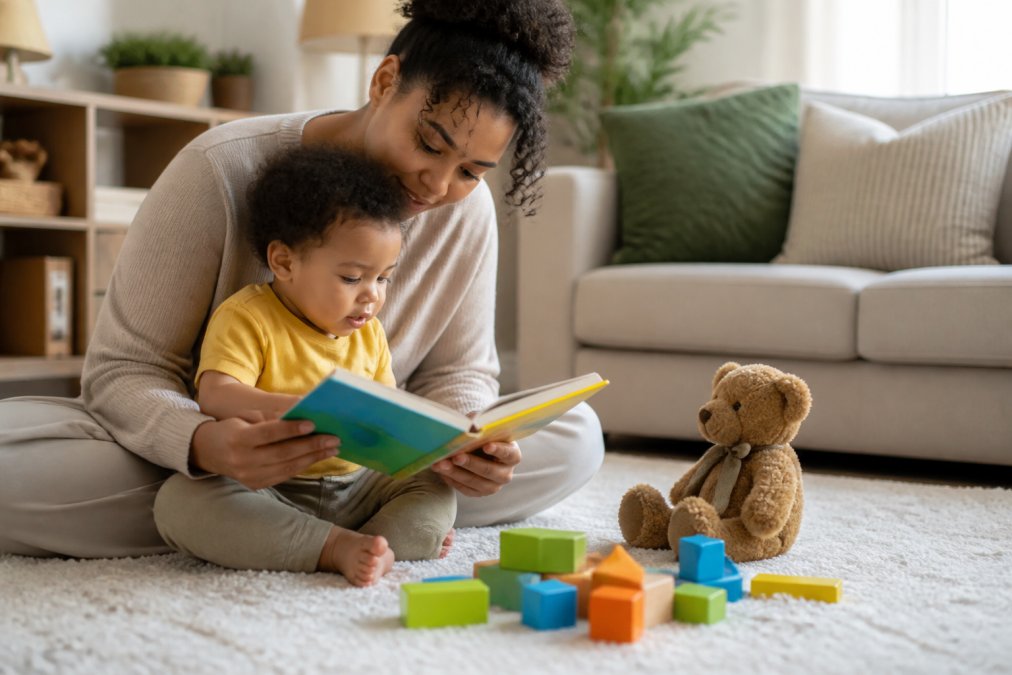
Early literacy activities for babies and toddlers are simple, repeated, and spoken out loud. The best ones take under five minutes and fit into routines you already have.
Start with these:
- Sing the alphabet song while washing hands
- Clap out syllables in your child's name: "El-a-nor"
- Play peekaboo with a favorite board book
- Narrate your day: "Now we pour the milk"
- Read the same book three times in a row if they ask
Phonemic Awareness Through Daily Routines
Phonemic awareness is the ability to hear and manipulate the individual sounds, phonemes, inside spoken words. It is purely oral and the strongest single predictor of later reading success. English is an alphabetic code, so a child who cannot hear that "cat" is three separate sounds has nothing to attach letters to; a child who can maps letters onto them almost immediately.
- Word awareness, hearing that a sentence is made of separate words. "Touch your nose" has three words.
- Syllable awareness, clapping or tapping the beats in a word. "Ba-na-na" is three.
- Rhyme awareness, hearing that "cat" and "hat" end the same way.
- Onset-rime, hearing the first sound separate from the rest. "C-at," "h-at."
- Initial sound isolation, hearing that "ball" starts with /b/.
- Blending, pushing sounds together. /c/ /a/ /t/ becomes "cat."
- Segmenting, pulling a word apart. "Cat" becomes /c/ /a/ /t/.
- Diaper changes (word awareness): "I am going to say three words. Clap once for each: I, love, you."
- Car rides (syllable awareness): "Let's clap your name. El-a-nor! Three claps. Now clap 'grandma.' Two claps."
- Mealtime (rhyme awareness): "Spoon, moon. Those rhyme. Spoon, cup. Do those rhyme? No, cup doesn't end the same way."
- Bath time (onset-rime): "Boat. B-oat. Can you say just the first part? B. Now the rest? Oat."
- Bedtime (initial sound): "Let's find something in this room that starts with /b/. Ball! Blanket! Bear!"
Oral Language: The Other Half of the Foundation
Phonemic awareness handles sounds. Oral language handles meaning, and toddlers need both. Vocabulary size at age two predicts reading comprehension years later, because decoding a word you have never heard gives you nothing. Build vocabulary through talk, not flashcards.
- Name what your child is looking at, not what you are looking at.
- Add one word to what they say. If they say "truck," you say "big red truck."
- Use rare words on purpose. "This soup is scalding," not just "hot."
- Ask questions with more than one answer. "What should we put in the soup?" beats "Is the soup hot?"
Step 3: Phonics Games for Toddlers That Need No Screen
Phonics games for toddlers teach letter-sound correspondence through touch, movement, and play. You don't need an app. You need a floor and a few objects.
- Letter hunt: Hide foam letters around the room. Your child finds one and says its sound. Start with two letters they already know so every round ends in success.
- Sound basket: Fill a basket with small toys. Pull one out and name its starting sound. "Bear. /b/. Bear starts with /b/." Keep the toy, not the letter, as the focus at first.
- Sidewalk chalk: Write big letters outside. Your child jumps on the one you call out. Call the sound, not the letter name, "jump on /s/", so the sound stays attached to the shape.
- Playdough letters: Roll snakes into the shape of a letter, then trace it with a finger. The tracing motion builds the muscle memory that handwriting later depends on.
- Rhyming toss: Toss a ball back and forth. Each catch, say a word that rhymes with "cat." This reinforces the ending sounds that phonics depends on.
- Sand or salt tray: Pour a thin layer of salt or sand into a baking sheet. Your child writes a letter with a finger, then says its sound. The tactile feedback is the point, this is the sensory angle most screen-free guides skip.
- Magnetic letter sort: Put five magnetic letters on the fridge. Ask your child to find the one that says /m/. Then hide it behind your back and ask again. Repetition with a known set beats novelty with an unknown one.
How to Run a Two-Minute Phonics Session
A workable session has four beats and fits in the time it takes to brush teeth:
- Review (30 seconds): Lay out the letters your child already knows. Ask for each sound. If they miss one, say it for them and move on, no correction, no pause.
- Introduce (30 seconds): Show one new letter. Say its sound three times. Have your child say it once. That's it. Do not test.
- Play (45 seconds): Run one game from the list above using the new letter plus two known ones.
- Close (15 seconds): End while your child is still interested. Stop before they are bored, not after.
Step 4: Troubleshooting Resistance and Building Daily Habits
Resistance is normal, and it rarely means your child hates reading. It usually means the activity is too long, too hard, or too adult-led. Fix the format before you fix the child.
Try this troubleshooting table:
| What You See | Likely Cause | What to Try |
|---|---|---|
| Child walks away mid-book | Session too long | Cut to 2-3 minutes |
| Refuses to repeat sounds | Pressure feels like a test | Switch to a game |
| Only wants the same book | Comfort and repetition | Read it again, then add one new |
| Meltdown at reading time | Wrong time of day | Move it after nap or snack |
If your toddler resists, shorten the session and follow their lead. A two-minute read they enjoy beats a ten-minute read they endure.
Step 5: Budget-Friendly DIY Resources for Teaching Toddler to Read Without Screens
You can teach a toddler to read without spending much at all. The library is free, and so are most of the best materials.
- Library card and a weekly book bag
- Index cards for word labels
- Magnetic letters from a dollar store
- Sidewalk chalk
- A shoebox for a "sound basket"
- Homemade flashcards from cereal boxes
Conclusion
The hardest part of teaching a toddler to read without screens isn't finding activities. It's trusting that the slow, quiet work you do every day is enough. It is. You don't need an app, a tutor, or a teaching degree. You need a lap, a book, and a few minutes repeated daily.
Frequently Asked Questions
What is the most effective way to teach a toddler to read without digital tools?
Focus on daily interactive reading, phonemic awareness, and playful phonics. Research shows that systematic phonics instruction and oral language activities build foundational reading skills. Start with letter-sound correspondence using alphabet books, magnetic letters, and rhyming games. Keep sessions short (5-10 minutes) and follow your child's interest. Consistency matters more than duration; a few minutes every day beats an hour once a week.
At what age should you start teaching a toddler to read?
You can begin early literacy activities from birth, but formal reading readiness typically emerges between ages 2 and 3. Watch for signs like pretending to read, recognizing familiar logos, and showing interest in letters. The American Academy of Pediatrics recommends daily reading from infancy. There is no rush; pushing too early can backfire. Follow your child's cues and make it playful.
How can I incorporate phonics into daily play without screens?
Use everyday moments: point out letters on cereal boxes, make up rhymes during bath time, and play I-spy with beginning sounds. Try phonics games for toddlers like sound sorting with toy bins or letter hunts around the house. These activities build phonemic awareness and letter-sound correspondence naturally. No special materials needed, just your voice and a little creativity.
What are the best screen-free reading activities for two-year-olds?
Two-year-olds love tactile learning. Try felt boards with letters, sensory bins filled with foam letters, and interactive read-alouds where they turn pages. Sing alphabet songs, play rhyming games, and let them "read" to you. Keep a basket of board books within reach. These early literacy activities for babies and toddlers support language acquisition and print awareness without any screen time.


