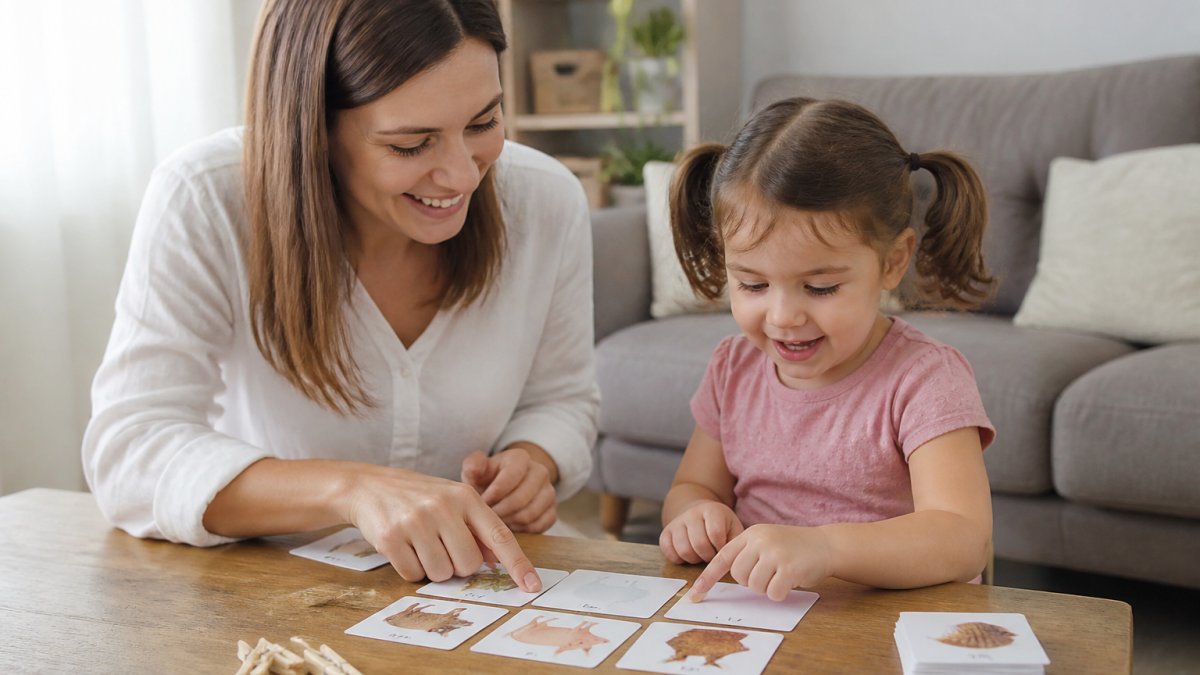
 How-to
Teach Rhyming to 4-Year-Olds at Home
Table of Contents
- Why Rhyming Matters for Early Literacy
- What You'll Need to Get Started
- Step 1: Build Phonological Awareness Activities for Preschoolers
- Step 2: Use Rhyming Books for Preschoolers During Read-Alouds
- Step 3: Teach Rhyming Words Examples for Kids
- Step 4: Play Rhyming Games for Preschoolers
- How to Establish a Realistic Home Routine
- Common Mistakes to Avoid
- Frequently Asked Questions
Last Updated: October 10, 2026
Why Rhyming Matters for Early Literacy
Rhyming is one of the earliest building blocks of reading success.
When you teach rhyming 4 year olds, consistency, playfulness, and patience matter most, not special training or expensive materials.
Children with strong phonological awareness read better in elementary school, decode more easily, and spell more accurately. But most importantly: rhyming is fun. Your child needs to play with sounds and words alongside you, not feel formally taught.
What You'll Need to Get Started
You probably have everything already. To teach rhyming 4 year olds, simplicity is what thrives.
Essential materials:
- Picture books with rhyming text (you likely own several)
- Household objects (toys, kitchen items, clothing)
- Your voice and willingness to be silly
- A consistent time each day (even 10 minutes counts)
That's genuinely it. No flashcards required. No subscription apps. No special curriculum. The most effective tool is your attention and enthusiasm.
Picture cards are optional; household objects work better because they're real, touchable, and immediately relevant to your child's world.
Step 1: Build Phonological Awareness Activities for Preschoolers
Before your child can produce rhyming words, they need to hear and recognize rhyming patterns through repetition, modeling, and playful exposure, not formal instruction.
Listening for Ending Sounds
Read books with obvious rhyming patterns aloud. Pause before rhyming words and let your child guess without correction. "The cat in the hat sat on the..." (pause) "...mat." Do this every time you read, your child's brain learns to anticipate patterns through exposure.
After reading, ask: "Did 'cat' and 'hat' sound the same at the end?" Exaggerate the matching sounds and make your mouth movements obvious.
Sound Matching Games
Introduce simple matching games with household objects: a cat toy, a bat, and a hat. Ask, "Which two words sound the same at the end?" Many four-year-olds need dozens of exposures before reliably identifying rhyming pairs, this is normal. Play informally during everyday moments: "Sock and rock! Do those sound the same?"
Step 2: Use Rhyming Books for Preschoolers During Read-Alouds
Picture books are the most natural teaching tool for rhyming. Choose books with strong rhythm and clear rhyme schemes, your child's brain picks up patterns faster when rhymes are predictable and language is musical.
Choosing Books That Emphasize Rhyme
Choose books where rhyming words appear at the end of lines consistently. Excellent choices include classic nursery rhymes, contemporary rhyming stories with strong rhythm, and books that repeat the same pattern. Read the same book multiple times, repetition is how preschoolers learn.
Interactive Reading Strategies
Pause before rhyming words and let your child predict. Use different voices, clap along with rhythm, and point to matching illustrations. Ask simple questions: "What word rhymes with 'tree'?" If your child struggles, provide the answer and move on. After finishing, ask them to recall a rhyming pair from the story.
Step 3: Teach Rhyming Words Examples for Kids
At this stage, your child has heard rhymes and recognized them. Now they're ready to understand what rhyming words are and eventually produce their own.
Rhyme Recognition vs. Rhyme Production
Recognition (identifying when words sound alike) comes before production (generating new rhyming words). Your child might identify that "cat" and "hat" rhyme long before thinking of a word that rhymes with "dog." This is developmentally normal.
Modeling and Guided Practice
Model rhyming aloud: "I'm thinking of a word that rhymes with 'cat.' It could be 'hat,' 'bat,' 'mat,' or 'rat.' They all have the same ending sound: 'at.'" Then guide them: "Can you think of a word that rhymes with 'sun'? How about 'fun' or 'run'?" Accept any attempt and gently correct near-misses: "That's a great try! 'Fun' has that same ending sound as 'sun.'"
Step 4: Play Rhyming Games for Preschoolers
Games make rhyming practice feel like play, not work. This is where the real learning happens because your child is motivated by fun, not instruction.
Matching and Sorting Activities
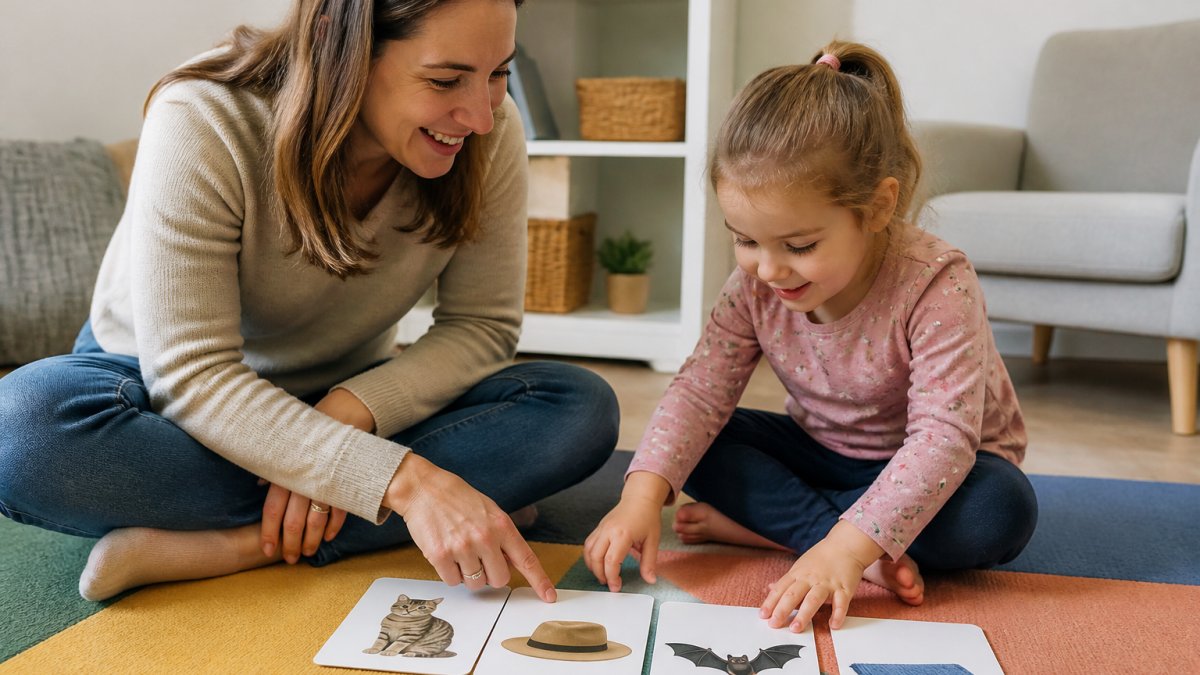
Create matching games with household objects or picture cards. Lay out six items and ask: "Can you find two things that have the same ending sound?" As they improve, use less obvious rhymes and add more items.
Songs and Silly Word Play
Sing nursery rhymes and rhyming songs together, "Twinkle, Twinkle, Little Star," "Humpty Dumpty," "Mary Had a Little Lamb." Then play with rhymes using silly substitutions: "Mary had a little... CAT!" Exaggerate the wrong rhyme and laugh. Create nonsense rhymes: "The cat wore a hat and sat on a... BOOT!" Then ask, "Does 'hat' and 'boot' rhyme? What would rhyme with 'hat'?"
How to Establish a Realistic Home Routine
Consistency matters more than duration. A ten-minute daily routine beats a one-hour session once a week.
A Four-Week Progression for Four-Year-Olds
Most four-year-olds move through rhyming development in stages. Here's a realistic sequence that works for home learning:
Week 1-2: Listening and Exposure, Read one rhyming picture book at bedtime 4-5 times per week, pausing before rhyming words. (10 minutes per session)
Week 3-4: Recognition Practice, Continue bedtime reading and add one five-minute matching game during the day. Sing one nursery rhyme together. (15 minutes per day)
Week 5-6: Production Attempts, Continue reading and matching games. Introduce guided rhyme generation and silly word substitution games. (15-20 minutes per day)
Week 7+: Consolidation and Play, Reduce formal activities; point out rhymes spontaneously during everyday moments. (10 minutes per day or less)
Building Rhyming Into Existing Routines
Layer rhyming into existing moments: bedtime reading (anchor activity, read the same book for a full week), car rides (sing nursery rhymes), mealtimes (point out rhymes), getting dressed (sing songs), and cleanup (rhyming songs). The key is repetition in low-stakes moments, not carved-out lesson time.
Tracking Progress Without Pressure
Signs of progress: your child fills in rhyming words during read-alouds, points out rhymes in everyday speech, attempts to produce rhymes, asks to reread the same book, or makes up silly rhyming words. You don't need formal assessments, your child's growing awareness and willingness to play with sounds is what matters.
Common Mistakes to Avoid
Many well-meaning parents accidentally slow their child's progress by making these mistakes. More importantly, they often misread signs of normal development as problems and either push too hard or give up too soon.
Pushing Too Hard, Too Fast
If your child isn't ready for rhyme production, stay in the recognition phase. Signs they're not ready: they can't identify rhyming pairs after weeks of exposure, become frustrated, or struggle to hear differences between similar sounds. If you see these signs, simplify: read rhyming books without asking questions, sing nursery rhymes without pausing for predictions. Let your child absorb patterns without performance pressure.
Confusing Rhyming with Spelling
Don't assume words that look similar rhyme, "cough" and "tough" rhyme but look different; "bough" and "through" don't rhyme despite similar letter patterns. Always emphasize sound, not spelling. Say words aloud, exaggerate ending sounds, and point to your mouth.
Accepting Near-Rhymes Without Clarification
When your child produces a near-rhyme ("sun" rhymes with "some"), acknowledge the attempt, clarify the difference, provide the correct answer, and move forward without dwelling. This teaches precision without shame.
Correcting Constantly
Acknowledge mistakes gently and move forward. Constant correction feels like criticism and makes children hesitant to participate. Use a ratio: for every correction, offer two or three moments of genuine praise or playfulness.
Choosing Books Without Clear Rhymes
Some picture books have subtle or internal rhymes that are hard for four-year-olds to catch. Stick with books where the rhymes are obvious and at the end of lines. Look for:
- Strong rhythm (the words have a musical beat)
- Rhymes at the end of lines (not hidden in the middle of sentences)
- Repetition of the same rhyme pattern throughout
- Illustrations that match the rhyming words
Avoid books with complex rhyme schemes, slant rhymes (words that almost rhyme but not quite), or rhymes buried in prose. Save those for kindergarten and beyond.
Treating It Like School
Worksheets, formal lessons, and rigid schedules turn rhyming into work. Your child learns best through play, conversation, and shared enjoyment of language. If your child sees you pulling out a "rhyming workbook," they'll brace for a lesson. If you're singing together and pointing out rhymes, they're playing.
Expecting Immediate Results
Phonological awareness develops gradually. Some children show dramatic progress within weeks. Others need months of exposure before rhyming clicks. Both paths are normal. A child who doesn't produce rhymes at four might be confidently rhyming by five, or even later. Development isn't linear, and there's no "too late" at this age.
Comparing Your Child to Others
Every child develops at their own pace. A four-year-old who isn't producing rhymes yet might be a confident reader by age six. A child who rhymes early might struggle with other phonological skills. Development isn't a race. Focus on your own child's progress over time, not their position relative to peers.
When to Simplify or Pause
If your child shows persistent difficulty with rhyming after consistent exposure over several months, consider these adjustments:
Check for hearing issues: If your child struggles to hear the difference between similar sounds ("cat" vs. "car," "bat" vs. "bad"), a hearing screening is worth discussing with your pediatrician. Some children have mild hearing differences that make sound discrimination harder.
Use more familiar words: Stick to words from your child's everyday vocabulary (cat, hat, dog, log, sun, fun).
Increase exposure before production: Some children need months of listening before they're ready to produce rhymes. That's okay.
Try different modalities: If picture cards aren't working, use real objects. If songs aren't engaging, focus on read-alouds.
Frequently Asked Questions
How do I teach rhyming to a 4-year-old who doesn't understand the concept yet?
Start with rhyme recognition before rhyme production. Read rhyming books aloud and pause before the rhyming word, letting your child guess. Use exaggerated emphasis on ending sounds: 'The cat sat on the MAT.' Repeat the same rhyming pairs daily (cat, bat, hat) so they become familiar. Once your child recognizes rhymes, gradually ask them to generate rhymes themselves. Keep sessions short, 10 to 15 minutes, and stop if your child loses interest. Consistency matters more than duration.
What are some simple rhyming words examples for kids to start with?
Begin with one-syllable, high-frequency words: cat/bat/hat, dog/log/fog, sun/run/fun, and sit/fit/bit. Use rhyming words examples that match objects in your home: book/look, door/floor, bed/red. Avoid complex or unfamiliar words. Picture cards with these rhyming pairs help children make visual connections. Nursery rhymes like 'Hickory Dickory Dock' and 'Twinkle Twinkle Little Star' reinforce common rhyming patterns through repetition and melody.
What should I do if my 4-year-old has trouble recognizing or producing rhymes?
Step back to listening activities. Play games where you emphasize ending sounds without asking for rhymes: 'Listen: CAN, FAN, PAN, they all end with the same sound!' Use household objects to sort into rhyming and non-rhyming groups. If your child has speech or hearing differences, consult a speech-language pathologist. Some children need more time; developmental readiness varies. Continue modeling rhymes through songs and books without pressure. Celebrate small wins, like noticing when two words sound the same.
How often should I practice rhyming with my preschooler?
Aim for 3 to 5 short sessions per week, each lasting 10 to 15 minutes. Consistency beats intensity. Weave rhyming into daily routines: sing rhyming songs during bath time, read rhyming books at bedtime, or play matching games while waiting for appointments. Informal learning through play-based activities is more effective than formal drills. Watch your child's energy and interest; stop if they become frustrated. The goal is to make rhyming feel natural and fun, not like a chore.


