 How-to
Simple Reading Routine for Toddlers: 7 Steps
Table of Contents
- Step 1: Set Up a Dedicated Reading Space
- Step 2: Choose the Right Time and Build Consistency
- Step 3: How to Make Reading Fun for Toddlers
- Step 4: Master Interactive Reading Strategies for Parents
- Step 5: Understand Your Toddler's Reading Attention Span
- Step 6: Let Your Child Choose and Rotate Books
- Step 7: Handle Resistance and Build a Simple Reading Routine for Toddlers
- Frequently Asked Questions
Last Updated: September 1, 2026
Step 1: Set Up a Dedicated Reading Space
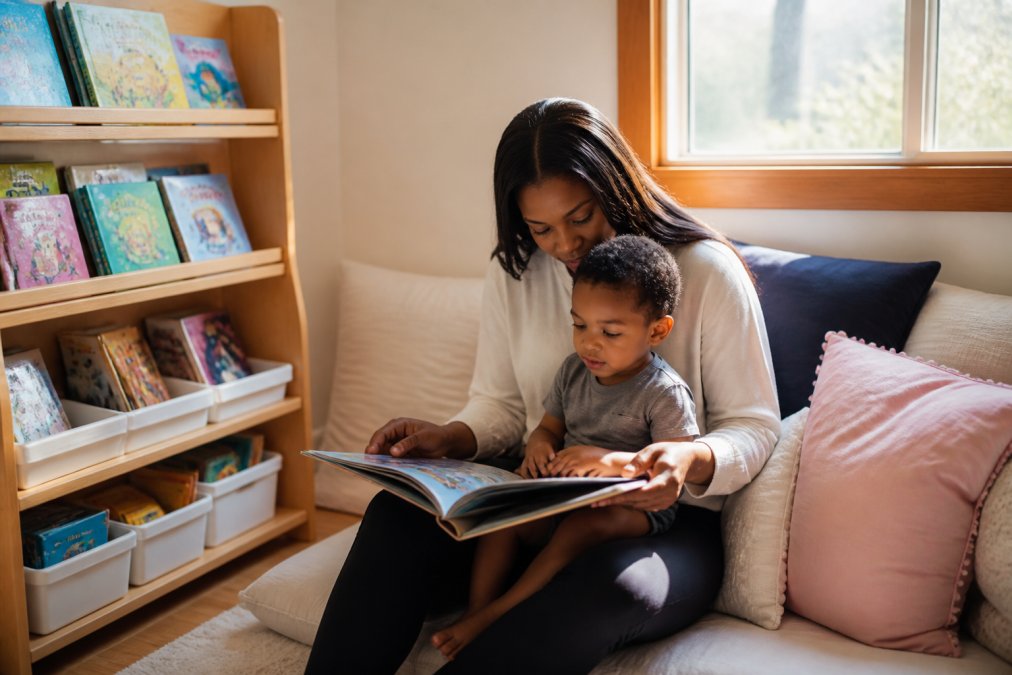
A dedicated reading space signals to your toddler that books matter. Start simple: gather 8-12 board books your toddler enjoys, arrange them spine-out on a low shelf so covers are visible, and add a cushion or small chair nearby. Natural light works better than harsh overhead lighting. A reading nook becomes a refuge where your child learns to associate stories with safety and closeness.
The physical setup matters more than you'd think. Toddlers with easy access to books in their own space read more frequently throughout the day, even without adult prompting. This builds literacy development naturally, turning reading into a habit rather than a scheduled activity.
Step 2: Choose the Right Time and Build Consistency
Consistency matters more than duration when building a reading routine for toddlers. Your toddler's brain thrives on predictability, the same time each day signals that reading is coming, which builds anticipation and reduces resistance.
Most families find bedtime works best, but morning, after lunch, or right after arriving home can work equally well. Choose a time when your toddler is alert but calm, not overstimulated or exhausted. Start with just 5-10 minutes daily (the NIH). This short window is enough to build the habit without burning you out. Bedtime routines work particularly well because reading naturally winds down energy and prepares the brain for sleep.
Step 3: How to Make Reading Fun for Toddlers
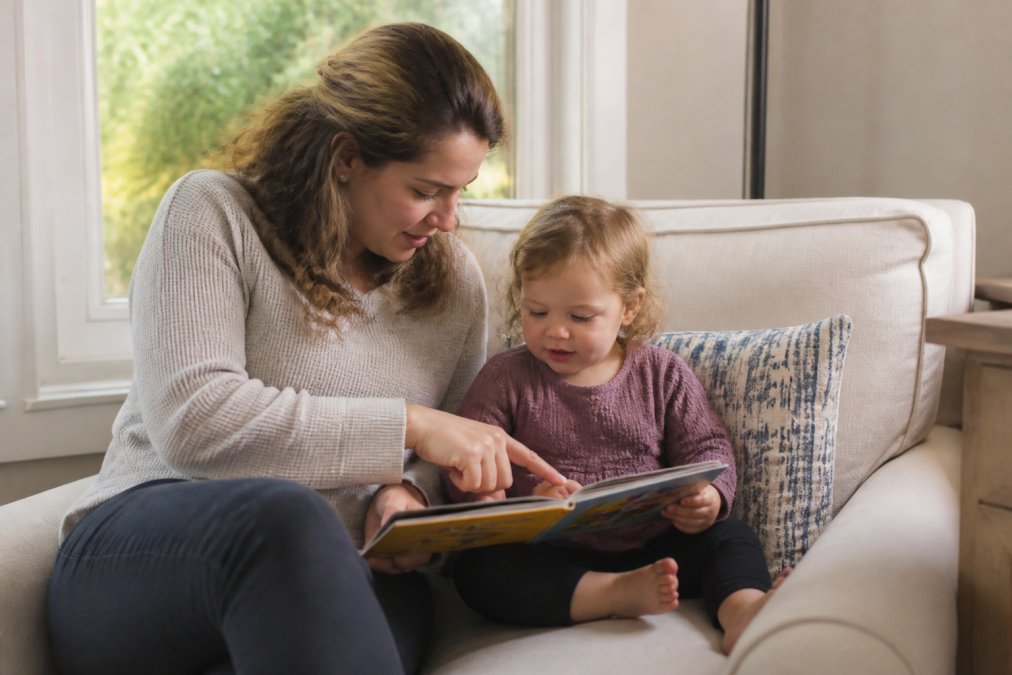
Reading should feel like play, not instruction. Use different voices for characters, make animal sounds, and let your toddler turn the pages. Point at pictures and ask simple questions: "Where's the dog?" Pause to let your child respond or make predictions. This interactive approach keeps your toddler engaged because they're participating, not passively listening.
Physical engagement matters too. Let your toddler sit on your lap or nestle against you while you read. The sensory experience, your warmth, your voice, the texture of the book, creates positive associations with books that last years.
Choose books with rhythm and rhyme. Toddlers respond to the musicality of language before they understand word meanings. If your child wants to read the same book five times in a row, that's perfect, repetition builds comprehension and confidence. Keep sessions short and follow your toddler's lead.
Step 4: Master Interactive Reading Strategies for Parents
Interactive reading transforms a one-way activity into a conversation. The most effective technique is the "pause and prompt" method: read a sentence, then pause and ask your toddler a question about what's happening. These simple prompts activate your child's thinking and keep attention focused on the story.
Use the "PEER" sequence: Prompt your child to respond, Evaluate their response without judgment, Expand on what they said, and Repeat the prompt later. Point at pictures and name objects. Ask your toddler to find things: "Can you point to the cat?" When your child responds, repeat and expand: "Yes, that's the cat! The cat is sleeping."
Connect stories to your toddler's life. When you read about eating, mention what your child ate for breakfast. These connections help your toddler see that reading is about understanding their world. Avoid over-explaining or correcting, gently model the correct version without making it a lesson.
Step 5: Understand Your Toddler's Reading Attention Span
Your toddler's attention span is not a weakness, it's a developmental reality. Understanding what's normal for your child's age helps you set realistic expectations and choose books that match their actual capacity.
Age-specific attention span and comprehension:
12-18 months. Attention span: 1-2 minutes per book (peer-reviewed research). Your toddler is interested in objects, not narratives. Choose board books with single objects per page, high-contrast images, or textured elements. Read the same book multiple times; repetition is how this age learns.
18-24 months. Attention span: 2-4 minutes. Your toddler can follow simple, concrete stories with repetitive patterns. Choose books with rhythm, rhyme, and simple plots. Your child may interrupt to point at pictures or make sounds, this is engagement, not distraction.
2-3 years. Attention span: 3-7 minutes (peer-reviewed research). Your toddler can follow a simple story arc with a beginning, middle, and end. They understand cause and effect. Choose books with 10-20 pages, clear illustrations, and relatable characters about familiar experiences: eating, sleeping, playing, family.
3-4 years. Attention span: 5-10 minutes. Your toddler can follow more complex plots with multiple characters and events. They understand emotions and can predict what happens next. Choose books with 20-30 pages, more detailed illustrations, and richer vocabulary.
4-5 years. Attention span: 10-15 minutes. Your child can follow chapter books read across multiple sessions. They understand abstract concepts and can discuss feelings and motivations. They may want to read independently or "read" by memory.
Matching book complexity to attention span:
The biggest mistake parents make is choosing books that are too advanced for their toddler's current stage. Match the book to your child's current attention span and comprehension, not their age.
For 12-24 months: Board books with 10-15 pages maximum, one clear object or simple action per page, high-contrast colors, and minimal text (2-5 words per page).
For 2-3 years: Picture books with 15-25 pages, simple stories with repetition, familiar themes, and illustrations that match the text clearly.
For 3-5 years: Picture books with 25-35 pages, more detailed illustrations, richer vocabulary, and stories with a clear problem and solution.
Recognizing genuine engagement versus distraction:
Signs your toddler IS engaged:
- Eyes occasionally on the book or illustrations
- Pointing at pictures, naming objects, or making sounds
- Asking questions or making predictions
- Staying in the general area, even if moving around
- Requesting the same book repeatedly
- Remembering details from previous readings
Signs your toddler is genuinely disengaged:
- Pushing the book away or saying "no"
- Running to a completely different activity and not looking back
- Showing signs of hunger, tiredness, or overstimulation
- Repeatedly trying to leave the space despite your invitations to stay
- Showing no response to your voice or the book's content
Building attention span gradually:
Attention span develops through repeated positive experiences, not through forcing longer sessions. If your toddler typically engages for 4 minutes, aim for 5 minutes next week. Add one extra page or one extra book to the routine. A short, positive reading experience is infinitely more valuable than a long, stressful one. The attention span will grow naturally as your child's brain develops and as they discover stories they genuinely love.
Step 6: Let Your Child Choose and Rotate Books
Giving your toddler choice builds investment in reading. When your child selects the book, they're more likely to stay engaged because they chose it.
Create a rotation system to keep books fresh without overwhelming your toddler. Keep 8-12 books accessible at any time. Every week or two, swap out 3-4 books and replace them with others from your collection. Visit your library regularly, most libraries have extensive toddler collections and librarians can recommend books matched to your toddler's interests and developmental level.
Pay attention to what captures your toddler's attention. Some children love animals, others prefer vehicles or people. Some want books with textures and flaps, others prefer simple illustrations. Don't force books that aren't working. If your toddler consistently rejects a book, set it aside. Respecting your child's preferences teaches them that their opinions matter and that reading should be enjoyable.
Step 7: Handle Resistance and Build a Simple Reading Routine for Toddlers
Resistance is one of the most common obstacles parents face when building a reading routine. Toddlers throw books, run away mid-story, or flatly refuse to sit down. This isn't a sign reading won't work; it's a sign you need a troubleshooting strategy.
Common resistance triggers and how to address them:
Book rejection. Your toddler pushes the book away or says "no." This usually means the book doesn't match their current interest or the length feels too long. Solution: Swap immediately. Have 2-3 backup books within arm's reach. Ask your toddler to pick the next one. If your child consistently rejects a book, remove it from rotation for a month and try again later.
Physical restlessness. Your toddler fidgets or paces. Many toddlers process stories while moving. Try reading while your child plays nearby, reads during snack time, or reads in the car. If your toddler is genuinely trying to leave the space, they may be tired, hungry, or overstimulated. Pause reading and address the root cause.
Throwing or destroying books. Your toddler tears pages or throws the book. This is often a sign your toddler is frustrated, bored, or testing boundaries. Stay calm and calmly say, "Books are for reading, not throwing. We're done for now." If this happens repeatedly, switch to board books with thicker pages or books designed for rough handling.
Demanding the same book repeatedly. Your toddler wants one book five times in a row. This isn't a problem, repetition builds comprehension and confidence. Read it five times if that's what your child needs. If you're burned out, try a compromise: "We'll read it three times, then pick a new one."
Refusing to read at the scheduled time. Give a 5-minute warning: "In five minutes, we're going to read together." If your child still refuses, don't force it. Offer reading at a different time that day. If resistance happens daily at the same time, your scheduled time may not match your toddler's natural rhythm.
Asking for screens instead. This is a boundary-setting moment. Calmly say, "Reading time is now. Screens come later." Once your child calms down, offer reading again. Consistency teaches your toddler that reading happens at this time.
When to pause and restart. If reading has become a daily battle, take a one-week break. Stop all scheduled reading. Offer books casually, leave them on the floor, read to yourself while your child plays nearby. Often, when pressure disappears, toddlers naturally gravitate back to books. After a week, restart with a shorter time window and lower expectations.
The power of celebration over pressure. Every time your toddler engages, even for one page, acknowledge it: "You sat with me for that story! You're such a good listener." Your genuine enthusiasm matters far more than perfect behavior. A toddler who reads three pages today and throws the book tomorrow is still building a reading routine. Consistency over perfection means showing up regularly, adjusting when something isn't working, and trusting that small, positive interactions accumulate into lasting habits.
Frequently Asked Questions
How long should a toddler reading session last?
Start with 5-10 minutes for infants and younger toddlers, gradually building as attention span develops. Most toddlers between 18-36 months can sustain engagement for about 10-15 minutes. Follow your child's cues, if they show signs of restlessness, it's okay to stop. Consistency matters more than duration. Short, daily sessions build stronger literacy skills and positive associations with reading than occasional longer sessions.
What should I do if my toddler refuses to sit for a book?
Resistance is normal and doesn't mean your child won't become a reader. Try reading aloud while your toddler plays nearby, letting them absorb language without pressure to sit still. Offer books during different times of day to find their natural rhythm. Let them stand, move, or hold the book themselves. Start with books featuring textures, flaps, or high-contrast images that invite interaction. Never force sitting, positive associations with books matter more than perfect posture during early literacy development.
How many books should I read to my toddler each day?
Reading at least one book daily is beneficial, though multiple short sessions spread throughout the day can be ideal for building strong literacy development. This doesn't require long books, even five minutes with a single picture book counts. The goal is daily consistency rather than hitting a specific number. Many families find success reading one book at bedtime, one during quiet time, and one or two during transitions (meals, car rides). Quality and repetition trump quantity; toddlers benefit from hearing the same stories multiple times.
What's the best time of day for a toddler reading routine?
Bedtime is often effective because it signals wind-down and pairs reading with a calming routine. However, the best time is whenever your toddler is naturally calm and receptive, this varies by child. Some toddlers engage better after a meal or snack when they're content. Avoid times when your child is hungry, tired, or overstimulated. Consistency with timing matters more than the specific hour. If bedtime reading doesn't work, try mid-morning or early afternoon when energy levels are stable.
This article was written using GrandRanker


