 Listicle
Reading Rockets Alternatives: 10 Programs for Parents
Table of Contents
- Why Parents Seek Reading Rockets Alternatives
- Quick Comparison of Top Reading Rockets Alternatives
- Science of Reading Resources for Parents: What Sets Programs Apart
- Best Reading Programs for Toddlers: Age-Appropriate Options
- Structured Literacy Activities at Home: Implementing Evidence-Based Strategies
- Free vs. Paid Alternatives: Cost-Benefit Analysis for Families
- How to Choose the Right Reading Program for Your Child
- Conclusion
- Frequently Asked Questions
Last Updated: August 30, 2026
Why Parents Seek Reading Rockets Alternatives
Parents often turn to established resources like Reading Rockets for guidance on early literacy, but many find themselves looking for a reading rockets alternative that better fits their family's unique needs, learning style, or budget. The reasons are surprisingly consistent: some programs don't align with a child's developmental stage, others feel too rigid for busy schedules, and many parents simply want options that reflect different teaching philosophies or offer more personalized support.

Military families relocating every 18 months need continuity that survives constant school changes. Parents on tight budgets want to know whether paid programs genuinely outperform free alternatives. And parents of very young children, infants and toddlers not yet speaking, need evidence that early literacy work actually matters before they invest time or money.
The truth is that no single resource works for every family. A reading rockets alternative might mean a more interactive app for a kinesthetic learner, a structured curriculum for a homeschooler, a digital library for a child who loves audiobooks, or a research-backed program that doesn't require a teaching background. At Lauren's Literacy Lounge, we understand that parents need clarity about what's actually available and how each option works in real family life, not just marketing promises.
This guide walks you through 10 legitimate alternatives, what sets them apart, and how to match the right program to your child's age, learning style, and your family's situation. By the end, you'll know exactly which approach fits your needs.
Quick Comparison of Top Reading Rockets Alternatives
| Program | Best For | Key Strength | Price Point |
|---|---|---|---|
| Lauren's Literacy Lounge | Parents as first teachers | Evidence-based strategies for birth to brilliance | Varies |
| Hooked on Phonics | Structured phonics learners | Proven systematic phonics with physical + digital | $1 first month, then $14.99/month |
| ABCmouse.com | Multi-subject learners | Comprehensive curriculum across reading, math, science | $14.99/month |
| Reading Eggs | Gamified learning | Engaging games covering phonics through comprehension | $13.99/month |
| Epic! | Book lovers | Massive library of 40,000+ books and audiobooks | $13.99/month |
| Starfall | Budget-conscious families | Strong free content with affordable premium tier | $35/year |
| Lexia Core5 Reading | Struggling readers | Adaptive, research-backed personalized instruction | $175 one-time |
| Logic of English Foundations | Homeschoolers | Explicit phonics without sight words | $88.16+ per level |
| All About Reading | Busy parents | 20-minute daily lessons, multisensory approach | Varies by level |
| Reading A-Z | Teacher-led instruction | Extensive leveled books with comprehensive lesson plans | $125/year |
Science of Reading Resources for Parents: What Sets Programs Apart
Understanding the science of reading resources for parents means recognizing that not all literacy programs are built on the same foundation. The most effective programs rest on evidence about how children actually learn to read, and this is where many alternatives diverge sharply from one another.
The five pillars of reading instruction, phonemic awareness, phonics, fluency, vocabulary, and comprehension, appear across quality programs, but the emphasis and execution differ dramatically. Some programs front-load phonics because that's where struggling readers need the most help. Others balance all five equally. Some rely on decodable texts (books built specifically to practice phonics rules), while others prioritize engagement through high-interest stories.
Programs like Lexia Core5 Reading and Logic of English Foundations explicitly advertise their research backing and systematic approach. They're designed for parents who want to know why each lesson matters and how it connects to reading science. In contrast, gamified programs like Reading Eggs and ABCmouse prioritize motivation and engagement, trusting that consistent practice across these five pillars will compound over time.
The real question isn't which approach is "best", it's which approach matches your child's learning profile. A child who thrives on structure and explicit instruction might struggle with open-ended exploration, while a highly motivated child might find rigid curricula boring. Lauren's Literacy Lounge helps parents recognize their child's learning style so they can choose a science of reading resources for parents option that actually sticks.
Best Reading Programs for Toddlers: Age-Appropriate Options
The best reading programs for toddlers aren't always the ones with the slickest marketing. Toddlers aged 18 months to 3 years are in a critical window for phonemic awareness and oral language development, the precursors to reading (the NIH). Programs that work at this stage focus on sound play, rhyming, letter recognition, and building vocabulary through repetition and joy.
Starfall's free tier excels here. Its simple animations and sound-focused activities feel right for toddlers, and parents don't need to commit financially before testing whether their child engages. The interactive letter sounds and basic phonics games align with how toddlers learn best: through play and repetition.
ABCmouse.com also works well for this age group, though it covers more ground than toddlers need. The sheer volume of activities (over 10,000) means parents can cherry-pick age-appropriate lessons without feeling pressured to complete a rigid scope and sequence. The offline access is practical for families managing screen time carefully.
For parents who want something more intentional, Logic of English Foundations or All About Reading can start as early as age 3, though both require active parent participation. These aren't "put your child in front of a screen" programs, they're "sit down together for 15-20 minutes" programs, which actually strengthens the home-school connection that research shows matters most.
Reading Eggs and Epic! both work for toddlers but skew slightly older (ages 3-5). Epic!'s audiobook feature is genuinely valuable for toddlers who love stories but can't yet decode text (peer-reviewed research). Hooked on Phonics begins at Pre-K but feels more suited to children closer to age 4 who show interest in letter sounds.
Structured Literacy Activities at Home: Implementing Evidence-Based Strategies
Structured literacy activities at home don't require expensive programs or a teaching degree. What they require is consistency, intentionality, and understanding what you're actually practicing.
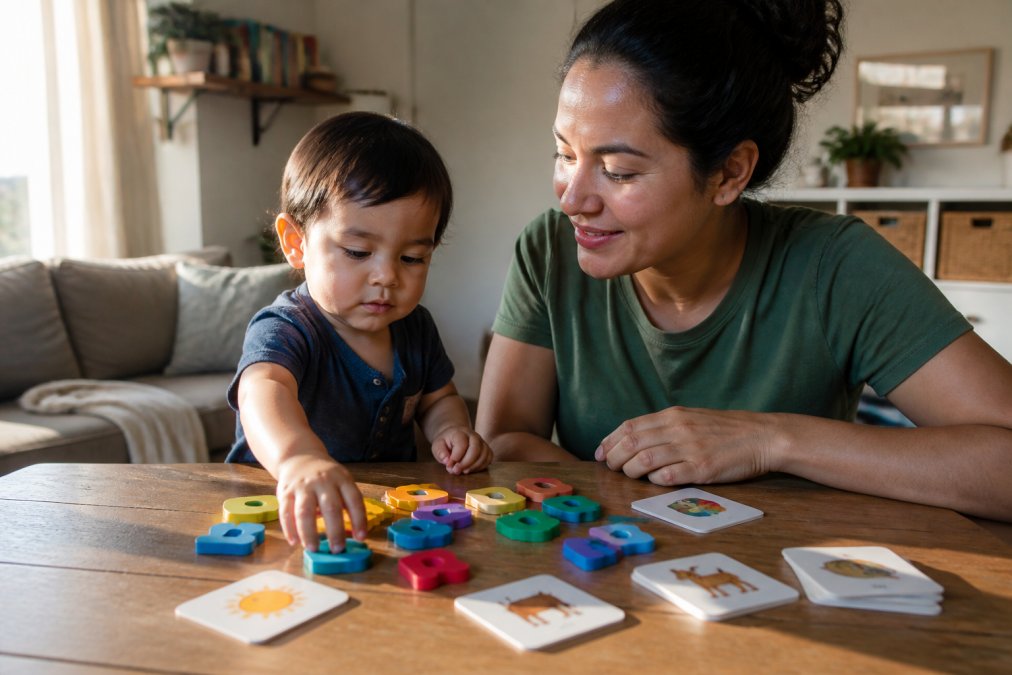
The most effective approach combines three elements: explicit instruction (you teach a phonics rule or letter sound directly), guided practice (you do it together), and independent practice (your child practices alone while you observe). This doesn't mean worksheets and drilling. It means:
Phonemic Awareness Play, Rhyming games, clapping syllables, identifying beginning sounds in words. This costs nothing and can happen during meals, car rides, or bath time. A child who can hear that "cat," "cap," and "car" start with the same sound has phonemic awareness. This is the foundation that makes phonics instruction stick.
Letter Sound Exploration, Rather than overwhelming a child with all 26 letters at once, introduce 2-3 letter sounds per week. Use magnetic letters, write in sand, trace in shaving cream. Say the sound repeatedly and find objects around the house that start with it. This multisensory approach works because toddler brains encode information through multiple senses simultaneously.
Read-Aloud Rituals, Predictable, daily read-alouds build vocabulary and oral language. Pause to ask questions, point out words, and let your child turn pages. This isn't passive screen time, it's interaction. Children who are read to daily hear roughly 1.4 million more words by age 3 than children without this routine (peer-reviewed research).
Controlled Decodable Practice, Once a child knows a few letter sounds, decodable readers (books built to practice those specific sounds) accelerate confidence. Programs like Hooked on Phonics, Reading Eggs, and Logic of English all include these. The point is that a child can actually read the book rather than memorizing it or relying entirely on picture cues.
Many parents worry they'll "mess it up" or teach something incorrectly. The reality: consistency and joy matter far more than perfection. A parent who reads aloud every night and plays rhyming games at dinner is doing literacy work that outperforms a parent paying for a program they never open. book purchasing alternatives.
Free vs. Paid Alternatives: Cost-Benefit Analysis for Families
The question of free versus paid often comes down to what you're willing to invest: money, time, or both.
Free Options, Starfall, ABCmouse (limited free tier), Reading Eggs (30-day free trial), and Epic! (free educator access, sometimes extended to home use) all offer substantial free content. For families on tight budgets, these are genuinely valuable. Starfall's free content covers phonics and early reading skills comprehensively. Epic!'s free access through schools provides unlimited books and audiobooks.
The trade-off: free programs often require more parental curation. You'll need to decide which activities match your child's level, monitor progress yourself, and potentially supplement with other resources. They also tend to have less personalized instruction, the program doesn't adapt based on your child's performance.
Paid Subscriptions, Hooked on Phonics ($14.99/month), Reading Eggs ($13.99/month), ABCmouse ($14.99/month), and Epic! ($13.99/month) all fall into the mid-range subscription category. These are affordable for most families and offer more curated progression. The programs typically track your child's progress and adjust difficulty automatically.
The trade-off: you're paying for convenience and structure, not necessarily better outcomes than free alternatives. A highly motivated parent using free Starfall might see better results than a disengaged parent with a paid subscription.
One-Time Purchases, Logic of English Foundations ($88.16+ per level), Lexia Core5 Reading ($175 one-time), All About Reading (varies by level), and Reading A-Z ($125/year) represent larger upfront investments. These appeal to parents who want a comprehensive, structured curriculum they can reference repeatedly.
The trade-off: higher initial cost, but no recurring fees. These programs also tend to require more active parental involvement, which means you're not just paying for the program, you're paying for structure that guides your teaching.
For military families or those moving frequently, subscription programs offer flexibility (you can pause or cancel), while one-time purchases tie you to a specific curriculum. For parents on a tight budget, free programs with consistent parental engagement often outperform expensive programs used sporadically.
How to Choose the Right Reading Program for Your Child
Choosing a reading rockets alternative that actually works means matching three factors: your child's age and developmental stage, their learning style, and your family's constraints (time, money, teaching background).
Start with age. A 12-month-old and a 4-year-old need completely different programs. Toddlers benefit from phonemic awareness and oral language work, programs like Starfall and ABCmouse work well here. Preschoolers (ages 3-5) are ready for explicit phonics, this is where Hooked on Phonics, Reading Eggs, and Logic of English excel. Early elementary children (ages 5-7) benefit from programs that push fluency and comprehension alongside continued phonics support.
Assess learning style. Is your child a visual learner who loves games and animations? Reading Eggs or ABCmouse. An auditory learner who loves stories? Epic! or a program heavy on read-alouds. A kinesthetic learner who needs to touch and manipulate? Logic of English or All About Reading, which incorporate letter blocks, writing, and hands-on activities. A child who needs explicit structure and clear progression? Lexia Core5 or Reading A-Z.
Consider your capacity. Can you commit 15-20 minutes daily? All About Reading or Logic of English require active parent participation. Do you have 5-10 minutes? ABCmouse or Reading Eggs work in shorter bursts. Do you need a program that runs mostly independently? Epic! or Reading Eggs allow more child autonomy.
Test before committing. Most programs offer free trials or free tiers. Use them. A $14.99/month subscription feels small until you've paid for three months of something your child doesn't engage with. Starfall's free content is substantial enough to give you real data about whether your child responds to that style of instruction.
Watch for red flags. If a program promises to teach reading in weeks, claims results without evidence, or requires you to buy multiple expensive add-ons to see results, move on. The most effective programs are honest about what they do and realistic about timelines. Reading is a skill that builds over years, not weeks.
Lauren's Literacy Lounge helps parents navigate these decisions by providing frameworks for evaluating programs against evidence-based literacy instruction. Rather than recommending a single "best" option, we help you understand why certain programs work for certain children and how to recognize quality instruction regardless of format.
Conclusion
The abundance of reading rockets alternatives reflects a real truth: families have different needs, and one-size-fits-all approaches rarely work. The best program is the one your child will actually use consistently and that aligns with how they learn.
Whether you choose a structured curriculum like Logic of English, a gamified app like Reading Eggs, a comprehensive digital library like Epic!, or a combination of free resources supplemented with parental guidance, the foundation remains the same: consistent, intentional exposure to phonemic awareness, phonics, fluency, vocabulary, and comprehension, delivered with joy rather than pressure.
Frequently Asked Questions
What makes a reading rockets alternative worth choosing over free online resources?
Free resources like Reading Rockets offer valuable information, but structured reading programs provide personalized learning paths, progress tracking, and evidence-based instruction tailored to your child's pace. Paid alternatives often include phonemic awareness, phonics instruction, fluency practice, and comprehension support in a cohesive curriculum. The difference lies in systematic, adaptive instruction versus general literacy guidance. Many alternatives also remove the burden of designing lessons yourself, which matters for busy parents or military families navigating frequent relocations who need consistency across moves.
Which reading programs work best for infants and very young toddlers under 18 months?
Most structured reading programs target ages 2 and up. For younger infants, focus on language development through read-alouds, singing, and verbal interaction rather than formal instruction. Programs like ABCmouse and Reading Eggs accept children as young as 2 years old and emphasize early literacy foundations. Starfall and Epic! also support very young learners with picture books and audiobooks. The best approach for infants under 18 months is consistent daily reading aloud and conversation, which builds auditory processing and vocabulary, the foundation for later reading success.
How do I know if a reading program uses science of reading principles?
Evidence-based reading programs address the five pillars of reading: phonemic awareness, phonics instruction, fluency practice, vocabulary acquisition, and reading comprehension. Look for programs that explicitly teach letter-sound relationships, include decodable texts, provide systematic phonics lessons, and track progress through criterion-referenced measures. Programs like Lexia Core5, Logic of English, and All About Reading are built on structured literacy frameworks. Check program descriptions for terms like 'multisensory learning,' 'systematic phonics,' and 'adaptive instruction.' Many alternatives provide research citations on their websites explaining their pedagogical approach.
Can these reading programs work for military families who move frequently?
Yes. Digital programs like ABCmouse, Reading Eggs, and Epic! are location-independent, you access them from any device, anywhere. They maintain progress tracking across moves, so your child picks up where they left off without losing continuity. Subscription-based programs are especially useful because you maintain the same curriculum regardless of school changes. Physical programs like All About Reading and Logic of English are portable and don't depend on school systems. The key advantage for military families is avoiding the disruption of changing literacy instruction methods every time you relocate. Your child stays with the same program and teacher (you) throughout moves.
What's the difference between programs designed for struggling readers versus typical learners?
Programs for struggling readers emphasize diagnostic assessment, personalized learning paths, and intensive phonics instruction. Lexia Core5 and All About Reading are specifically designed for children with reading difficulties, including dyslexia, using multisensory, mastery-based approaches. They move at a slower pace and provide more repetition. General programs like ABCmouse and Reading Eggs work for typical learners but may not provide the targeted intervention struggling readers need. If your child is behind in decoding skills or auditory processing, choose programs with adaptive instruction that diagnoses gaps and adjusts difficulty. Many offer trial periods so you can assess whether the pacing matches your child's needs.
At Lauren's Literacy Lounge, we empower parents to become their child's first and most important teacher. Our Literacy Roots program equips you with evidence-based strategies designed from birth through early reading, so you can confidently guide your child's literacy journey without relying solely on external programs. Get started with Lauren's Literacy Lounge and transform how you approach early literacy at home.
This article was written using GrandRanker