 Ultimate guide
Parent Guide to Early Literacy: Birth to Age 5
Table of Contents
- What Is Early Literacy and Why It Matters
- Early Literacy Milestones by Age
- Building a Literacy-Rich Home Environment
- Phonemic Awareness Activities for Parents
- Reading Aloud and Interactive Shared Reading
- Supporting Early Literacy for Diverse Learners
- Recognizing When Your Child Needs Extra Support
- Frequently Asked Questions
Last Updated: September 19, 2026
What Is Early Literacy and Why It Matters
Early literacy refers to the skills, knowledge, and dispositions that lay the foundation for reading and writing development from birth through age five. It encompasses oral language development, phonological awareness, print awareness, and the understanding that symbols carry meaning, emerging long before formal instruction begins, shaped by everyday interactions with language and books in the home environment.
Children who develop strong early literacy skills enter kindergarten with a significant advantage: they're more likely to become fluent readers, perform better academically, and develop a love of reading that sustains them throughout their education. The birth-to-five window is critical because neural pathways for language processing form most rapidly during this period. Missing this window doesn't prevent later success, but requires considerably more intervention.
Early literacy development is about creating natural, joyful interactions with language. When you read aloud, play rhyming games, or narrate daily activities, you're building the cognitive architecture for reading success. This parent guide to early literacy walks you through what to expect at each developmental stage and concrete strategies you can implement immediately.
Early Literacy Milestones by Age
These milestones are general guidelines; individual variation is normal and expected.
Birth to 12 Months
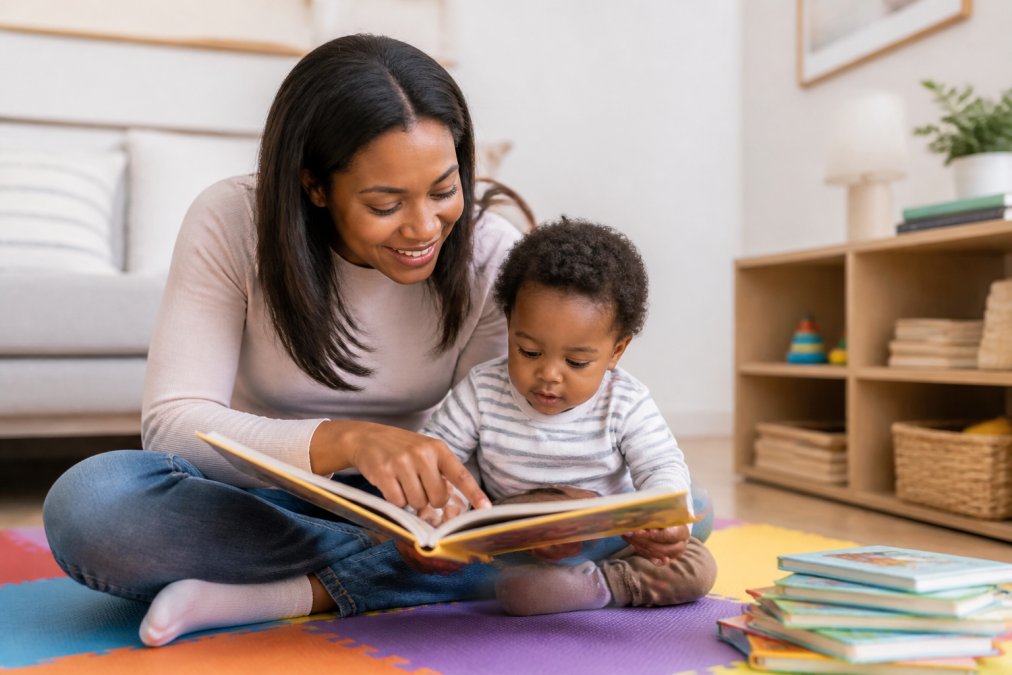
Infants absorb language long before producing it, learning the rhythm and melody of speech. By three months, babies typically respond to their name. By six months, they begin babbling, experimenting with sounds that mimic the language they hear around them.
Around nine to twelve months, most infants understand simple words like "mama," "dada," and their own name. Receptive language (understanding words) always precedes expressive language (saying words). During this stage, narrate daily activities, read board books together, and respond to your baby's vocalizations as if they're participating in conversation, this back-and-forth interaction builds neural connections for language processing.
12 to 24 Months
Between twelve and eighteen months, most toddlers speak their first recognizable words. By two years, vocabulary typically grows to 50-200 words, and many children begin combining two words ("more milk," "daddy home"). Toddlers notice and enjoy rhyming sounds and rhythmic patterns in speech.
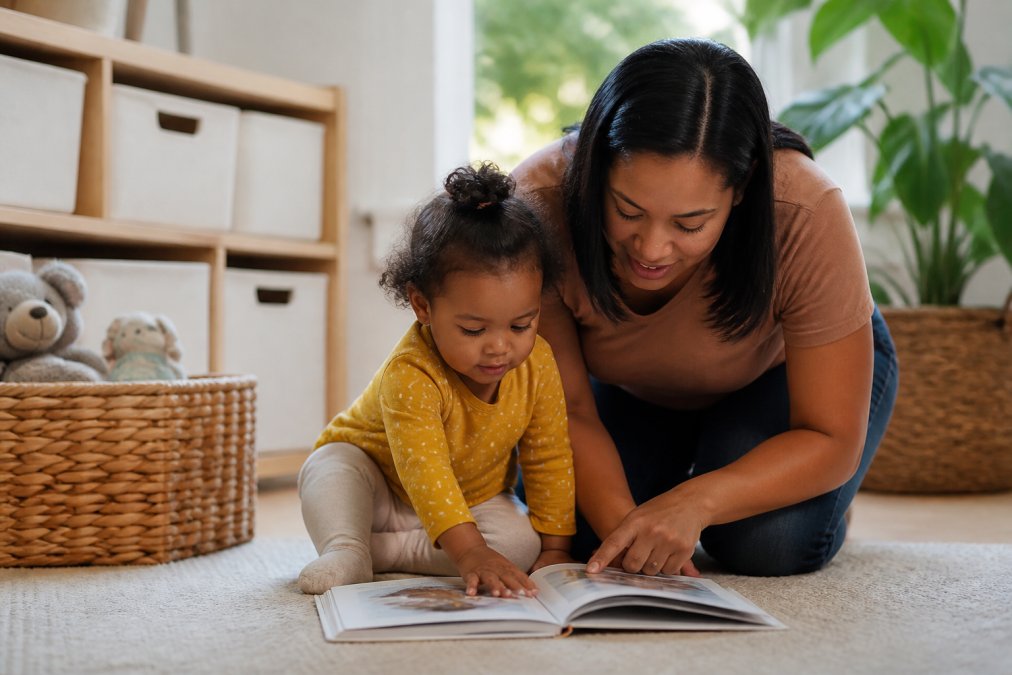
Toddlers learn that books have a front and back, that you turn pages, and that pictures represent real objects. Reading the same books repeatedly is essential, repetition builds vocabulary and helps toddlers anticipate what comes next, strengthening comprehension and memory.
2 to 3 Years
Two-year-olds typically use 200-500 words and begin forming simple sentences. They understand simple directions, ask "what's that?" constantly, and enjoy songs, nursery rhymes, and books with repetitive patterns. Narrative skills emerge, though their stories are often fragmented.
Children notice and play with individual sounds within words, enjoying tongue twisters, alliteration games, and rhyming activities. By three years, many recognize some letters, particularly those in their own name. Phonological awareness activities should always feel like play, not instruction. A three-year-old who can rhyme or segment syllables has skills that directly predict later reading success.
3 to 5 Years
By age four, most children have vocabularies of 1,000-2,000 words and can tell longer, coherent stories. They understand complex sentences, enjoy wordplay, and many begin recognizing letters and their sounds. Some start writing, progressing from scribbles to invented spellings.
Children understand that print carries meaning, recognize environmental print (stop signs, cereal boxes), and show interest in decoding simple words. By age five, children with rich early literacy experiences often recognize left-to-right directionality, understand the concept of a word, and can read simple texts independently.
Building a Literacy-Rich Home Environment
The most powerful predictor of reading success is a literacy-rich home environment: surrounding your child with language, books, and meaningful interactions around text. It requires intentionality about making language and reading central to daily life, not expensive programs or fancy materials.
Keep picture books at your child's level for independent access and rotate them regularly. Visit your local library frequently for free storytimes and book borrowing. Fill your home with print: label objects, read recipes aloud while cooking, point out words on signs during walks. Talk constantly with your child, narrating daily activities and responding enthusiastically to their communication attempts.
Create predictable reading routines. A bedtime story becomes an anchor point in the day, signaling that books and language are valued in your family. The specific time matters less than consistency.
Limit screen time, particularly for children under two. Interactive language and conversation build skills far more effectively than passive screen consumption. For children two and older, choose high-quality programming and watch together, pausing to discuss. Reading together, playing language games, and talking should dominate your child's day.
Phonemic Awareness Activities for Parents
Phonemic awareness, the ability to recognize and manipulate individual sounds within words, is one of the strongest predictors of reading success and develops naturally through playful interaction.
Rhyming Games and Sound Play
Rhyming is the most accessible entry point into phonemic awareness. Start with nursery rhymes and picture books that emphasize rhyme. "Chicka Chicka Boom Boom," "Hop on Pop," and "Green Eggs and Ham" make rhyming irresistible.
Play simple rhyming games: say a word and ask your child to think of a rhyming word. Start with obvious rhymes like "cat" with "hat," "bat," "mat." Model correct answers without correcting: "Dog is a great word, and it rhymes with... log!" Sing rhyming songs together and make up silly rhyming sentences during daily routines.
Syllable and Sound Segmentation
Clap out syllables in words: "el-e-phant" (three claps), "dog" (one clap), "but-ter-fly" (three claps). Children enjoy the physical movement of clapping while saying words.
Reading Aloud and Interactive Shared Reading
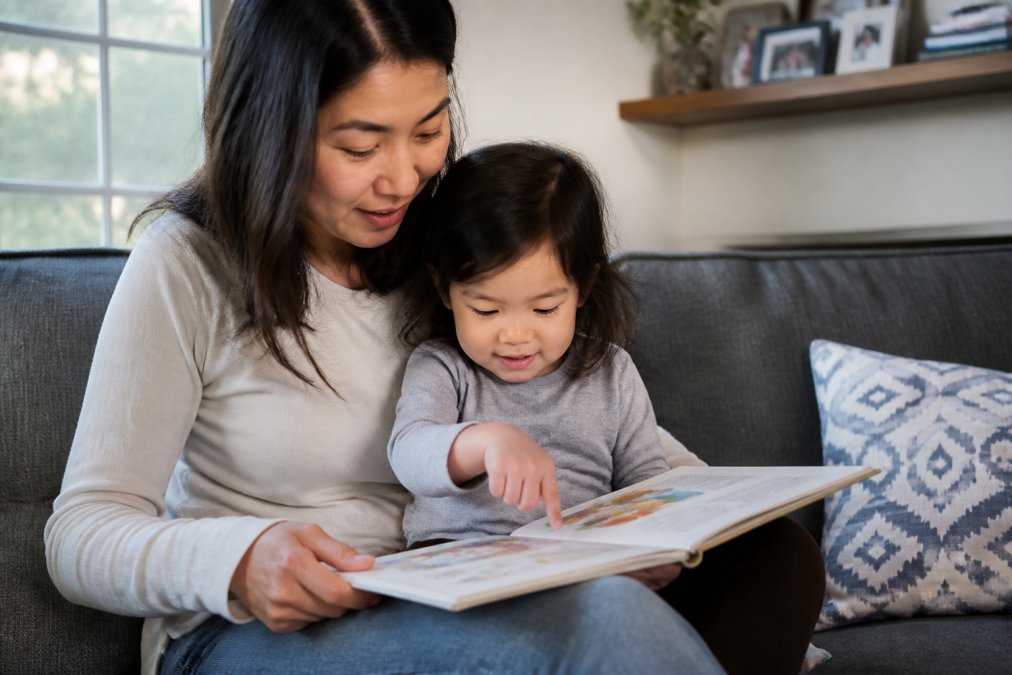
Reading aloud is the single most important activity you can do to support early literacy development. Interactive shared reading, where you pause to ask questions, make predictions, and discuss what you're reading, is significantly more powerful than passive listening.
Supporting Early Literacy for Diverse Learners
Every child develops at their own pace, and some children have additional considerations that affect literacy development. Recognizing and supporting diverse learners ensures all children have access to literacy success.
Multilingual and Bilingual Development
Children growing up in multilingual households often develop literacy skills across languages simultaneously. This is an asset, not a liability. Research shows that bilingual children typically have advantages in phonological awareness and metalinguistic awareness, the ability to think about language itself (Bilingualism and Development of Literacy in Children: A Systematic Review).
Neurodiversity and Sensory Considerations
Some children have sensory processing differences, ADHD, autism, or other neurological differences that affect how they engage with literacy activities. A child who struggles with sustained attention might need shorter reading sessions but more frequent ones. A child with sensory sensitivities might prefer books with particular textures or resist certain types of sensory input during reading.
Recognizing When Your Child Needs Extra Support
Most children develop literacy skills within a typical range, but some children benefit from additional support. Knowing what to watch for helps you identify potential concerns early, when intervention is most effective.
Frequently Asked Questions
What are the Big 5 components of early literacy?
The Big 5 early literacy skills are phonemic awareness (hearing individual sounds), phonics (connecting sounds to letters), vocabulary development (understanding word meanings), reading fluency (reading smoothly and automatically), and reading comprehension (understanding what's read). All five work together to build strong readers. Parents can support each component through daily conversations, read-alouds, and play-based activities at home.
How can I tell if my child is meeting early literacy milestones?
By 18 months, most children recognize familiar books and point to pictures. By age 2, they enjoy rhyming games and repeat words. By age 3, they understand longer stories and recognize some letters. By age 4, they know letter sounds and may read simple words. If your child shows little interest in books, doesn't follow simple directions, or has limited vocabulary by age 2-3, talk to your pediatrician about early intervention options.
What phonemic awareness activities can parents do at home?
Start with rhyming songs and nursery rhymes, children naturally enjoy the sound patterns. Play 'I Spy' with beginning sounds ('I spy with my little eye something that starts with /s/'). Clap syllables in words during daily routines. Sing songs where you pause for your child to fill in rhyming words. These activities build phonemic awareness through play, requiring no special materials or preparation, making them perfect for busy families.
How much time should I spend on literacy activities with my child daily?
Aim for 15-20 minutes of focused reading or literacy play daily, though shorter, frequent interactions throughout the day are equally valuable. Read aloud at bedtime, sing during car rides, and talk about what you see during walks. Consistency matters more than duration. Even 10 minutes of engaged, interactive reading beats 30 minutes of passive screen time. Quality interaction builds stronger literacy foundations than long, forced sessions.
Can I support early literacy if my child is multilingual or bilingual?
Yes, bilingual children benefit from literacy exposure in both languages. Read aloud in whichever language feels natural to you; children absorb phonological awareness across languages. Maintain consistent language exposure at home while your child learns English in school. Bilingualism is an asset, not a barrier. Children may take slightly longer to reach reading milestones in English, but they develop stronger cognitive and language skills overall.
What if my child has difficulty with early literacy or seems uninterested in books?
Some children need different approaches, try interactive books with flaps and textures, books about their interests, or audiobooks paired with pictures. If your child shows persistent difficulty with sounds, speech, or attention by age 3, ask your pediatrician about evaluation. Early intervention services are free or low-cost and can identify specific needs. Struggling early doesn't predict later reading ability, but early support makes a significant difference.
How do I balance early literacy with screen time and digital media?
The American Academy of Pediatrics recommends limiting screen time for children under 5. Prioritize interactive, in-person literacy activities, reading together, conversations, and play. If you use educational apps or videos, choose quality content and watch together, pausing to discuss. Screen time should not replace read-alouds or conversations. Shared media experiences are more beneficial than passive viewing, and nothing replaces the bonding and language development that come from face-to-face interaction.