 Ultimate guide
Benefits of Early Reading Programs for Toddlers
Table of Contents
- How Early Reading Programs Support Brain Development in Toddlers
- Early Literacy Development Milestones: What to Expect at Every Age
- The Social and Emotional Benefits of Reading Together
- Phonemic Awareness Activities for Preschoolers You Can Do at Home
- Choosing the Best Reading Programs for Toddlers: What Actually Matters
- Digital vs. Physical Books, Multilingual Homes, and Neurodiversity: What Most Guides Miss
- Common Pitfalls: When Early Reading Pressure Backfires
- Conclusion
- Frequently Asked Questions
Last Updated: September 11, 2026
How Early Reading Programs Support Brain Development in Toddlers
The benefits of early reading programs start with what happens inside a toddler's brain during a shared story. Early reading programs are structured routines of reading, talking, and playing with sounds that build the neural pathways a child will use for language and literacy. At Lauren's Literacy Lounge, our approach emphasizes the back-and-forth of shared reading for cognitive development. The American Academy of Pediatrics literacy guidance recommends reading aloud with children from birth, and the research behind that guidance points to measurable gains in vocabulary expansion and comprehension.
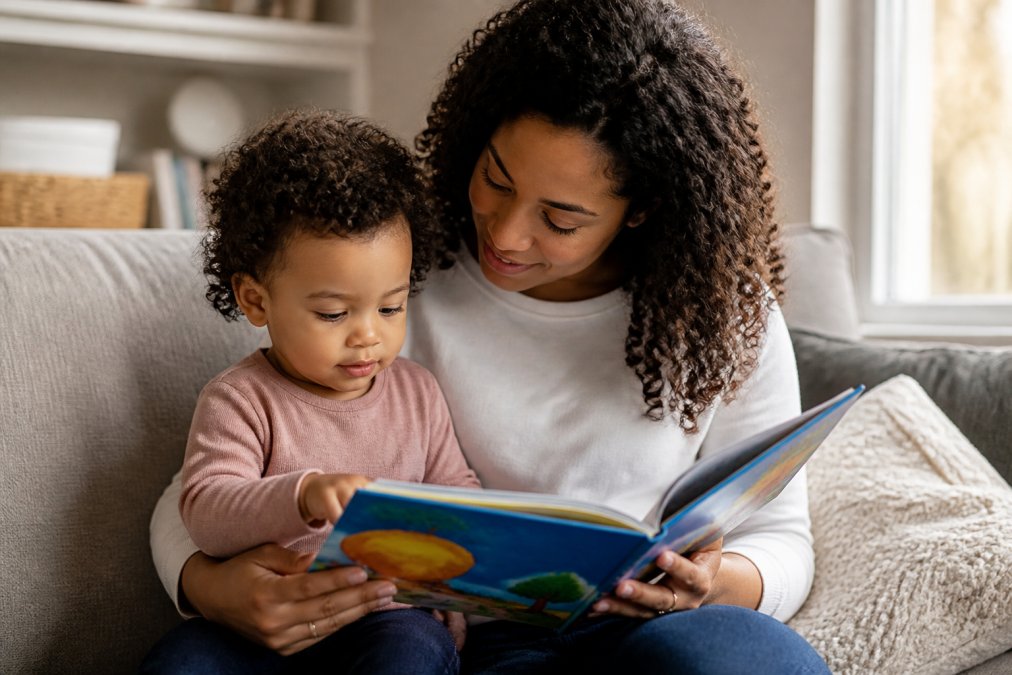
Neural Connections Built Through Shared Reading
Every time you read with a toddler, their brain practices linking sounds to meaning. This is neuroplasticity at work: repetition strengthens the connections that support language acquisition, and those connections become the literacy foundation for everything that follows. A common mistake is treating reading time as a performance where the child must sit still and listen. In practice, the richest brain-building moments happen when a toddler interrupts, points, and asks.
Early Literacy Development Milestones: What to Expect at Every Age
Early literacy development milestones are the skills children typically gain on the path to reading, and they unfold on a predictable but flexible timeline. Knowing what to expect helps you match activities to your child's stage instead of pushing skills they aren't ready for. The ranges below are wide on purpose. A child who walks early is not "ahead" in literacy, and a child who talks late is not "behind" in reading. What matters is the direction of travel, not the exact month.
A useful frame is that early literacy rests on four pillars: oral language (talking and understanding), print motivation (wanting to read), print awareness (how books and text work), and phonological awareness (hearing the sounds inside words). Every age band below builds on those four, and every activity you do at home maps back to at least one of them.
Birth to 12 Months: Sounds, Faces, and First Words
Babies build oral language skills long before they speak. They tune into your voice, watch your mouth, and begin to connect sounds with comfort. In the first months, the goal is not words at all, it is print motivation: helping your baby associate books with warmth, attention, and your voice.
What you may notice:
- 0-3 months: Calms or stills to a familiar voice; tracks a high-contrast face on a page.
- 3-6 months: Reaches for and mouths board books; babbles back when you pause.
- 6-9 months: Looks at a named picture; turns toward a sound source.
- 9-12 months: Points at pictures; lifts a flap; holds a book upright (briefly).
What to do: choose board books with high-contrast faces, simple rhythms, and few words per page. Name what you see ("Dog! Big dog."). Pause and let your baby "answer." The back-and-forth, not the story, is the point.
Ages 1 to 3: Vocabulary Explosion and Print Awareness
Toddlers add words quickly and start to notice that print carries meaning. A typical 18-month-old may use 20-50 words; by age 2, many children use 200-300, and by age 3, some use 1,000 or more. The range is enormous, and it is driven far more by how much adults talk with the child than by any program.
What you may notice:
- 12-18 months: Brings you a book to read; says or signs a word for a favorite page.
- 18-24 months: "Reads" a familiar book from memory; turns pages (sometimes several at once).
- 2-3 years: Points to and names objects in pictures; asks "what's that?"; understands that print (not just the picture) carries meaning.
What to do: name objects in pictures, ask simple questions ("Where's the duck?"), and let your toddler finish a repeated line. "Reading" a book from memory is a real milestone, not a party trick, it shows your child is holding the story's structure in mind.
Ages 3 to 5: Phonological Awareness and Narrative Skills
Preschoolers begin to hear the smaller sounds inside words, an ability called phonological awareness, and they start telling stories with a beginning, middle, and end. This is also when phonemic awareness, the ability to isolate individual sounds, like the /c/ in "cat", takes root. These pre-literacy skills predict later reading comprehension more reliably than knowing the alphabet alone.
What you may notice:
- 3-4 years: Claps syllables in a name; notices words that rhyme; recognizes their own name in print.
- 4-5 years: Hears the first sound in a word; retells a familiar story in order; pretends to read, sweeping a finger left to right.
- 5 years: Matches some letters to sounds; writes or approximates their name; asks what a sign says.
What to do: play with sounds, not letters. Rhyme, clap syllables, and swap first sounds in silly ways. Read stories with clear structure and ask what happens next. Keep sessions short, 10 to 15 minutes is plenty at this age.
The Social and Emotional Benefits of Reading Together
Reading together is one of the most reliable tools for social-emotional learning in early childhood. The routine itself, the same couch, the same voice, the same closing page, gives a toddler a sense of security, and that security is what makes parent-child bonding stick. A child who feels safe during a story is more willing to take risks with language.
The mechanism is worth naming, because it explains why the routine matters as much as the book. Shared reading does three things at once:
- It co-regulates. Your calm voice and steady pace help a toddler's nervous system settle. A settled child can pay attention, and attention is the doorway to learning.
- It builds a shared reference. When you both point at the same picture and name it, you create a moment of joint attention, one of the strongest predictors of later language growth.
- It rehearses emotion safely. A story about a lost toy lets a child feel worry and relief without real stakes. That rehearsal is how emotional vocabulary grows.
The emotional payoff goes both directions. When you pause to ask "How do you think he feels?", you are teaching a toddler to name emotions and read faces, skills that carry into every friendship they will form. Over time, children who hear emotion words in stories use more of them themselves, and that vocabulary is what lets them say "I'm frustrated" instead of throwing the book.
What This Looks Like in Practice
- Name feelings out loud. "She looks sad. I wonder why." You are supplying the word your child does not have yet.
- Let the child lead. If they want to read the same page five times, that repetition is the point, it is how the story becomes theirs.
- Sit close. Physical proximity does more for bonding than any particular title.
- End on a calm note. A predictable closing line ("The end. Goodnight.") signals safety and makes the routine repeatable.
When the Pressure Creeps In
A common pattern is that the bonding benefit quietly disappears once reading becomes a performance. If every story turns into a quiz, a child learns that reading time is a test, and the security that made the routine work is gone. The fix is not to abandon structure; it is to protect the joy. Keep the questions curious, not corrective. Let the child turn the pages, skip ahead, and interrupt. The connection is the curriculum.
Phonemic Awareness Activities for Preschoolers You Can Do at Home
Phonemic awareness activities for preschoolers don't require a curriculum, a screen, or a single purchase. They require your voice and a few minutes. A common approach is to make sound play part of routines you already have, like the walk to the car or bath time.
Sound Games That Take Five Minutes
- Sound hunt: "I'm thinking of something that starts with the /s/ sound." Let your child guess.
- Rhyme toss: Say a word, toss a ball, and take turns naming a rhyme.
- Sound counting: Clap once for each sound in a short word like "cat."
- Silly swaps: Change the first sound in your child's name and let them giggle and correct you.
Choosing the Best Reading Programs for Toddlers: What Actually Matters
The best reading programs for toddlers share three traits: they're built on back-and-forth interaction, they fit into routines you already keep, and they teach the adult as much as the child. Fancy materials matter far less than consistency. A program that gives you a short daily script and clear milestones will outperform an elaborate kit you use twice.
When you evaluate options, look for these markers:
| What to Look For | Why It Matters | Red Flag |
|---|---|---|
| Daily 10-15 minute routines | Builds habit without fatigue | Sessions over 30 minutes |
| Parent coaching included | You are the primary teacher | Child-only screen time |
| Milestone guidance by age | Matches activities to readiness | One-size-fits-all pacing |
| Print and oral language focus | Builds the literacy foundation | Phonics drills before age 3 |
| Portable, low-prep format | Survives moves and busy weeks | Heavy physical kits |
For families who move often, a program that lives in a bag or on your phone keeps routines intact when schools and teachers change. That continuity is what Lauren's Literacy Lounge's Literacy Roots program aims to provide, giving parents a repeatable routine they can carry anywhere.
Digital vs. Physical Books, Multilingual Homes, and Neurodiversity: What Most Guides Miss
Most guides treat print books as the only serious option, and that's too simple. Digital reading can work well when an adult shares the screen and talks through the story, but passive screen time without conversation doesn't build the same language skills. The interaction matters more than the medium.
Multilingual literacy deserves the same nuance. Children raised in homes with more than one language often develop strong executive function and flexible thinking, and the literacy foundation transfers across languages. Read in the language you're most comfortable speaking, because rich oral language skills in one language support reading in another.
Neurodiversity considerations change the equation again. Children with developmental differences may need more repetition, shorter sessions, or different sensory input, and that's not a failure of the approach. It's a signal to adjust pacing. The Centers for Disease Control and Prevention developmental milestones resource is a useful reference for tracking progress and knowing when to ask a professional.
Common Pitfalls: When Early Reading Pressure Backfires
Early reading pressure backfires when adults chase decoding before a child has the oral language to support it. A common mistake is drilling letter sounds with a two-year-old who still needs conversation and play, then reading the child's resistance as a discipline problem. The consequence is real: kids who associate reading with stress can lose print motivation, and that loss is harder to reverse than a delayed milestone.
Watch for these patterns:
- Turning every story into a quiz about letters
- Comparing your child's timeline to a sibling or a neighbor
- Replacing conversation with flashcards
- Ignoring frustration signals in favor of "finishing the lesson"
The fix is to slow down. Literacy intervention works best when it starts from where a child actually is, not where a chart says they should be.
Conclusion
The science is clear that the benefits of early reading programs come from connection, not pressure. If you want a routine that fits real family life, whether you're settling into a new town or juggling a full schedule, Lauren's Literacy Lounge offers Literacy Roots. This program provides age-based milestone guidance, phonemic awareness activities, and a parent-first approach to support you as your child's first teacher. Get started with Lauren's Literacy Lounge to explore building a reading routine.
Frequently Asked Questions
Is it too early for a 4-year-old to start a reading program?
No, age 4 is an ideal time for early reading programs. At this stage, children's brains are primed for phonological awareness and print motivation. Programs that focus on shared reading, sound games, and conversation rather than formal decoding drills work best. The goal is exposure and enjoyment, not pushing a 4-year-old to read independently. Research consistently shows that children who engage with books before kindergarten enter school with stronger vocabulary and comprehension skills.
How do early reading programs support brain development in toddlers?
Early reading programs build neural pathways through repeated back-and-forth interaction. When a parent reads aloud and a toddler points, babbles, or turns pages, the brain practices connecting sounds to meaning. This strengthens cognitive development, executive function, and oral language skills. Shared reading also builds phonemic awareness, the ability to hear and manipulate individual sounds in words. These connections form the literacy foundation that supports decoding, fluency, and reading comprehension later on.
What is the difference between early literacy and formal reading instruction?
Early literacy focuses on pre-literacy skills like vocabulary expansion, print motivation, narrative skills, and conventions of print. It happens through play, conversation, and shared reading. Formal reading instruction teaches decoding, sight words, and fluency through structured lessons. For children under 5, early literacy is the priority. Formal instruction can wait until kindergarten or first grade unless a child shows clear readiness. Mixing the two too soon can create frustration and reduce a child's love of books.
How can parents measure the effectiveness of an early reading program?
Watch for developmental milestones rather than test scores. Signs of progress include your child bringing you books, pretending to read, asking what words say, and using new vocabulary in conversation. Track whether they can clap out syllables, rhyme words, or recognize their name in print. These behaviors show that phonemic awareness and print motivation are growing. If a program feels like a chore or your child resists consistently, adjust the approach. Enjoyment is the strongest predictor of long-term reading success.