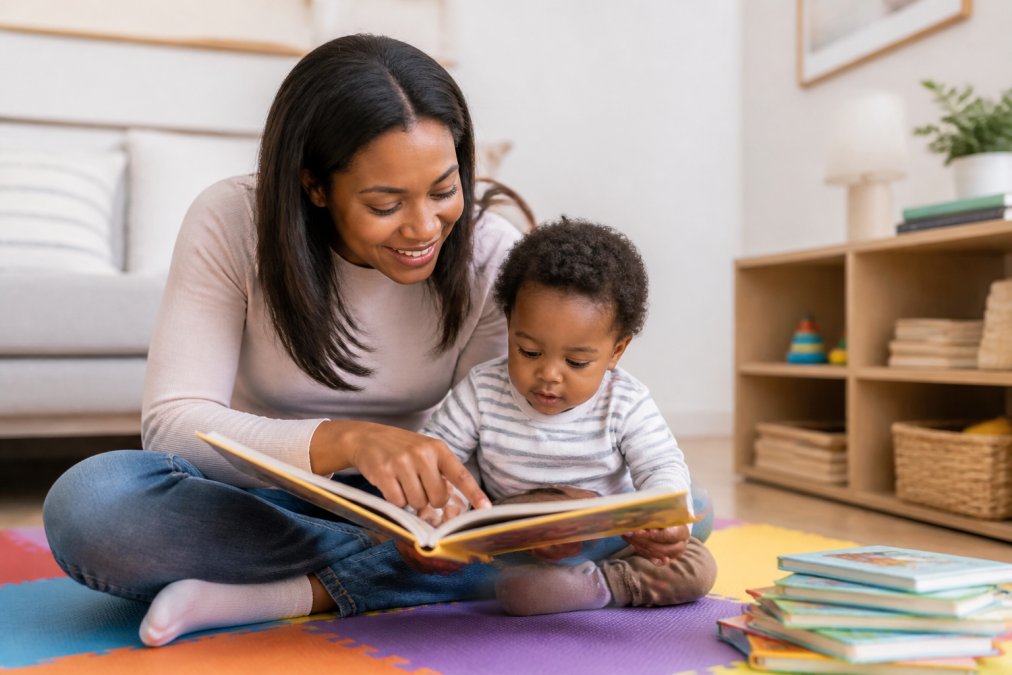
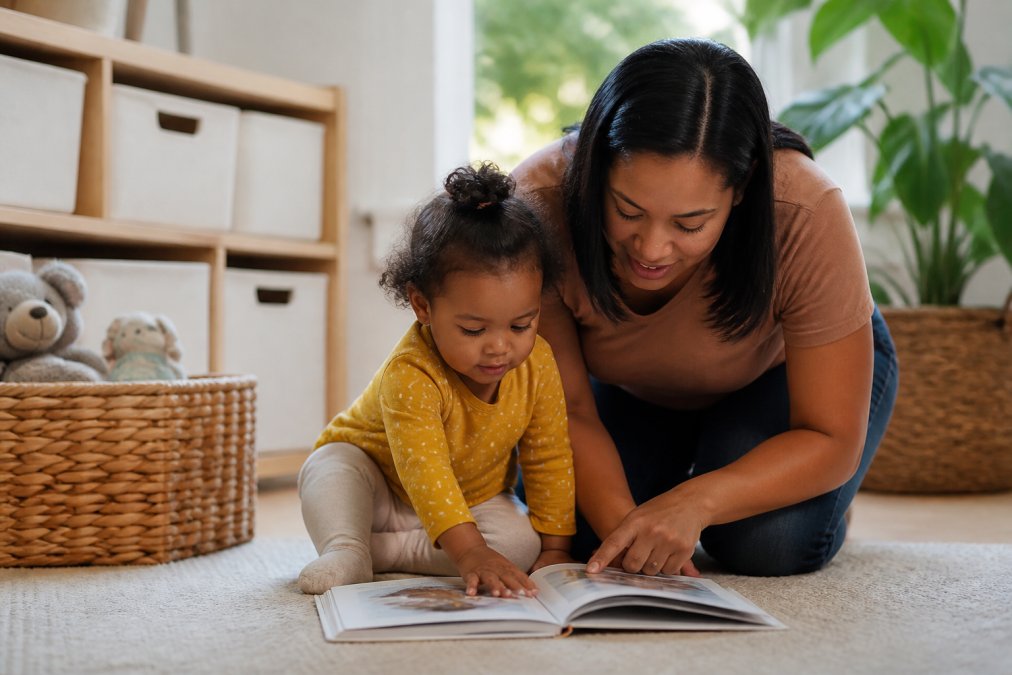
 Ultimate guide
Literacy Strategies for Toddlers 2026: Proven Guide
Table of Contents
- The Five Early Literacy Practices: Talk, Sing, Read, Write, Play
- Early Literacy Activities for Babies: Building Foundations Before Words
- Interactive Reading Techniques for Parents: Making Storytime Stick
- Daily Reading Habits for Children: Routines That Build Lifelong Readers
- Phonological Awareness and Rhyming: The Sound Play That Predicts Reading Success
- Digital Literacy and Screen Time Balance for Toddlers
- Inclusive Literacy Strategies for Neurodivergent Toddlers
- Frequently Asked Questions
Last Updated: September 10, 2026
The Five Early Literacy Practices: Talk, Sing, Read, Write, Play
The five early literacy practices are talking, singing, reading, writing, and playing, and they form the backbone of every effective literacy strategies plan for toddlers. This framework works because it builds pre-literacy skills through ordinary daily moments rather than formal lessons. This framework helps parents integrate these practices into their daily routines.
Talking builds oral language and vocabulary acquisition. Singing sharpens phonological awareness through rhythm and rhyme. Reading aloud develops print knowledge and comprehension. Scribbling and drawing support letter recognition and fine motor control. Play ties it all together through storytelling and word association.
Most parents already do three of the five without realizing it. The gap is usually writing and singing.
Early Literacy Activities for Babies: Building Foundations Before Words
Early literacy activities for babies look nothing like reading lessons, and that surprises most parents. They look like face-to-face babbling, board books with high-contrast images, and songs with hand motions. Babies build emergent literacy long before they speak their first word.
A common mistake is waiting until a child talks to start. Instead, try these:
- Hold your baby facing you and copy their sounds back
- Offer cloth or board books to mouth and grab
- Sing the same two or three songs every day so repetition takes hold
- Point to and name objects during diaper changes and feedings
Caregiver-child interaction is the active ingredient here, not the book itself. Zero to Three on early brain development explains how these back-and-forth exchanges shape language circuits in the first year.
Interactive Reading Techniques for Parents: Making Storytime Stick
Interactive reading techniques for parents turn a passive story into a conversation, and that shift is what makes storytime stick. Dialogic reading is the best-known method: you prompt, the child responds, and you expand on what they say.
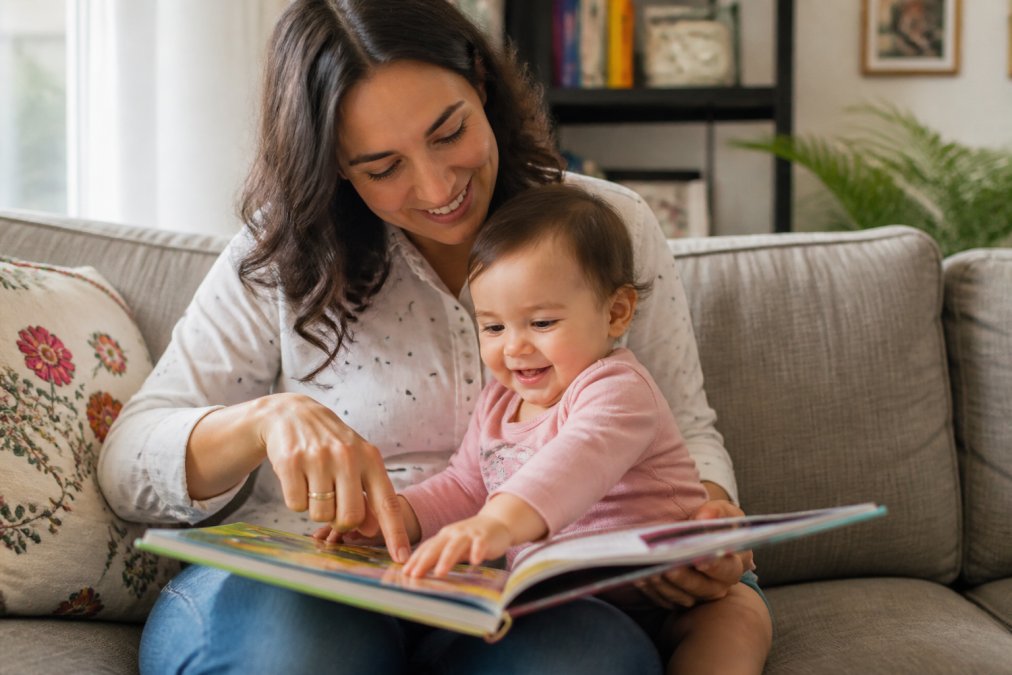
Try these prompts during your next read-aloud:
- Ask "What's this?" while pointing at a picture
- Ask open questions like "What do you think happens next?"
- Repeat and expand what your toddler says back to them
- Connect the story to their life: "That dog looks like Grandma's dog"
The thing nobody tells you about shared reading is that you don't need to finish the book. Follow your toddler's attention instead of the page count.
Daily Reading Habits for Children: Routines That Build Lifelong Readers
Daily reading habits for children work best when they attach to something that already happens every day. A consistent 10-minute read before nap or bedtime beats an ambitious 30-minute session that only happens twice a week. What matters most is predictability, not duration.
The mechanism is habit stacking: you anchor the new behavior to an existing cue so the routine requires no willpower. The existing cue is the trigger, the sleep sack, the toothbrush, the lights dimming. The reading is the reward. After roughly two to three weeks of the same sequence, most toddlers begin prompting the routine themselves, which is the signal that the habit has taken hold.
A practical anchor map looks like this:
- Morning: read one board book right after breakfast while your toddler is still strapped into the high chair
- Post-nap: keep a basket of three books on the floor next to the nap mat so the transition out of sleep has a landing spot
- Bedtime: read after teeth are brushed and before lights go out, never as a reward you can revoke
Keep books in a basket next to the bed or couch so the routine requires zero setup. Let your toddler choose between two books rather than the whole shelf, a binary choice preserves autonomy without producing a 20-minute negotiation.
Budget-friendly book sourcing. You do not need to buy a home library. Most public libraries run free storytimes and board-book collections sized for toddler hands, and many library systems allow you to place holds online and pick up at a drive-through window. Little Free Library boxes, neighborhood book swaps, and library book sales (often priced per bag on the final day) keep the cost near zero. Rotate five to seven titles at a time and swap them out monthly so the shelf feels new without new spending.
When the routine breaks. Moves, travel, a new sibling, or a schedule shift will interrupt the habit. The fix is to shrink the routine rather than abandon it, one book, one song, same cue. The book and the ten minutes travel better than any program does. Rebuild the full sequence once the disruption settles.
Phonological Awareness and Rhyming: The Sound Play That Predicts Reading Success
Phonological awareness is the ability to hear and manipulate the sounds in spoken words, and it is one of the strongest early predictors of later reading success. Rhyming, clapping syllables, and noticing words that start with the same sound all build this skill before a child ever decodes a printed word. The key word is spoken, this is an ear skill, not an eye skill, which is why it develops before letters do.
The skill builds in a predictable sequence, and toddlers sit at the front of it:
- Word awareness, hearing that a sentence is made of separate words
- Syllable awareness, hearing that "ba-na-na" has three beats
- Rhyme awareness, hearing that "cat" and "hat" end the same way
- Alliteration, hearing that "big blue ball" starts with the same sound
- Phonemic awareness, isolating the individual sounds inside a word (the last and hardest step, usually emerging closer to age four or five)
You can build the first four without worksheets, and you should not push a toddler toward step five before the earlier steps are solid.
- Sing nursery rhymes and pause before the last word so your toddler fills it in
- Clap out the syllables in your child's name, then in family names, then in favorite foods
- Play "I spy" with sounds: "I spy something that starts with /b/"
- Read rhyming books and let your toddler guess the next rhyme
- Swap the first sound in a familiar word for a silly one, "banana" becomes "fanana", and let your toddler correct you
Repetition is the point. The same three rhymes sung daily do more than twenty sung once.
Adapting sound play for neurodivergent toddlers. Some toddlers cannot yet produce words but can still hear and match sounds. Accept alternative responses: a point to the correct picture, a sign, a picture card, or a tap on a communication device all count as demonstrating the skill. Pair sound play with movement, bounce on a syllable, tap a drum on a rhyme, because rhythmic input often holds attention longer than spoken input alone. If a toddler covers their ears at singing, drop the volume and switch to whispered rhymes; the skill is the same, the sensory load is lower.
Sound play in multilingual households. Rhyme and syllable awareness transfer across languages. A toddler learning two languages can clap syllables in both, and the underlying skill strengthens rather than splits. Keep the home language strong, a toddler's first language supports, rather than competes with, English vocabulary acquisition, and use rhymes from both languages so the ear training is doubled.
If you are concerned about speech or language development, ASHA's resources on speech and language milestones is a solid starting point, and the CDC's developmental milestones checklist can help you decide whether to raise a question with your pediatrician.
Digital Literacy and Screen Time Balance for Toddlers
Screen time and early literacy can coexist, but only when screens stay interactive and shared. A caregiver and toddler tapping through a story app together is a different activity from a toddler watching videos alone.
Set a few household rules and hold them:
- Choose apps that require talking, tapping, or answering, not passive watching
- Sit with your child and narrate what's on screen
- Keep mealtimes and the hour before bed screen-free
- Treat screens as one tool among the five practices, never the default
The goal isn't zero screens. It's making sure screens don't crowd out talk, sing, read, write, and play.
Inclusive Literacy Strategies for Neurodivergent Toddlers
Inclusive literacy strategies for neurodivergent toddlers start with following the child's interest rather than a fixed sequence. Some toddlers need movement while listening, some need the same book for weeks, and some respond to pictures far better than to spoken words.
What works in practice:
- Pair books with sensory input: textured pages, felt boards, or a favorite fidget
- Accept alternative responses such as pointing, signing, or a picture exchange instead of words
- Shorten sessions and repeat them more often
- Use visual schedules so storytime has a predictable shape
For multilingual households, keep the home language strong. A toddler's first language supports, rather than competes with, English vocabulary acquisition. If you're concerned about speech or language development, ASHA's resources on speech and language milestones is a solid starting point, and the CDC's developmental milestones checklist can help you decide whether to raise a question with your pediatrician.
Below is a quick reference for matching a strategy to the child in front of you.
| If your toddler... | Try this strategy | Why it helps |
|---|---|---|
| Won't sit still for a book | Pair reading with movement or a fidget | Channels energy into listening |
| Repeats one book endlessly | Read it, then add one new book beside it | Uses repetition as a bridge |
| Responds to pictures over words | Point-and-name with visual prompts | Builds vocabulary acquisition visually |
| Mixes two languages at home | Keep the home language strong | Supports later English decoding |
| Loses interest in seconds | Shorter, more frequent sessions | Matches attention span |
Most parents already own everything they need to raise a reader: their voice, their lap, and ten predictable minutes a day. The hard part is consistency, not curriculum. Lauren's Literacy Lounge offers Literacy Roots Nurturing Your Child's Reading Journey from Birth to Brilliance, empowering parents to be the best first teachers. This program provides strategies for talk, sing, read, write, and play, and offers routines designed to support consistency even with moves, schedule changes, and busy seasons.
Frequently Asked Questions
What are the best literacy strategies for toddlers in 2026?
The most effective literacy strategies for toddlers in 2026 combine the five early literacy practices: talking, singing, reading, writing, and playing. Research shows that daily interactive reading, rhyming games, and rich conversation build phonological awareness and vocabulary. Newer approaches also include balanced screen time with digital storybooks and adapting activities for neurodivergent learners. Consistency matters more than duration, so short, daily sessions work best.
How can I encourage early literacy at home?
Create a literacy-rich environment by keeping books within reach, labeling everyday objects, and talking about what you see. Incorporate early literacy activities for babies like singing songs, playing peek-a-boo with books, and pointing at pictures. For toddlers, ask open-ended questions during shared reading and let them turn pages. Daily reading habits for children, even just 10 minutes, make a big difference. Also, model reading yourself so your child sees it as a valued activity.
What are the five early literacy practices recommended by experts?
Experts recommend five practices: talking, singing, reading, writing, and playing. Talking builds vocabulary and oral language; singing slows down language so children hear individual sounds; reading together builds print knowledge and narrative skills; writing (scribbling and drawing) develops fine motor skills for later handwriting; and playing allows children to act out stories and use language in creative ways. These practices form the foundation of emergent literacy.
At what age should I start formal literacy strategies with my toddler?
You can start from birth with informal strategies like talking, singing, and sharing board books. Formal instruction isn't necessary for toddlers; instead, focus on playful interactions. By 12-18 months, many toddlers enjoy pointing at pictures and turning pages. By age two, they may begin to recognize familiar logos or letters. The key is following your child's lead and making literacy a joyful part of daily life, not a structured lesson.