 Listicle
Literacy Activities for Military Kids: 7 Proven Strategies
Table of Contents
- Why Literacy Matters for Military Children
- Read-Aloud Sessions: Building Connection During Deployment Reading Support for Kids
- Journaling and Creative Writing for Emotional Expression
- Month of the Military Child Reading Activities and Community Engagement
- DIY Literacy Kits for PCS Transitions
- Interactive Literacy Activities for Neurodivergent Military Children
- Digital Literacy Tools and Remote Connection Resources
- Building Resilience Through Storytelling and Peer Connection
- Frequently Asked Questions
Last Updated: September 19, 2026
Why Literacy Matters for Military Children
Military families face unique challenges: frequent relocations, parental deployment, and school transitions disrupt reading routines and emotional stability. For military-connected children, consistent literacy engagement bridges academic skill-building with emotional resilience and family connection.
Literacy activities for military kids maintain academic progress across school changes while strengthening bonds with deployed parents. Children who maintain regular reading routines experience better emotional regulation during transitions. Military families need practical, portable literacy strategies that work regardless of location or frequency of moves.
Military children change schools an average of 6-9 times before graduation, compared to 2-3 times for civilian peers, creating gaps in reading comprehension and confidence. Yet literacy interventions tailored to military life help children maintain grade-level skills and develop resilience through transitions.
Read-Aloud Sessions: Building Connection During Deployment Reading Support for Kids
Read-aloud sessions are the most powerful literacy activity for military families separated by deployment. When a parent records themselves reading, they create a tangible connection that transcends physical distance, the child hears their parent's voice, sees their face, and experiences the familiar rhythm of storytelling, critical for literacy development and emotional security.
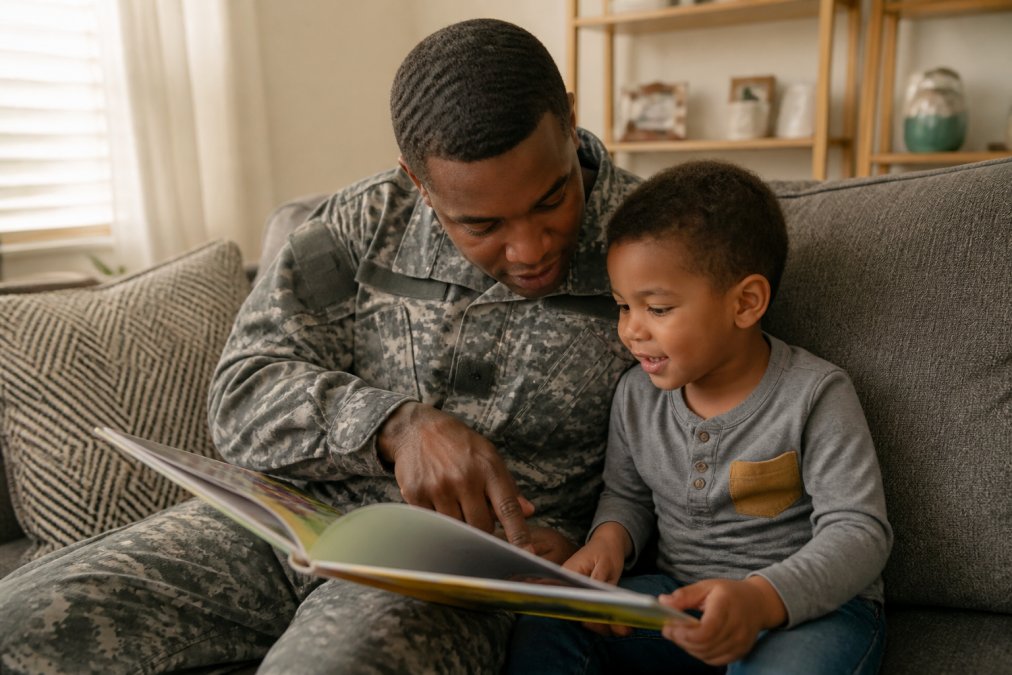
Read-aloud routines build literacy skills directly: children absorb vocabulary, phonemic awareness, and comprehension strategies from fluent reading models. For military families, this approach advances reading comprehension while maintaining parent-child interaction that deployment threatens to interrupt.
How to Start a Read-Aloud Routine
Starting a read-aloud routine requires minimal setup but maximum consistency:
-
Choose books strategically. Select stories with predictable patterns, repetitive language, and matching illustrations. Picture books suit younger children; chapter books suit older kids.
-
Set a regular recording schedule. Consistency matters more than length. Recording one book per week creates a sustainable rhythm your child can anticipate.
-
Create a dedicated recording space. A quiet room with a smartphone or tablet is sufficient. Close doors to minimize background noise and position yourself so your child sees your face clearly.
-
Read with expression and pacing. Children respond to animated voices, pauses, and enthusiasm. Focus on genuine engagement your child recognizes as authentically yours.
-
Share the recording immediately. Send videos within 24 hours. The anticipation of receiving a "message" from their parent strengthens emotional connection.
Using Video Recording for Remote Storytelling
Video recording transforms read-aloud sessions into interactive experiences that survive deployment separations. United Through Reading, designed for military families, lets parents record storytime sessions children can watch repeatedly. Record a 10-15 minute video of yourself reading a picture book. Your child watches on their own schedule, pausing to examine illustrations. Many children rewatch recordings multiple times, deepening engagement and connection.
For neurodivergent children or those with separation anxiety, rewatching videos provides predictability and comfort. Children control pace by pausing and rewinding, reducing anxiety during transitions.
Journaling and Creative Writing for Emotional Expression
Journaling transforms literacy into a tool for processing emotions. Military children experience deployment, relocation, and school transitions that generate complex feelings. Writing gives them a safe space to explore emotions while building writing fluency.
Creative writing activities for military kids should connect to their lived experience. Prompts referencing military life feel more relevant than generic assignments.
Journaling routines work best when low-pressure and frequent. Daily 5-10 minute writing builds habit faster than occasional longer sessions. Pair journaling with read-aloud routines: children write responses to stories or create variations on familiar plots.
For younger children, drawing with simple captions works equally well. Creating a visual record of thoughts provides the same emotional outlet as writing for older kids. Captions naturally expand into sentences and paragraphs over time.
Month of the Military Child Reading Activities and Community Engagement
May is designated as Month of the Military Child, a national observance schools and communities use to celebrate military-connected youth. This timing creates an opportunity to coordinate literacy activities for military kids that build peer connection and community recognition.
The Department of Defense provides official resources through the Month of the Military Child Toolkit, available via Military OneSource.
Hosting a School-Based Literacy Event
School-based literacy events during Month of the Military Child create visibility and belonging for military students while advancing literacy skills through peer engagement.
Effective events combine storytelling, interactive reading activities, and recognition:
-
Invite military authors or veterans to read aloud. Ask a parent or community member to share a picture book or short story, personalizing the event and showing military children their community is represented in literature.
-
Create a "Military Stories" display. Ask students to share books featuring military characters or themes, including student-written stories about their own military families.
-
Organize a peer read-aloud activity. Pair students to read stories aloud, building reading fluency, peer connection, and confidence. Older student volunteers can read to younger children.
-
Distribute free books to military-connected families. Partner with local libraries or United Through Reading to provide books selected for military children, removing access barriers during transitions.
-
Recognize military families publicly. Certificates, announcements, or assembly moments signal that military service is valued in your school community.
DIY Literacy Kits for PCS Transitions
PCS (Permanent Change of Station) moves happen quickly and create logistical chaos. A DIY literacy kit prepared in advance ensures reading materials and activities travel with your child, providing continuity. Assemble kits before the move to reduce decision fatigue and prevent literacy from falling away during transition.
A basic literacy kit includes:
- 5-7 favorite books your child has read before (familiar stories reduce anxiety)
- 2-3 new books at current reading level (novelty maintains engagement)
- Journal and colored pencils for creative writing and drawing
- Reading goal tracker (simple chart to mark progress)
- Bookmark set with motivational messages from family
- Audiobook access information (library card, app login, or free service details)
Interactive Literacy Activities for Neurodivergent Military Children
Neurodivergent military children, those with autism, ADHD, dyslexia, or sensory processing differences, need literacy activities tailored to their neurological profiles. Standard approaches miss the mark because they don't account for how neurodivergent brains process information and regulate attention.
Effective adaptations include:
- Multisensory reading stations where children can touch textured pages, manipulate letters, or listen to audiobooks while moving (rocking chair, exercise ball, standing desk)
- Choice-based reading where children select from pre-approved book options rather than being assigned titles
- Graphic novels and comics for children who respond better to visual narratives than text-heavy picture books
- Audio-first approaches where children listen to stories before or instead of reading text
- Structured social reading with clear expectations, visual schedules, and predictable routines
- Fidget-friendly reading spaces that allow movement and sensory input without judgment
Digital Literacy Tools and Remote Connection Resources
Digital literacy tools maintain engagement when in-person instruction is disrupted and enable remote connection between parents and children during deployment and relocation.
Building Resilience Through Storytelling and Peer Connection
Stories teach children that challenges are survivable and that their experiences have meaning. For military children navigating deployment, relocation, and school transitions, storytelling becomes a tool for building resilience and peer connection.
Frequently Asked Questions
How can reading help military children cope with deployment?
Reading provides emotional stability and routine during family separations. Stories help children process feelings of separation and uncertainty. Read-aloud sessions with a deployed parent, recorded on video or via phone calls, maintain the parent-child bond and create predictable moments of connection. Literacy activities also build emotional intelligence, helping children recognize and express their feelings about transitions and stress.
What are the best literacy activities for military kids during a PCS move?
Create DIY literacy kits before moving that include familiar books, journaling supplies, and writing prompts about the move itself. Pack a 'reading survival box' with comfort books for the transition. Once settled, visit the new school or library to establish a fresh reading routine. Journaling about the move helps children process the change. Connecting with new peers through book clubs or reading buddy programs eases social transitions in a new community.
Are there free literacy resources available specifically for military families?
Yes. United Through Reading offers free video recording services so deployed parents can read to children remotely. Tutor.com provides free Department of Defense-funded tutoring for K-12 military students, including reading and writing support. The Month of the Military Child Toolkit provides free activity templates and literacy event guides. Many libraries also offer free access to BookFlix and other digital literacy platforms for military-connected families.
How do I incorporate literacy into Month of the Military Child celebrations?
Use the official Month of the Military Child Toolkit to access ready-made literacy activity templates and event guides. Host a school book drive or reading celebration featuring military-themed stories. Organize a pen pal program connecting military children through letter writing. Create a community read-aloud event where military families share favorite books. Encourage children to write thank-you letters or illustrated stories celebrating military service, combining literacy skills with meaningful community engagement.
What literacy activities work best for neurodivergent military children?
Choose books with predictable patterns, clear illustrations, and shorter sentences for children with attention differences. Audiobooks paired with physical books support auditory and visual learners. Graphic novels and comic formats appeal to many neurodivergent readers. Journaling without pressure to spell perfectly allows creative expression. Interactive digital tools like Scholastic Teachables offer varied formats. Sensory-friendly reading spaces with comfortable seating reduce anxiety. Work with school tutors or platforms like Tutor.com to tailor strategies to your child's specific learning style.