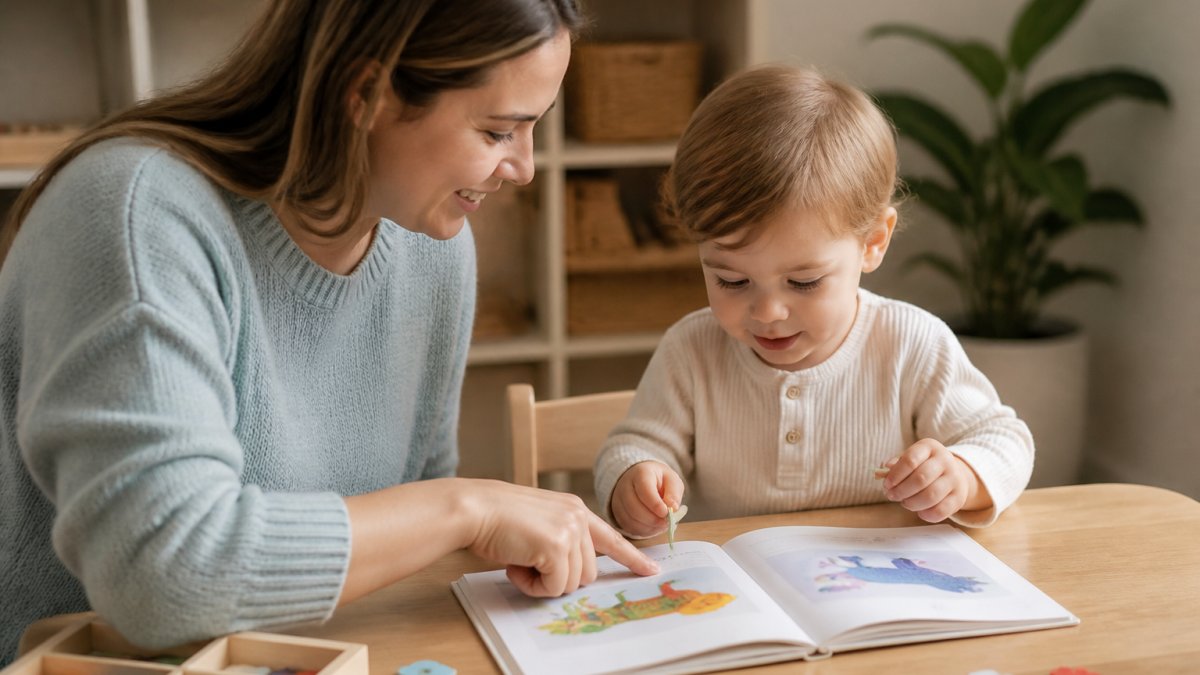
 How-to
Is the Science of Reading Good for Toddlers? A 2026 Guide
Table of Contents
- Is the Science of Reading Good for Toddlers? The Honest Answer
- What Reading Research Says About Early Literacy in the Toddler Years
- How to Teach Toddlers Letter Sounds Without Formal Lessons
- Pre-Reading Skills for Toddlers: What Actually Matters Before Age Three
- Early Literacy Activities for Toddlers That Fit Into Your Day
- Reading to Toddlers Daily: How Often, How Long, and What to Read
- When the Science of Reading Isn't the Right Fit for Your Toddler
- Conclusion: Building a Home Literacy Routine That Grows With Your Child
- Frequently Asked Questions
Last Updated: October 12, 2026
Is the Science of Reading Good for Toddlers? The Honest Answer
The science of reading is a body of research on how children learn to read, and it is good for toddlers only when it is applied as talk, play, and shared books, not as formal lessons. The research tells us what skills matter, and child development tells us when to introduce them. For a one-year-old, that means sounds, words, and lap time. The structured parts of the science of reading, like phonics and decoding, come later.
Here is the short answer, and it is the one most guides get wrong:
- Good for toddlers: the language and sound foundations the research identifies
- Not good for toddlers: worksheets, drills, and sitting still for lessons
- The right age for formal instruction: typically around age five, not age two
That gap between "what to teach" and "when to teach it" is where most confusion starts.
What Reading Research Says About Early Literacy in the Toddler Years
Reading research points to one clear finding for the toddler years: oral language comes first. Children build the vocabulary and sound awareness that reading depends on long before they connect letters to sounds.
The research behind the science of reading identifies five core parts of learning to read:
- Phonological awareness, which is noticing the sounds inside spoken words
- Phonics, which is matching letters to those sounds
- Vocabulary, which is knowing what words mean
- Fluency, which is reading smoothly
- Comprehension, which is understanding what was read
Two of these, vocabulary and phonological awareness, grow fastest in the toddler years. The other three need a child who can already hold a book, follow a story, and sit for a few minutes. Most toddlers are still working on those.
That is why the science of reading is good for toddlers in a narrow, specific way. It tells parents what to feed a growing brain: words, sounds, and back-and-forth interaction. It does not tell you to hand a two-year-old a phonics workbook.
How to Teach Toddlers Letter Sounds Without Formal Lessons
You teach letter sounds to toddlers by making them part of play, not by running a lesson. A toddler learns the sound of "m" while you sing, point, and name things, not while sitting at a table.
Try these low-pressure moves:
- Name the sound, not the letter. Say "mmm, like mama" while you point at a mug.
- Use songs and rhymes. Rhythm makes sounds stick.
- Point and name during chores. "Ball. Buh, buh, ball."
- Let your child lead. If they hand you a book, follow their interest.
- Keep it under two minutes. Short and often beats long and rare.
This is the same idea behind explicit instruction in the science of reading, just scaled down. The research favors clear, direct teaching of sounds. For a toddler, "direct" means saying the sound out loud while your child is looking at your face.
A common mistake is drilling letters before sounds. Toddlers hear sounds before they see letters, so start with what they can already notice.
Pre-Reading Skills for Toddlers: What Actually Matters Before Age Three
Before age three, the pre-reading skills that matter most are print awareness, alphabet knowledge, and a growing pile of words.
Print awareness is knowing that books have words, that we read left to right, and that pictures and text mean something.
Alphabet knowledge is recognizing some letters, often the ones in a child's own name. The letters in "Mama" or a sibling's name tend to come first because they carry meaning.
Vocabulary is simply knowing more words, which comes from hearing them in context. A toddler who hears "sticky," "squishy," and "wobbly" during a meal is building the word knowledge that later supports comprehension.
Here is how these skills tend to show up by age, with the caveat that the range is wide and the order is not fixed:
| Age | What You'll Often See | What Helps |
|---|---|---|
| 12-18 months | Points at pictures, turns pages, says a few words | Naming, pointing, sturdy board books |
| 18-24 months | Adds words quickly, brings you books, imitates sounds | Songs, rhymes, daily reading, back-and-forth talk |
| 24-36 months | Knows some letters, asks "what's that?", pretends to read | Letter talk, questions, repeat reads, labeling |
Signs of readiness are easier to read than most parents expect.
When to avoid pressure is simple: when the interaction stops being playful. If you find yourself quizzing, correcting, or repeating a letter until your child performs, you have crossed from exposure into instruction.
Development varies widely, and that variation is normal. Some toddlers talk early and read late. Others do the reverse.
If you are ever worried about hearing, speech, or language, ask your child's doctor. That is the right first step, not a reading program.
Early Literacy Activities for Toddlers That Fit Into Your Day
Early literacy activities for toddlers work best when they slide into what you already do. You do not need a shelf of supplies or a free hour.
- Talk through your day. Narrate the grocery store, the bath, the walk.
- Sing the same three songs. Repetition builds sound awareness.
- Read the same book ten times. Repeat reads build word knowledge.
- Play with sounds. "Moo," "beep," "sss" for a snake.
- Let them "read" to you. They turn pages and make up the story.
- Label the house. Tape a word to the door, the crib, the light.
Notice that none of these look like school. That is the point. Play-based activities for home are how the science of reading shows up for a toddler.
Reading to Toddlers Daily: How Often, How Long, and What to Read
Reading to toddlers daily is the single most reliable habit you can build. Aim for at least once a day, for five to ten minutes, with books your child picks.
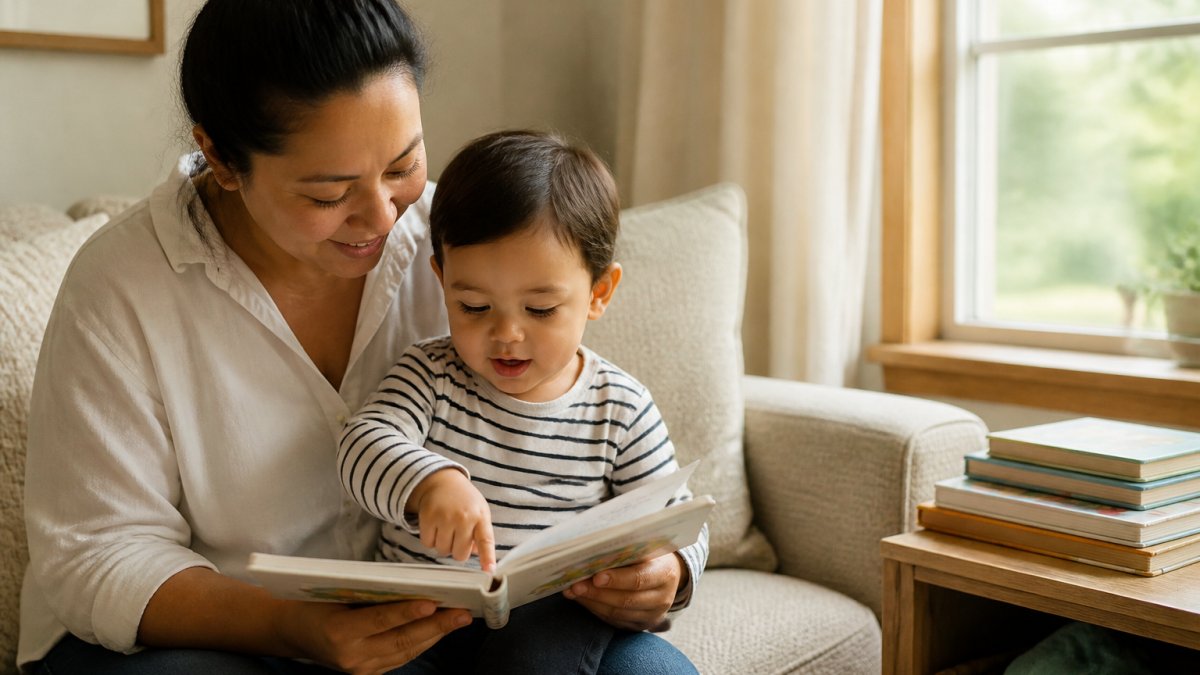
On length: follow your child, not a timer. A two-minute session where your toddler is engaged beats a ten-minute session where they are squirming.
On frequency: daily matters more than long. Shared reading builds language, and the back-and-forth interaction is where the learning happens.
On choosing books for toddlers, look for:
- Board books with thick pages they can hold
- Few words per page, so you can point and talk
- Clear pictures of everyday things
- Rhyme and repetition, which build sound awareness
- Books about your child's world, like animals, food, and family
Let your toddler pick, even if it is the same book again. Re-reading is not a waste. It is how word recognition starts.
When the Science of Reading Isn't the Right Fit for Your Toddler
The science of reading is not the right fit when it turns into pressure, and for most toddlers, formal reading instruction is not appropriate at all. That is not a flaw in your child or a gap in the research. It is how development works.
The clearest way to see the difference is to separate two things that sound alike:
- Playful exposure to print is noticing letters on a sign, hearing a rhyme, naming a picture, and turning pages with you. It is open-ended, child-led, and has no correct answer.
- Structured decoding lessons are sequenced instruction in letter-sound relationships with practice, correction, and mastery goals. They require a child who can sit, attend, and follow a task for several minutes.
Most toddlers are still building the attention and self-regulation that structured lessons assume. That is why the same research that supports explicit phonics instruction for a five- or six-year-old does not translate into a phonics workbook for a two-year-old. The method is not wrong.
Watch for these signs that it is too much:
- Your child cries or runs when books come out
- You feel like you are failing when they will not sit
- You are buying programs to fix a problem that does not exist yet
- Reading time feels like a chore for both of you
- You find yourself testing rather than talking
If any of those sound familiar, the fix is not a better program. It is a smaller, warmer version of what you were already doing. Go back to talk, play, and shared books.
A common pattern is that parents who ease off see their child come back to books on their own within a few weeks. Interest is not something you can force; it is something you protect.
If you have real concerns about your child's language, hearing, or speech, bring them to a doctor or a speech-language pathologist. That is a different question than "when should my child read," and it deserves a professional answer rather than a store-bought one.
Conclusion: Building a Home Literacy Routine That Grows With Your Child
The science of reading is good for toddlers when you use it as a guide, not a script. Give them words, sounds, and daily shared books now. Save the letters and decoding for when they are ready.
That is the whole approach behind Literacy Roots, our program at Lauren's Literacy Lounge. It helps parents act as their child's first teacher from birth, with routines that fit real life, including moves and busy seasons. You do not need a teaching background. You need a plan that grows with your child.
Get started with Lauren's Literacy Lounge and build a home literacy routine.
Frequently Asked Questions
Is the science of reading appropriate for toddlers?
Yes, with the right approach. The science of reading covers how children learn to read, from oral language and phonological awareness to phonics and comprehension. For toddlers, that means building pre-reading skills through talk, play, songs, and shared reading, not formal lessons. The research supports early literacy experiences, but formal decoding instruction typically waits until around age five or six when children show readiness signs like recognizing letters and playing with sounds.
Should toddlers learn letter sounds?
Toddlers can absolutely start noticing letter sounds, but the goal is exposure, not mastery. Point out that 'M' says /m/ when you see a moon, sing alphabet songs, and play with magnetic letters on the fridge. Keep it playful and brief. Most children do not reliably connect letters to sounds until ages four to six, so treat early practice as planting seeds, not testing. If your toddler loses interest, stop and try again another day.
How often should I read to my toddler?
Aim for at least once a day, ideally as part of a predictable routine like bedtime or after breakfast. Research on shared reading shows that frequency and consistency matter more than length. Ten to fifteen minutes of back-and-forth interaction around a book, where your toddler points, babbles, and turns pages, builds vocabulary and print awareness. If your child wants the same book ten times, that repetition is doing real work for language development.
What are pre-reading skills for toddlers and how do I build them?
Pre-reading skills for toddlers include print awareness (knowing books have words and pictures), phonological awareness (hearing sounds in words), vocabulary exposure, and oral language. Build them by narrating your day, singing rhyming songs, reading aloud daily, and letting your toddler handle books. Point to words as you read, ask simple questions about pictures, and pause so your child can respond. These parent-child interactions are the foundation reading research points to for later reading proficiency.
When should I worry if my toddler isn't talking or interested in books?
Every child develops at a different pace, and some toddlers are late talkers who catch up without intervention. However, if your child is not using words by 18 months, does not respond to your voice or name, or shows no interest in shared reading or back-and-forth interaction by age two, talk to your pediatrician. Early language development is a strong predictor of later reading outcomes, and early support from a speech-language pathologist can make a significant difference.


