 Ultimate guide
Effective Reading Strategies for Parents: A 2026 Guide
Table of Contents
- Why Your Role as First Teacher Matters More Than Any Program
- The Core Framework: 5 Pillars of Reading Instruction at Home
- How to Teach Reading at Home: A Step-by-Step Routine for Busy Parents
- Best Practices for Reading Aloud That Build Strong Listeners
- Reading Comprehension Activities for Parents to Use After Any Book
- How to Help Struggling Readers Without the Tears
- Modern Challenges: Screens, Neurodiversity, and Multilingual Homes
- Track Progress Without Tests: Simple Observations That Matter
- Frequently Asked Questions
Last Updated: September 6, 2026
Why Your Role as First Teacher Matters More Than Any Program
The most powerful reading strategies for parents are not found in expensive curricula or apps; they are found in the daily interactions you already have with your child. Research from organizations like the National Center for Families Learning consistently highlights that a child's literacy development begins at birth, shaped by the language-rich environment parents create long before formal schooling begins. Lauren's Literacy Lounge aims to help parents translate this science into simple, sustainable habits that fit real family life.
The gap between a child who enters school ready to read and one who struggles is often not intelligence, but exposure to oral language, vocabulary, and the joy of storytelling. When you narrate your day, sing songs, or point out letters on a cereal box, you are building the foundational neural pathways for decoding and comprehension. This guide will show you exactly how to layer these moments into a practical framework, giving you the confidence to be the primary educator your child needs without adding stress to your day.
Below, we'll walk through a step-by-step framework that can help families turn everyday moments into powerful literacy lessons, covering everything from the five core pillars of reading to handling modern challenges like screens and neurodiversity.
The Core Framework: 5 Pillars of Reading Instruction at Home
Effective reading strategies for parents rest on a foundation of five interconnected pillars, adapted from the science of reading. Phonemic awareness is the ability to hear and manipulate sounds in words, like recognizing that "cat" starts with the /k/ sound. Phonics connects those sounds to letters. Fluency is the ability to read with speed, accuracy, and proper expression. Vocabulary refers to the words a child knows and understands. Comprehension is the ultimate goal: understanding and extracting meaning from text.
Most parents focus heavily on phonics and letter recognition, but the real magic happens when you weave all five pillars together. A child who can decode words but lacks vocabulary will struggle to understand what they read. A child with strong comprehension skills but poor fluency will tire quickly and lose interest.
| Pillar | What It Looks Like at Home | Simple Activity |
|---|---|---|
| Phonemic Awareness | Playing with sounds, rhyming games | Sing "Willoughby Wallaby Woo" |
| Phonics | Connecting letters to sounds | Point out letters in environmental print |
| Fluency | Reading with rhythm and expression | Re-read favorite books with a "voice" |
| Vocabulary | Learning new words in context | Use "big" words in daily conversation |
| Comprehension | Understanding and retelling stories | Ask "what do you think happens next?" |
This framework is the backbone of the National Reading Panel's findings on early literacy, which emphasizes that systematic instruction in these areas is critical. Your home doesn't need to replicate a classroom; it just needs to offer playful, consistent exposure to these concepts.
How to Teach Reading at Home: A Step-by-Step Routine for Busy Parents
Teaching reading at home doesn't require a dedicated hour each day. A more effective reading strategy is to embed short, focused bursts of literacy into your existing routine. The goal is consistency, not duration.
- The Morning Chat (5 minutes): During breakfast, talk about the day ahead. Use rich vocabulary ("We are going to the grocery store to purchase some ripe avocados"). This builds oral language and vocabulary acquisition.
- The Errand Run (10 minutes): In the car or at the store, play "I Spy" with sounds ("I spy something that starts with the /b/ sound"). This is a powerful phonemic awareness exercise.
- Story Time (15 minutes): This is your dedicated reading time. Follow the best practices in the next section to maximize engagement.
- The Wind-Down (5 minutes): At bedtime, ask your child to retell the story you read earlier or the best part of their day. This reinforces narrative structure and comprehension.
This routine is designed to be flexible for families with unpredictable schedules, like military spouses managing frequent relocations. The consistency of the routine provides a stable learning environment regardless of external changes. A common mistake is trying to force a child to sit still for a long period; instead, let them move, play, or color while you read to them. The auditory input is still building their literacy skills.
Best Practices for Reading Aloud That Build Strong Listeners
Reading aloud is only half the battle; how you read determines how much your child absorbs. To build strong listeners and future readers, your read-aloud sessions should be interactive and expressive. This is where the best practices for reading aloud come into play, transforming a passive activity into an active learning experience.

First, choose books that are slightly above your child's independent reading level. This exposes them to new vocabulary and complex sentence structures. Second, use your voice as a tool: change your tone for different characters, pause for dramatic effect, and read with genuine enthusiasm. This models fluency and expression. Third, engage your child in the story by asking questions before, during, and after reading. This active reading strategy is crucial for developing comprehension and critical thinking skills.
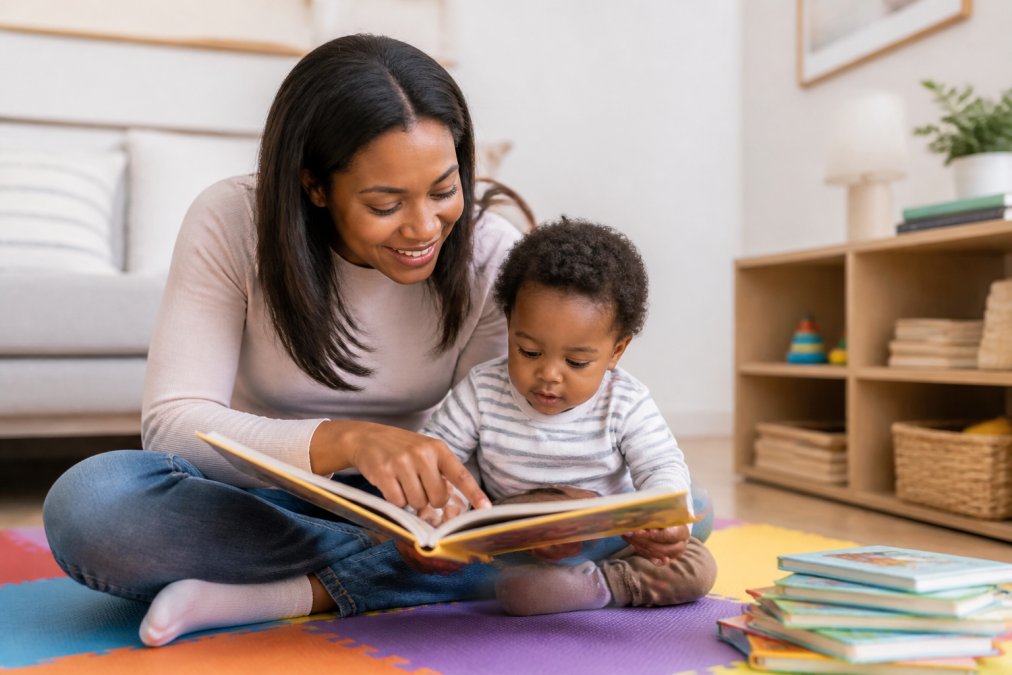
A great technique is the "PEER" sequence: Prompt your child to describe what's on the page, Evaluate their response, Expand on it with more information, and Repeat the new idea. For example, if your child points to a dog, you can say, "Yes, that's a dog! It's a golden retriever, and it looks like it's fetching a stick." This simple interaction builds vocabulary and background knowledge. The American Academy of Pediatrics literacy guidance recommends starting this interactive reading practice from infancy, as it fosters the emotional bond that makes reading a positive experience.
Reading Comprehension Activities for Parents to Use After Any Book
The conversation doesn't end when you close the book. Engaging your child in post-reading discussion is one of the most effective reading comprehension activities for parents, as it forces them to process and personalize the information. These activities help solidify the story in their minds and develop higher-level thinking skills.
Use these prompts after any book to spark discussion:
- For Prediction: "What do you think the character will do tomorrow?"
- For Main Idea: "What was the most important thing that happened in the story?"
- For Problem Solving: "If you were the main character, how would you have solved that problem?"
- For Connection: "Did that character remind you of anyone we know? How?"
- For Inference: "Why do you think the character felt sad at the end?"
You don't need to ask all of these every time; one or two thoughtful questions are enough. For younger children, simply asking "What was your favorite part?" and then asking "Why?" is a perfect starting point. For older children, encourage them to make predictions about a sequel or to rewrite the ending. These activities move beyond simple recall and encourage text analysis and critical thinking, which are essential for academic success.
How to Help Struggling Readers Without the Tears
If your child resists reading or seems to be falling behind, your first instinct might be to push harder. But a more effective reading strategy for struggling readers is to take a step back, reduce pressure, and rebuild confidence. The tears often come from a feeling of failure, not a lack of ability.
First, ensure you are working at the right level. If a book is too hard, it creates frustration. Drop down a level or two until reading feels easy and fluent, then slowly increase difficulty. This is called "scaffolding." Second, focus on their interests. If your child loves dinosaurs, find every dinosaur book you can, even if it's above their level and you read it to them. Engagement is the fuel for progress. Third, celebrate small wins. Did they sound out a tricky word? Did they read a full page without stopping? Acknowledge it specifically.
If you are concerned about a true learning difference like dyslexia, don't wait to seek help. Early intervention is critical. You can consult with your child's school or a pediatrician about a formal evaluation, and resources like the International Dyslexia Association guidelines can provide direction. Remember, your job is to be their cheerleader, not their drill sergeant.
Modern Challenges: Screens, Neurodiversity, and Multilingual Homes
Traditional guides often ignore the realities of modern family life. Effective reading strategies for parents must adapt to screens, neurodivergent learners, and multilingual households. This is where generic advice falls short, and a more tailored approach is necessary.
For screens: Digital literacy is a skill in itself. Instead of banning screens, use them strategically. Audiobooks are fantastic for building vocabulary and comprehension, especially during car rides. E-readers with built-in dictionaries can help struggling readers decode new words instantly. The key is to treat screen time as a tool for literacy, not a replacement for it. Discuss what was watched or listened to, just as you would with a physical book.
For neurodivergent children: Children with ADHD or autism often have unique reading profiles. They may hyperfocus on topics of interest or struggle with sustained attention. Use their special interests as the gateway to reading. A child obsessed with trains might not care about a storybook, but will devour a non-fiction book about locomotive engines. Also, allow for movement while reading. Some children listen better when they are rocking, pacing, or holding a fidget toy. This is not a distraction; it is a regulation tool that enables focus.
For multilingual households: A rich literacy environment in the home language is the strongest predictor of success in a second language. Do not stop reading in your native language out of fear it will confuse your child. The skills of phonemic awareness and comprehension transfer across languages. Reading a story in Spanish and then discussing it in English builds deep conceptual knowledge that supports literacy in both.
Track Progress Without Tests: Simple Observations That Matter
You don't need a standardized test to know if your child is making progress. Measuring reading progress at home is about making simple, qualitative observations during your daily routine. This observational approach is far less stressful and gives you a more complete picture of your child's literacy development.
Keep a simple list of what you notice over time:
- Phonemic Awareness: Can they now rhyme words they couldn't a month ago? Can they identify the first sound in their name?
- Decoding: Do they attempt to sound out new words? Are they recognizing more sight words by memory?
- Fluency: Is their reading becoming smoother? Are they pausing at periods and using expression for question marks?
- Comprehension: Can they retell a story with more detail? Do they ask "why" questions about the plot?
- Engagement: Do they choose books during free time? Do they have favorites they want to read again?
This kind of observation is especially valuable for military families who move often and face changing school curricula. By tracking your child's development at home, you create a consistent benchmark that travels with you, ensuring you can advocate for their needs and celebrate their growth no matter where you are stationed.
Teaching your child to read is a marathon, not a sprint, and you don't need a teaching degree to be their most effective guide. The most impactful reading strategies for parents are built on consistency, warmth, and a focus on the joy of stories, not on perfection. At Lauren's Literacy Lounge, we believe every parent is their child's best first teacher. Our program, Literacy Roots Nurturing Your Child's Reading Journey from Birth to Brilliance, is designed to help you with the confidence and tools to nurture your child's reading journey from birth to brilliance, without overwhelming your schedule or budget. Get started with Lauren's Literacy Lounge and turn your everyday moments into the foundation of your child's lifelong love of reading.
Frequently Asked Questions
What are the 5 pillars of reading instruction for parents to support at home?
The five pillars are phonemic awareness, phonics, fluency, vocabulary, and comprehension. Phonemic awareness is hearing sounds in words. Phonics connects those sounds to letters. Fluency is reading with speed and expression. Vocabulary grows through conversation and reading. Comprehension is understanding what was read. You can support all five at home with simple games, daily reading aloud, and talking about stories. You do not need a teaching degree to practice these skills.
How much time should parents spend on reading practice daily?
Quality beats quantity. For infants and toddlers, 10 to 15 minutes of interactive reading daily is enough. Break it into shorter sessions if attention wanders. For early elementary children, aim for 20 minutes of reading or being read to. The goal is consistency, not long stretches. A short daily routine builds stronger reading habits than a long weekly session. Let your child set the pace and stop before frustration starts.
How can I help a struggling reader build confidence?
Start with books your child can read with about 95 percent accuracy. That builds success. Praise effort, not just correctness. Let your child choose the material, even if it is a graphic novel or a magazine. Read together using echo reading, where you read a line and your child repeats it. Avoid public correction. Instead, model the word and move on. Confidence grows when children feel safe to try without fear of failure.
What is the 3-2-1 reading strategy for comprehension?
The 3-2-1 strategy is a simple after-reading activity. Ask your child to share three things they learned, two things they found interesting, and one question they still have. For younger children, adjust it to two things they liked and one question. This activity builds comprehension by encouraging children to summarize, identify engaging details, and think critically about what they read. It works for picture books and chapter books alike.
How do I choose the right books for my child's reading level?
Use the five-finger rule. Open a book to any page. Have your child read it. Count each word they do not know on your fingers. If they miss five or more words, the book is too hard for independent reading, but it can still be a great read-aloud choice. For independent reading, aim for books where they know almost every word. For read-alouds, choose books slightly above their level to stretch vocabulary and comprehension.
My child is only 8 months old. Is it too early to start reading strategies?
It is never too early. At 8 months, reading strategies look different. Board books with bright pictures build visual attention. Let your baby chew, grab, and pat the book. That is exploration, not distraction. Talk about the pictures using simple words. The sound of your voice builds oral language and bonding. The goal is not to finish the book. It is to create a positive association with reading that grows over time.
I'm a military spouse and we move often. How can I keep reading routines consistent?
Build a portable literacy kit that travels with you. Keep a small bin with favorite books, magnetic letters, and a notebook for drawing and writing. Read the same beloved books at every stop to create familiarity. Use your local library at each new base to find new titles. Establish a daily read-aloud time that stays constant regardless of location. The routine becomes the anchor your child relies on during transitions.