 Listicle
Early Literacy Activities for Toddlers: 15 Proven Strategies
Table of Contents
- Why Early Literacy Activities Matter for Toddlers
- Alphabet Recognition and Letter Learning Activities
- Phonological Awareness and Rhyming Games
- Interactive Reading Aloud and Storytime Strategies
- Early Literacy Skills for Toddlers: Fine Motor and Writing Development
- Literacy Games for 2 Year Olds: Play-Based Learning
- How to Teach Reading Readiness at Home: Daily Routines
- Budget-Friendly Early Literacy Activities You Can Start Today
- Frequently Asked Questions
Why Early Literacy Activities Matter for Toddlers
Early literacy activities build neural pathways that support reading comprehension, vocabulary development, and academic confidence. Toddlers who experience rich language environments develop stronger pre-reading skills, better phonological awareness, and more advanced vocabulary than peers without these experiences.
At Lauren's Literacy Lounge, we help parents move beyond passive screen time and build genuine engagement with language and books. The activities in this guide don't require expensive programs, special materials, or a teaching degree, most use items already in your home or cost just a few dollars.
Below, we'll walk you through 15 strategies organized by skill focus. Each activity includes step-by-step instructions, age recommendations, and practical tips.
Alphabet Recognition and Letter Learning Activities
Letter recognition is where most early literacy journeys begin. Young toddlers start by noticing that letters are distinct shapes, then gradually connect those shapes to sounds and eventually to words.
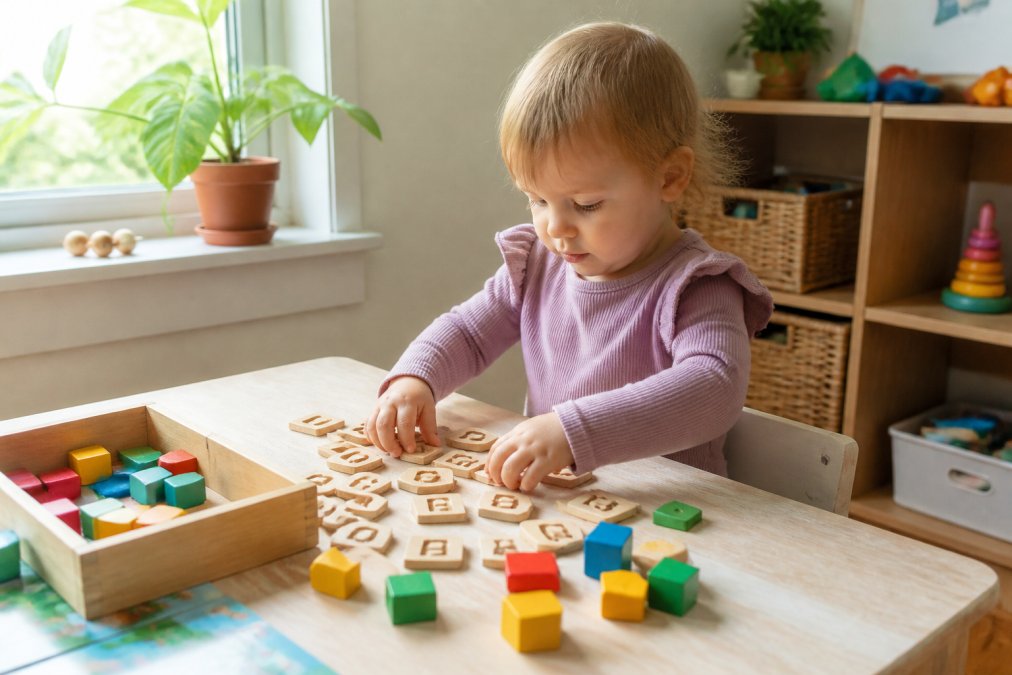
Alphabet Matching Games
Alphabet matching transforms letter learning from abstract to concrete.
How to do it:
- Gather uppercase letter cards or print simple letter pairs on index cards
- Spread one set of letters face-up on a low table or floor
- Hold up a matching letter and ask, "Can you find the same one?"
- When they match correctly, celebrate with genuine enthusiasm
- Start with just 3-4 letters; expand as they succeed
Age range: 18 months to 3 years
What works in practice: Toddlers need physical interaction. Letting them place the cards themselves keeps them engaged far longer than watching you demonstrate.
Letter Scavenger Hunts
Scavenger hunts combine movement with letter recognition, ideal for toddlers who learn through their whole body.
How to do it:
- Choose one letter to focus on (start with a letter from your child's name if possible)
- Hide large printed versions around a single room
- Tell your child, "Let's find all the A's!" and walk around together
- When they spot one, let them retrieve it and place it in a collection basket
- Count how many you found together
Age range: 20 months to 3 years
What works in practice: Movement keeps toddlers engaged longer than sitting at a table. Using letters from your child's name creates personal relevance and motivation.
Phonological Awareness and Rhyming Games
Phonological awareness, the ability to hear and manipulate sounds in language, is one of the strongest predictors of reading success. Rhyming games build this skill naturally through play.
Rhyme Time Circle
Rhyming is fun for toddlers because it's rhythmic and playful.
How to do it:
- Sit with your child in a comfortable spot
- Say a simple word: "cat"
- Offer two options: "Does 'bat' rhyme with 'cat'? Or does 'dog' rhyme with 'cat'?"
- Exaggerate the ending sounds: "caaaat" and "baaaat"
- Let your child respond by pointing, saying the word, or nodding
- Celebrate correct answers and gently repeat the rhyme if they choose wrong
Age range: 2 to 3 years
What works in practice: Toddlers often learn rhymes through repetition before they can produce them. Hearing rhymes repeatedly builds phonological awareness even if they're not answering correctly yet.
Syllable Clapping and Counting
Syllable awareness helps toddlers understand that words are made of smaller sound chunks.
How to do it:
- Choose a word, start with your child's name or familiar words like "puppy," "apple," "banana"
- Say the word slowly and clap once for each syllable: "ba-na-na" (three claps)
- Have your child clap along with you
- Repeat with different words, exaggerating the syllable breaks
Age range: 18 months to 3 years
What works in practice: Young toddlers may not clap on beat, and that's fine. The goal is hearing the syllables.
| Activity | Age Range | Time Required | Key Skill |
|---|---|---|---|
| Alphabet Matching | 18 mo-3 yr | 5-10 min | Letter recognition |
| Letter Scavenger Hunt | 20 mo-3 yr | 10-15 min | Visual letter tracking |
| Rhyme Time Circle | 2-3 yr | 5-10 min | Phonological awareness |
| Syllable Clapping | 18 mo-3 yr | 5 min | Auditory discrimination |
Interactive Reading Aloud and Storytime Strategies
Reading aloud is the single most powerful literacy activity you can do. It builds vocabulary, models fluent reading, strengthens the parent-child bond, and creates positive associations with books.
Dialogic Reading Techniques
Dialogic reading flips the traditional read-aloud on its head. Instead of you reading while your child listens passively, you ask questions and let your child drive parts of the conversation.
How to do it:
- Choose a picture book with clear, engaging illustrations
- Pause and ask questions: "What do you see on this page?" or "What's the dog doing?"
- Point to pictures and name them: "That's a bird. Can you say 'bird'?"
- Encourage your child to turn pages, touch pictures, or make sounds
- If your child says a word, expand on it: Child says "dog." You say, "Yes, that's a big brown dog!"
- Let long pauses happen; toddlers need time to process and respond
- Follow your child's interests; if they focus on one page for five minutes, stay there
Age range: 12 months to 3 years
What works in practice: This feels like having a conversation about a book rather than "reading a book." Toddlers stay engaged longer because they're active participants.

Sensory Storytime with Props
Adding sensory elements to storytime, textures, sounds, movements, keeps toddlers engaged and creates memorable learning moments.
How to do it:
- Choose a book with repetitive text or clear actions
- Gather props related to the story: stuffed animals, fabric scraps, bells, or household items
- As you read, incorporate the props: ring a bell or show a stuffed cow when the cow appears
- Encourage your child to touch textures: "Feel how soft the bunny is"
- Add movements: "Jump like the frog!" or "Stomp like the elephant!"
- For books with repetitive phrases, pause and let your child fill in the word
Age range: 12 months to 3 years
What works in practice: Toddlers with sensory needs or shorter attention spans often thrive with this approach. Books with strong rhythm and repetition work especially well.
Early Literacy Skills for Toddlers: Fine Motor and Writing Development
Fine motor skills, the small, precise movements of fingers and hands, are essential for writing. Early scribbling and mark-making activities build the hand strength and coordination your toddler will need for letter formation later.
Scribbling and Mark-Making
Scribbling isn't random; it's your toddler's first attempt at written communication and the foundation for writing.
How to do it:
- Offer chunky crayons, markers, or colored pencils designed for toddlers
- Provide large paper, newsprint, butcher paper, or the back of old flyers work well
- Sit beside your child and scribble alongside them; model the behavior
- Narrate what you're doing: "I'm making big lines" or "Look at my circles"
- Celebrate their marks: "You made a big scribble!"
- Tape their creations to the wall or refrigerator to validate their work
Age range: 12 months to 3 years
What works in practice: Keep sessions short and have washable materials on hand. Some toddlers prefer markers that require less pressure; others like the control of crayons.
Letter Formation Practice
Once your toddler shows interest in letters, you can introduce guided letter formation activities that bridge scribbling and actual letter writing.
How to do it:
- Start with large, simple letters: O, I, L, or letters from your child's name
- Use a whiteboard or large paper with a thick marker or crayon
- Lightly trace the letter and have your child trace over your lines
- Use multi-sensory approaches: trace letters in sand, shaving cream, or salt trays
- Offer pre-drawn dots and have your child connect them to form letters
- Praise effort, not perfection: "You're working hard on that letter!"
Age range: 2 to 3 years
What works in practice: Forcing letter formation too early creates frustration. If your toddler resists, return to scribbling and try again in a few months.
Literacy Games for 2 Year Olds: Play-Based Learning
Play-based learning is how toddlers naturally acquire skills. Games that integrate literacy into play feel less like instruction and more like fun.
Sensory Bins for Word Exploration
Sensory bins combine tactile exploration with vocabulary building. Your toddler plays with materials while you name objects and concepts.
How to do it:
- Fill a shallow bin with safe materials: dried beans, rice, sand, or water
- Hide small objects inside: plastic letters, toy animals, blocks, or household items
- Sit with your child and explore together, narrating as you go: "You found a letter A! A is for apple"
- Pull out objects and name them: "This is a cow. Cows say 'moo'"
- Let your child bury, dig, and pour; the sensory play IS the learning
- Rotate objects weekly to maintain novelty
Age range: 18 months to 3 years
What works in practice: Contain the mess by using a bin with high sides or setting up outside. Vocabulary building happens naturally through your narration.
Pretend Play and Role-Playing Scenarios
Pretend play builds narrative skills and oral language development. When toddlers act out scenarios, they're practicing language in context.
How to do it:
- Set up simple pretend play scenarios: a "kitchen" with toy food, a "doctor's office" with a toy stethoscope, a "store" with items to buy
- Join your child in the play, modeling language: "I'm making breakfast. What would you like to eat?"
- Introduce simple scripts: "Let's pretend you're the shopkeeper. I want to buy milk"
- Use props and narrate actions: "The baby is sleeping. We need to be quiet"
- Follow your child's lead and add language to their play
Age range: 18 months to 3 years
What works in practice: Toddlers don't need elaborate setups. A blanket draped over chairs becomes a house. Your participation is key; toddlers engage longer when you're playing alongside them.
How to Teach Reading Readiness at Home: Daily Routines
Reading readiness is built through consistent, everyday exposure to language and books. Daily routines anchor literacy into your family's rhythm.
Print-Rich Environment Setup
A print-rich environment means surrounding your toddler with visible words, letters, and books. This builds print awareness, the understanding that written symbols carry meaning.
How to set it up:
- Place books in multiple rooms at your toddler's eye level, low shelves, baskets, or bins
- Label household items with words: "door," "window," "toy box"
- Post alphabet letters or word cards on walls
- Keep picture books within easy reach so your child can grab them independently
- Display your child's artwork and writing alongside printed words
- Rotate books monthly to maintain freshness and interest
What works in practice: Toddlers are more likely to engage with books they can access independently. Low shelves beat high ones. Rotating 10-15 books monthly works better than 50 books that overwhelm.
Consistent Bedtime Reading Rituals
Bedtime reading creates predictability and signals to your child that books are part of daily life. The routine itself becomes soothing.
How to establish it:
- Choose a consistent time each evening for reading
- Create a calm environment: dim lighting, comfortable seating, minimal distractions
- Read the same books repeatedly; toddlers love familiarity and will anticipate favorite parts
- Keep sessions short, 10 to 15 minutes is plenty
- Allow your child to choose books when possible
- Use a calm, steady voice; this is intimate sharing, not performance
What works in practice: Consistency matters more than duration. Reading three nights a week at the same time becomes a ritual your child anticipates.
Budget-Friendly Early Literacy Activities You Can Start Today
You don't need expensive programs or materials to build early literacy. Many of the most effective activities use items already in your home or cost just a few dollars.
Free or nearly-free activities:
- Singing nursery rhymes and songs: Builds phonological awareness and vocabulary at zero cost
- Narrating daily life: Talk constantly about what you're doing: "We're putting on your shoes. Shoes keep our feet warm"
- Library visits: Most libraries offer free board books, picture books, and sometimes toddler storytimes
- Homemade alphabet cards: Print letters on index cards or cardstock; laminate with clear packing tape
- Sensory bins with household items: Dried pasta, beans, buttons, and fabric scraps provide rich sensory exploration
- DIY letter matching games: Cut letters from magazines or print them on poster board
Low-cost paid resources:
Highlights Hello Magazine offers affordable, screen-free literacy engagement. Reading Eggs Junior offers a 30-day free trial covering alphabet knowledge and pre-reading skills. Fisher-Price Laugh & Learn Smart Stages Puppy provides multi-sensory, interactive literacy support.
What works in practice: The most effective early literacy activities require your time and presence more than your money. Reading aloud costs nothing. Talking to your child costs nothing. Playing with language costs nothing.
Early literacy activities don't require special programs or expensive materials. They require consistency, genuine engagement, and a commitment to making language and books part of your daily family life. The activities in this guide, from alphabet matching to sensory play to bedtime reading rituals, build the pre-reading skills, phonological awareness, and positive associations with reading that set your toddler up for success.
At Lauren's Literacy Lounge, we believe parents are the most powerful literacy teachers. Our mission is to help you with evidence-based strategies and practical activities that fit into real family life. Start with one or two activities that match your child's age and interests. Get started with Lauren's Literacy Lounge and watch your toddler develop a genuine love of reading that lasts a lifetime.
Frequently Asked Questions
What age should you start early literacy activities with toddlers?
You can begin early literacy activities from birth. Infants benefit from listening to your voice during reading aloud, and even 6-month-olds respond to rhymes and songs. Formal alphabet recognition typically emerges around 18-24 months, but play-based phonological awareness activities work well from 12 months onward. The key is matching activities to your child's developmental stage rather than waiting for a specific age.
What are the 5 basic early literacy skills for toddlers?
The five foundational early literacy skills for toddlers are: phonological awareness (hearing and playing with sounds), letter recognition (identifying letters and their names), print awareness (understanding that text carries meaning), vocabulary building (learning new words), and oral language development (speaking and listening skills). These skills build gradually through play, conversation, and shared reading experiences at home.
How can I encourage early literacy at home without spending money?
Free early literacy activities include singing songs and nursery rhymes, reading library books aloud, creating sensory bins with household items like pasta or beans, playing rhyming games, and practicing letter recognition with items around your home. Pretend play, storytelling without books, and labeling objects in your home with words also build literacy skills. Many communities offer free story times at libraries, which provide structured early literacy activities at no cost.
Can early literacy activities help my neurodivergent toddler?
Yes, adapted early literacy activities can support neurodivergent toddlers. Sensory-based approaches like tactile letter exploration, rhyming games with repetition, and multi-sensory storytime work well for many children with sensory sensitivities or autism. Allow extra processing time, repeat activities frequently, and follow your child's interests. Some toddlers prefer movement-based phonological awareness (clapping syllables, dancing to songs) over traditional reading. Consult your pediatrician or speech-language pathologist for personalized recommendations.
How do I balance screen time with digital literacy activities for toddlers?
The American Academy of Pediatrics recommends limiting screen time for children under 2 to video chatting only, and for children 2-5 to high-quality programming with parent co-viewing. Interactive apps designed for letter learning (like alphabet puzzles) are better than passive video watching. Balance any screen-based activities with hands-on play, physical books, and conversation. Co-view or co-play with your child to maximize learning and maintain connection.
This article was written using GrandRanker