 Listicle
Best Literacy Tools for Parents: Top Picks for 2026
Table of Contents
- Quick Comparison: Best Literacy Tools for Parents
- How We Evaluated These Literacy Tools
- 1. Lauren's Literacy Lounge: Best Overall for Parent-Led Early Literacy
- 2. ABCmouse: Best for Gamified Early Learning
- 3. Reading.com: Best for Parent-Child Phonics Lessons
- 4. Reading Horizons Discovery: Best Structured Curriculum for Home Use
- 5. Reading Kingdom: Best Adaptive Program for Reading and Writing
- 6. Explode the Code: Best Budget-Friendly Workbook Series
- Frequently Asked Questions
Last Updated: September 14, 2026
Quick Comparison: Best Literacy Tools for Parents
The best literacy tools for parents combine evidence-based instruction with a format that fits real family life. This guide from Lauren's Literacy Lounge cuts through the noise with six tested options, ranked by age fit, cost, and the specific skill each one builds.
Early literacy is not a race, but the window between birth and age five matters more than most parents realize. A landmark position statement from the International Literacy Association on early literacy confirms that phonemic awareness and print awareness begin developing well before a child speaks in full sentences. That is why the tools below are sorted by what they actually teach, not by marketing claims.
Quick picks:
- Best overall: Lauren's Literacy Lounge, for parent-led instruction from birth
- Best gamified: ABCmouse, for ages 2-8 who need engagement first
- Best budget: Explode the Code, for paper-based phonics under $15 per book

How We Evaluated These Literacy Tools
Every tool in this guide was scored against five weighted criteria, not just brand recognition. The weighting matters because a program can be excellent on paper and still fail in a living room at 7 p.m. with a tired five-year-old.
1. Alignment with the science of reading (30%). Does the program teach phonemic awareness, phonics, fluency, vocabulary, and comprehension explicitly and systematically? The National Center on Improving Literacy notes that explicit, systematic phonics instruction outperforms incidental exposure, so programs built on that principle ranked higher here. Watch for a defined scope and sequence, the order in which letter-sound correspondences are introduced, rather than a random grab bag of activities.
2. Parent time and scaffolding (25%). How much support does the program give a caregiver who has never taught phonics? The deciding factor is almost always scaffolding: scripted lessons, pronunciation guides, and error-correction prompts. A tool that assumes you already know a schwa from a digraph will frustrate most families.
3. Cost transparency (20%). We flagged whether pricing is published, whether it renews automatically, and what the true first-year cost is. A $10 workbook and a $19.99/month subscription are not comparable line items, one is a one-time purchase, the other is roughly $240 a year if you never cancel.
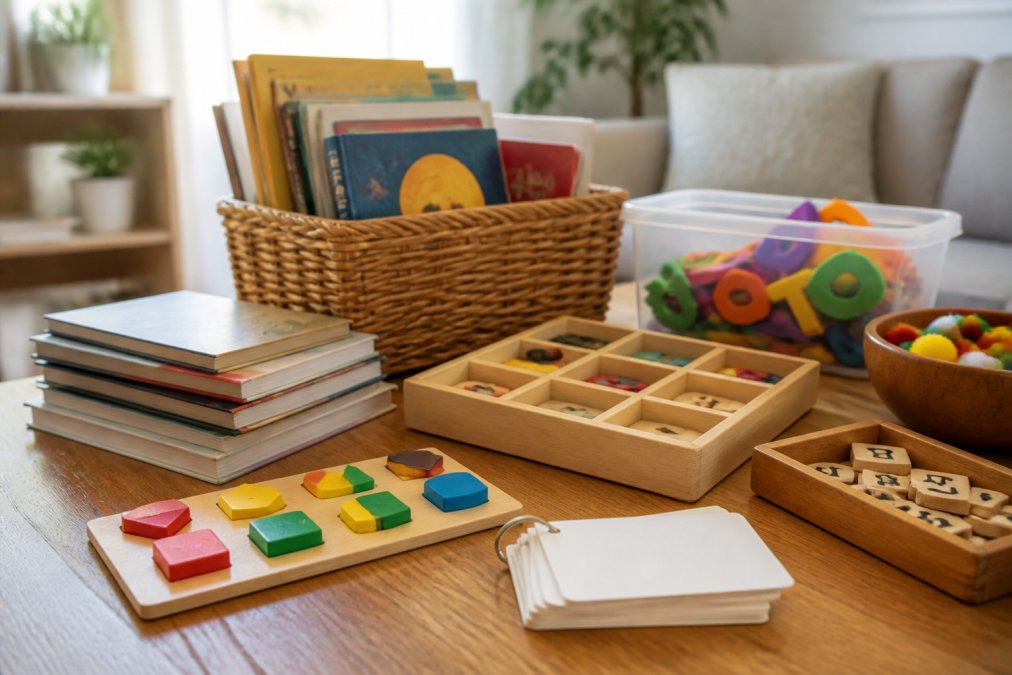
4. Offline and screen-free usability (15%). Can the tool work without Wi-Fi, a tablet, or a subscription? Physical manipulatives, magnetic letters, letter tiles, decodable card decks, build the same orthographic mapping as an app for many children, and they never log a child out mid-lesson.
5. Support for learning differences (10%). Does the program offer multisensory instruction, adjustable pacing, and diagnostic assessment? These features matter most for children with dyslexia, ADHD, or sensory processing differences.
Offline vs. Online: A Quick Decision Framework
Most ranking guides push apps. In practice, the right answer is usually a blend, and the split depends on your child:
- Choose offline-first if your child is under four, gets overstimulated by animation, or already fights screen limits. Magnetic letters, sand trays, and decodable readers cost less and remove the attention tug-of-war.
- Choose online-first if your child needs immediate feedback, you want automatic progress tracking, or you cannot reliably deliver a lesson yourself.
- Blend both for most school-age children: a 15-minute app session for phonics drill, plus 15 minutes of parent-led read-aloud for fluency and comprehension.
Budget vs. Premium: What You Actually Get
Cost does not track quality as tightly as parents expect. A common pattern:
- Under $15 one-time: print workbooks and card decks. Strong on systematic phonics, weak on audio modeling and progress data.
- $10-$15 per month: app subscriptions. Strong on engagement and tracking, weak on parent coaching.
- $15-$25 per month or curriculum licenses: structured programs with diagnostics and multisensory routines. Strongest for struggling readers, but they demand the most parent time.
A practical rule: spend on the skill your child is stuck on, not on the most feature-rich product. If decoding is the bottleneck, a $10 workbook beats a $20/month app. If comprehension is the bottleneck, invest in read-aloud time before you invest in software.
1. Lauren's Literacy Lounge: Best Overall for Parent-Led Early Literacy
Lauren's Literacy Lounge earns the top spot because it treats the parent as the child's first teacher, not a passive subscriber. The program, built around the Literacy Roots framework, walks caregivers through nurturing a child's reading journey from birth to brilliance, empowering parents to be the best first teachers.
What Makes It Different
Most digital tools hand the teaching to an algorithm. This one hands it back to you, with structured guidance that fits the developmental stage your child is actually in. For military families who relocate every 18 months, that consistency matters: the routine travels with you, even when the school does not.
Who It's For
Parents of infants and toddlers who want a proactive, evidence-based approach without a teaching background. If you have ever felt overwhelmed by free online tips that contradict each other, this is the structured alternative.
2. ABCmouse: Best for Gamified Early Learning
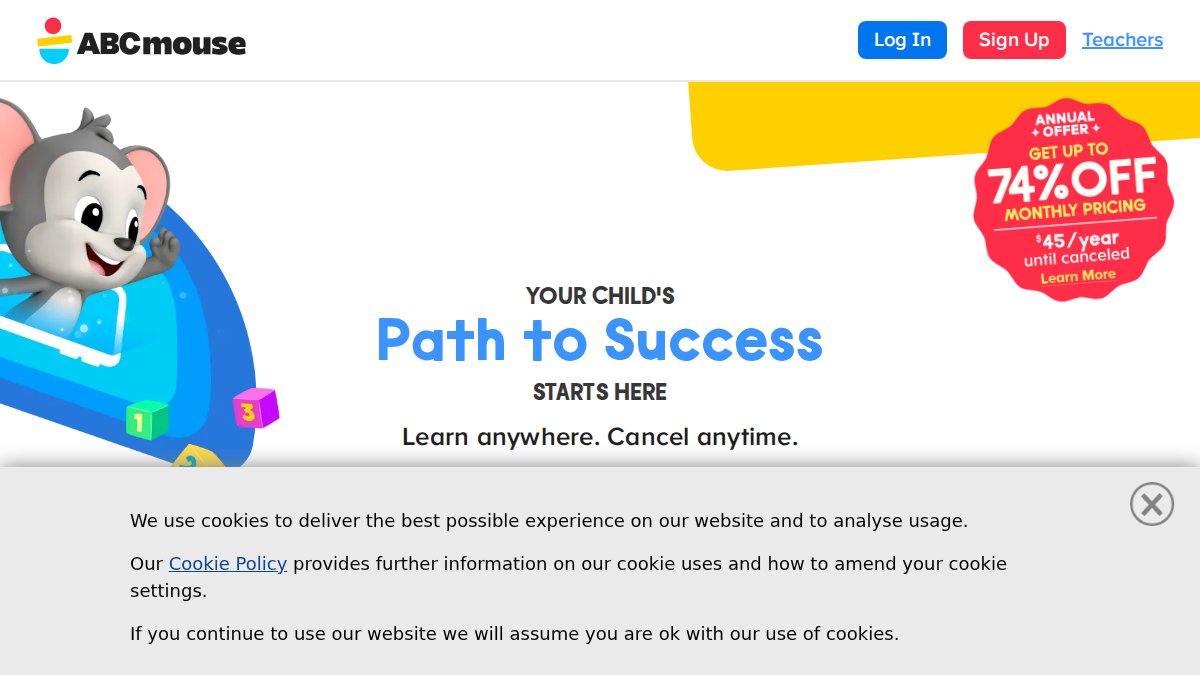
ABCmouse wins on engagement. Its step-by-step learning path packs thousands of activities into a colorful interface that holds a young child's attention, and the parent dashboard shows progress without requiring you to sit through every lesson.
The tradeoff is cost and screen time. At $12.99/month, it adds up over a year, and the gamified design can encourage tapping over thinking (How Much Does ABCmouse Cost? Subscription plan overview). Use it as a supplement, not the foundation.
3. Reading.com: Best for Parent-Child Phonics Lessons
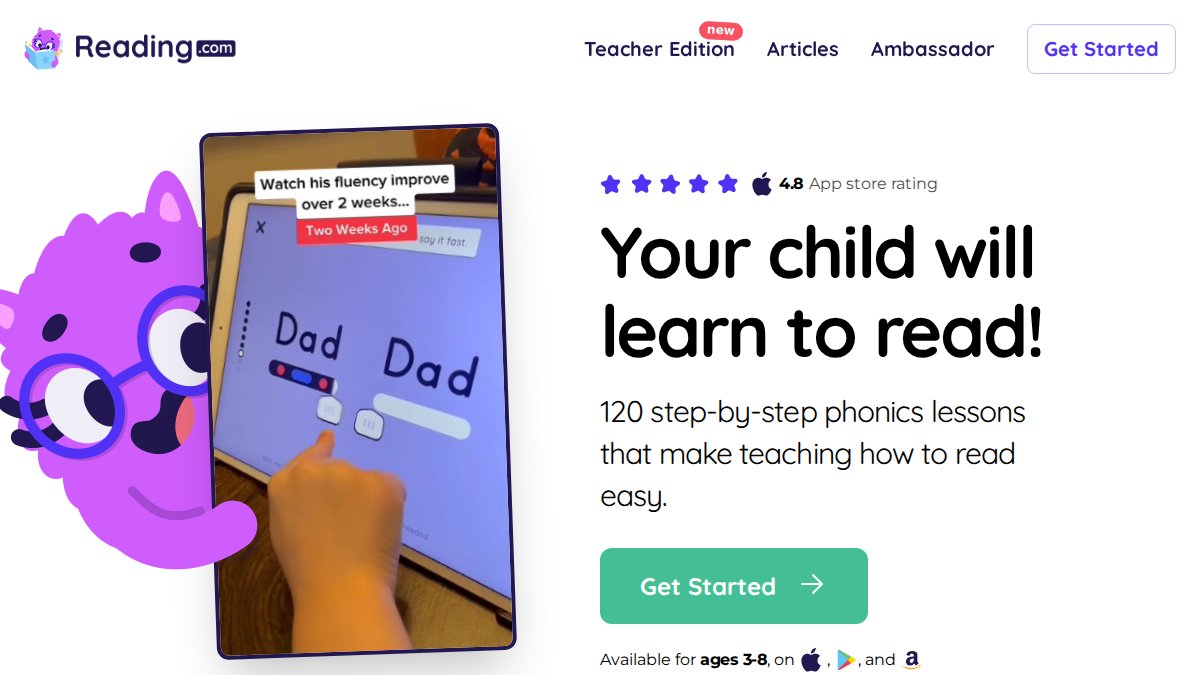
Reading.com is built for parents who want to teach phonics instruction directly. Lessons are completed together, with systematic phonics sequencing and built-in progress tracking.
Where it falls short: it demands real parent time commitment. Skip it if you cannot commit to several sessions a week.
4. Reading Horizons Discovery: Best Structured Curriculum for Home Use
Reading Horizons Discovery follows the Orton-Gillingham approach, with explicit, systematic instruction, multisensory learning techniques, and diagnostic assessments that pinpoint skill gaps. It aligns closely with the science of reading, which makes it a strong pick for struggling readers.
The learning curve is steeper than an app. Expect to study the parent guides before you teach.
5. Reading Kingdom: Best Adaptive Program for Reading and Writing
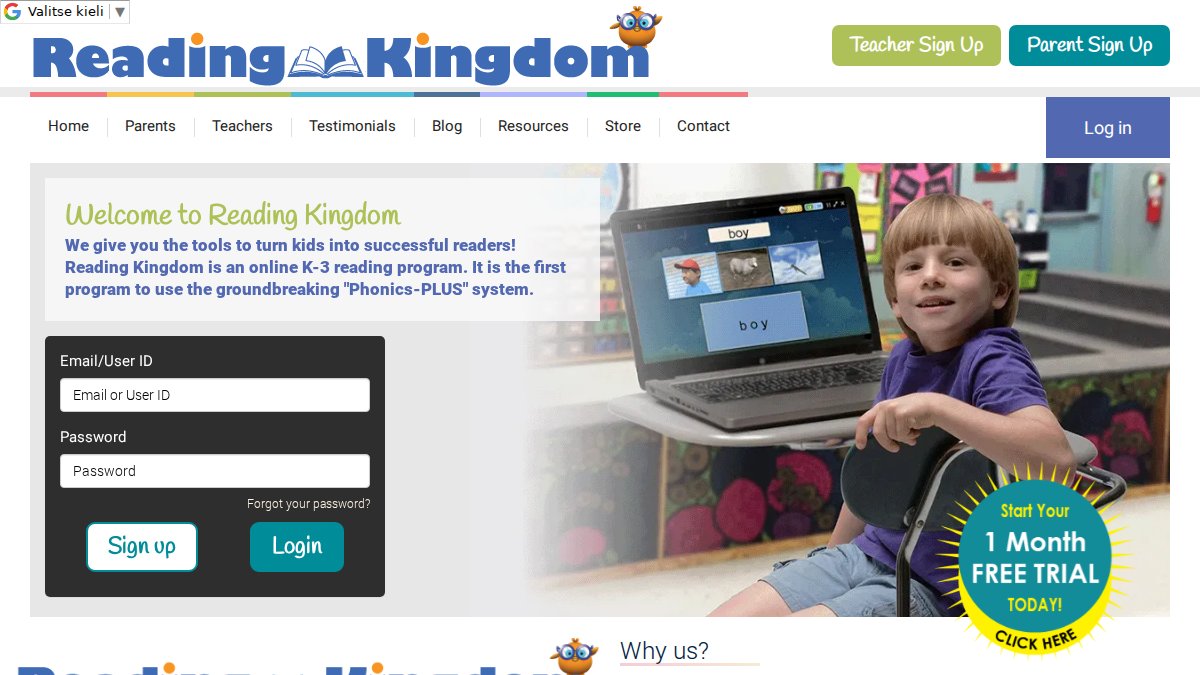
Reading Kingdom uses its Phonics-Plus method to teach reading, writing, and spelling simultaneously. Adaptive technology adjusts pacing to your child's skill level, which prevents the frustration that comes from material that is too hard or too easy.
The interface feels less playful than gamified competitors. It is a subscription, so it suits families whose child needs a personalized path.
6. Explode the Code: Best Budget-Friendly Workbook Series
Explode the Code is the offline answer to screen fatigue. These sequential phonics workbooks drill blending and segmenting sounds with a minimalist design that reduces distractions.
It lacks audio feedback, so your child will not hear correct pronunciation modeled. Pair it with read-aloud time to cover that gap. For families on a tight budget, this offers a cost-effective option per skill taught.
| Tool | Starting Price | Format | Best For |
|---|---|---|---|
| Lauren's Literacy Lounge | Varies by package | Parent-led program | Birth-to-early-reader guidance |
| ABCmouse | $12.99/month | App subscription | Gamified learners, ages 2-8 |
| Reading.com | Contact for pricing | App subscription | Hands-on phonics lessons |
| Reading Horizons Discovery | Contact for pricing | Curriculum license | Struggling readers, homeschool |
| Reading Kingdom | $19.99/month | Web platform | Adaptive reading and writing |
| Explode the Code | $10/book | Print workbooks | Budget-conscious, offline families |
Frequently Asked Questions
What are the best literacy tools for parents of toddlers?
For toddlers, look for tools that build phonemic awareness and print awareness through play. Lauren's Literacy Lounge is designed specifically for parent-led early literacy from birth, making it a strong fit. ABCmouse offers gamified phonics activities for ages 2 and up. Explode the Code workbooks provide affordable, screen-free phonics practice. The best choice depends on whether your toddler responds better to interactive apps, hands-on workbooks, or guided parent-child sessions.
How do I know if my child is struggling with reading?
Warning signs include difficulty sounding out simple words by age 6, avoiding reading tasks, guessing at words instead of decoding, and falling behind peers in reading fluency. If your child shows these signs, a structured literacy tool like Reading Horizons Discovery can help. These programs use diagnostic assessments to identify skill gaps and provide explicit, systematic phonics instruction. Speak with your child's teacher about whether a formal reading assessment is warranted.
What role do phonics games for toddlers play in early literacy development?
Phonics games for toddlers build phonemic awareness, the ability to hear and manipulate individual sounds in words. This skill is a proven predictor of later reading success. Games that involve rhyming, clapping syllables, and matching letter sounds to objects make these skills concrete for young children. Tools like ABCmouse and Reading.com incorporate game-based phonics instruction, while Explode the Code offers workbook-based practice for families who prefer less screen time.
How can I support reading comprehension at home without a teaching background?
You do not need a teaching degree to support reading comprehension at home. Start by asking your child questions during and after reading: what happened, why a character acted a certain way, and what might happen next. Tools like Reading Kingdom include built-in comprehension checks. Reading Horizons Discovery provides parent guides that walk you through each lesson. The key is consistent, low-pressure practice that keeps your child engaged.
Are free literacy resources enough, or should I invest in a paid program?
Free resources like library storytimes and printable worksheets can supplement your child's literacy development, but they often lack the sequential structure that builds decoding skills systematically. Paid programs like Lauren's Literacy Lounge and Reading Horizons Discovery provide a scope and sequence designed by literacy experts. If your child is progressing well with free materials, that may be sufficient. If they need more structure or are struggling, a paid program can make a measurable difference.
Choosing the right literacy tools for parents comes down to one question: who is doing the teaching? If you want to be your child's first and best teacher without a teaching degree, Lauren's Literacy Lounge gives you the structured, stage-by-stage guidance to make that real, from the Literacy Roots framework through practical routines you can start tonight. Get started with Lauren's Literacy Lounge and turn everyday read-alouds into lasting reading skills.