 Listicle
Best Evidence Based Reading Resources: 2026 Guide
Table of Contents
- Best Evidence Based Reading Resources: Quick Comparison
- How We Evaluated These Evidence Based Reading Resources
- 1. CORE Learning Science of Reading Resource Library: Best Free Professional Development
- 2. Evidence for ESSA: Best Free Clearinghouse for Curriculum Selection
- 3. Pride Reading Program: Best Structured Literacy Program for Struggling Readers
- 4. Sprig Learning: Best Data-Driven Intervention for Schools on a Budget
- 5. Storytime AI: Best AI-Powered Reading Support for Districts
- 6. Lauren's Literacy Lounge: Best for Parents Who Want to Teach Early Reading at Home
- Structured Literacy Activities at Home: Free and Low-Cost Ideas for Parents
- The Bottom Line on Choosing Reading Resources
- Frequently Asked Questions
Last Updated: September 16, 2026
Best Evidence Based Reading Resources: Quick Comparison
Finding the best evidence based reading resources starts with knowing which ones actually align with the science of reading. The table below compares the six options covered in this guide, from free professional development libraries to structured literacy programs and home-based tools. At Lauren's Literacy Lounge, we built this comparison around one question: does the resource reflect research-backed practice, or just marketing language?
| Resource | Cost | Best For | Standout Feature |
|---|---|---|---|
| CORE Learning Resource Library | Free | Teachers and administrators | Expert-vetted science of reading guides |
| Evidence for ESSA | Free | District curriculum selection | Independent clearinghouse ratings |
| Pride Reading Program | Contact for pricing | Struggling readers | Orton-Gillingham structured literacy |
| Sprig Learning | Contact for pricing | Budget-conscious schools | Data-driven progress monitoring |
| Storytime AI | Contact for pricing | District-wide literacy frameworks | AI-personalized reading support |
| Lauren's Literacy Lounge | Varies by format | Parents of infants and toddlers | Parent-as-first-teacher framework |
Quick Picks:

- Best Free Professional Development: CORE Learning Science of Reading Resource Library
- Best Free Clearinghouse: Evidence for ESSA
- Best for Parents at Home: Lauren's Literacy Lounge
How We Evaluated These Evidence Based Reading Resources
Most roundups of evidence based reading resources rank by brand recognition or affiliate payout. This one ranks by instructional design. Each resource was scored against five criteria, and a resource had to clear all five to earn a place here.
1. Alignment with structured literacy principles. Does the scope and sequence build cumulatively across phonemic awareness, phonics, fluency, vocabulary, and comprehension, or does it isolate one skill and call it a program? A resource that teaches phonics without phonemic awareness, or comprehension strategies without decoding support, fails this criterion regardless of its marketing.
2. Transparency of research backing. Can you trace the instructional design to published research, or does the site use science of reading vocabulary without citing anything? The gap between "research-backed" and "research-adjacent" is wider than most buyers expect. Plenty of programs borrow the terminology without building their sequence around orthographic mapping or cumulative review.
3. Practical usability for the intended audience. A district clearinghouse that requires a research analyst to interpret is not usable for a first-year teacher. A parent program that assumes a master's degree in education is not usable for a family. Usability is audience-specific, and we scored it that way.
4. Cost relative to value. Free does not always mean accessible, and paid does not always mean better. We weighed whether the free tier is genuinely usable or a demo, and whether paid tiers publish pricing or hide behind a quote form.
5. Implementation feasibility. This is the criterion most roundups skip. A program can be research-aligned and still fail because it requires training the school cannot fund, technology the building does not have, or a coaching model that collapses when a literacy specialist leaves. We asked: what does adoption actually require in time, training, and infrastructure?
The implementation gap competitors ignore. The most common reason evidence-based programs fail is not the program, it is the rollout. A district that adopts a Tier 2 intervention without scheduling intervention blocks, without training paraprofessionals, and without a progress-monitoring cadence will see flat results and blame the curriculum.
The Nation's Report Card reading assessment data
1. CORE Learning Science of Reading Resource Library: Best Free Professional Development
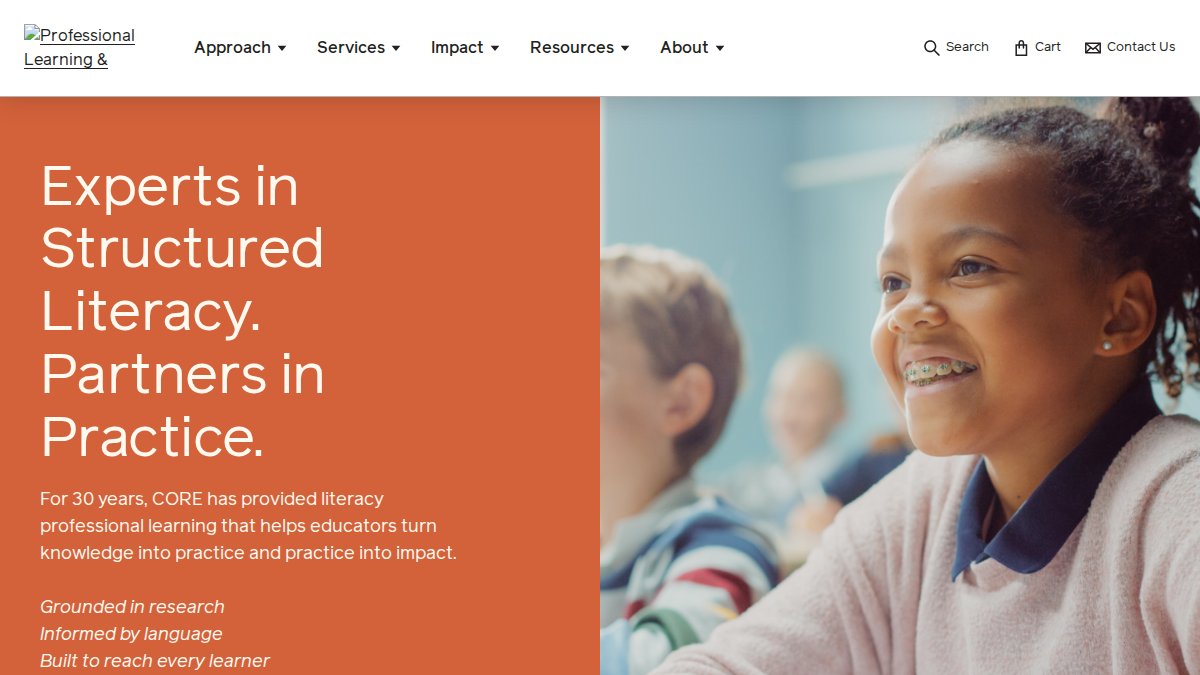
CORE Learning's library is the strongest free starting point for anyone who needs to understand the pedagogical framework behind effective reading instruction before choosing materials. It offers downloadable guides, webinars, and classroom-ready tools, all centered on the science of reading.
2. Evidence for ESSA: Best Free Clearinghouse for Curriculum Selection
Evidence for ESSA rates reading programs against Every Student Succeeds Act evidence standards, which makes it the closest thing to an independent clearinghouse for curriculum decisions. You can filter by grade level and subject, then read summaries of the underlying study outcomes.
3. Pride Reading Program: Best Structured Literacy Program for Struggling Readers
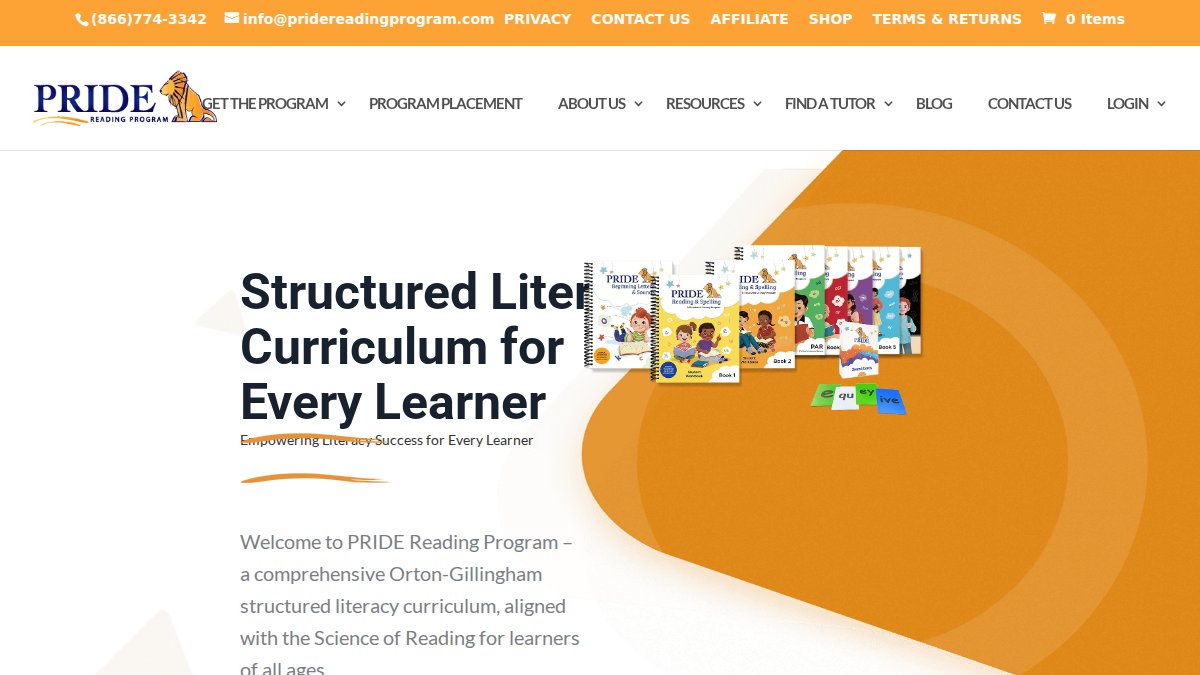
Pride Reading Program delivers direct, explicit, systematic phonics through an Orton-Gillingham-based approach, with multisensory activities and teacher-led support materials. For a student with a genuine skill gap in decoding, that structure matters more than novelty.
4. Sprig Learning: Best Data-Driven Intervention for Schools on a Budget
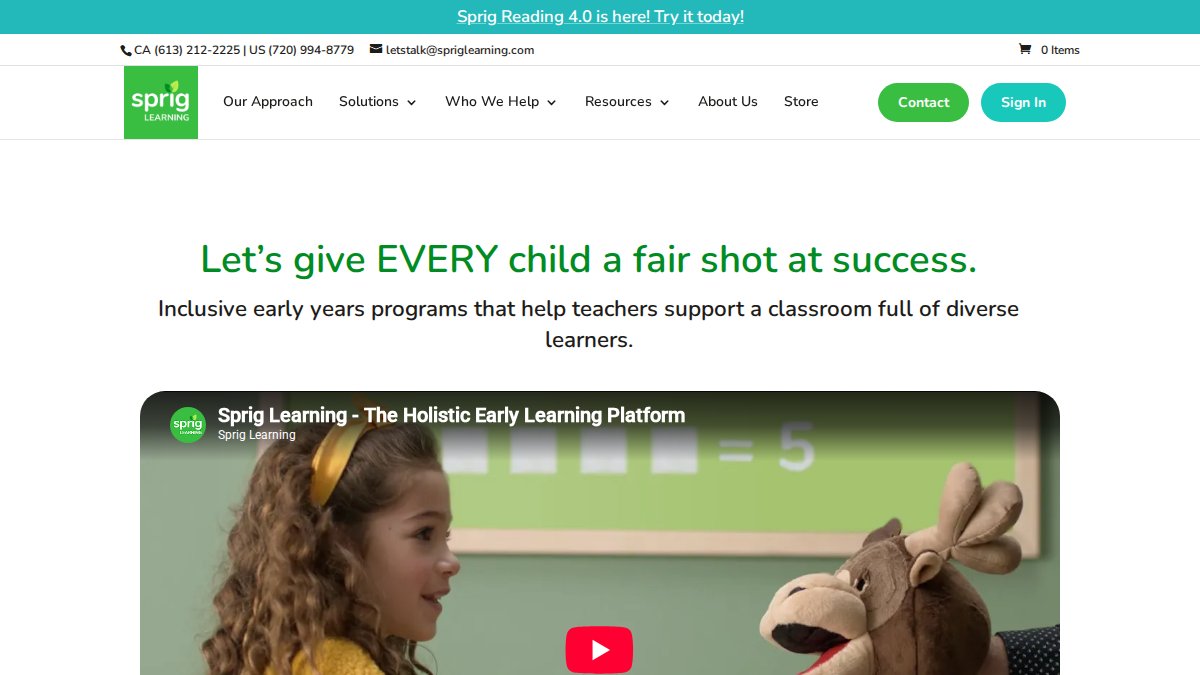
Sprig Learning targets the cost side of literacy intervention, pairing personalized learning paths with progress monitoring dashboards for teachers. The data-driven instruction model is sound: assessment informs grouping, grouping informs instruction.
5. Storytime AI: Best AI-Powered Reading Support for Districts
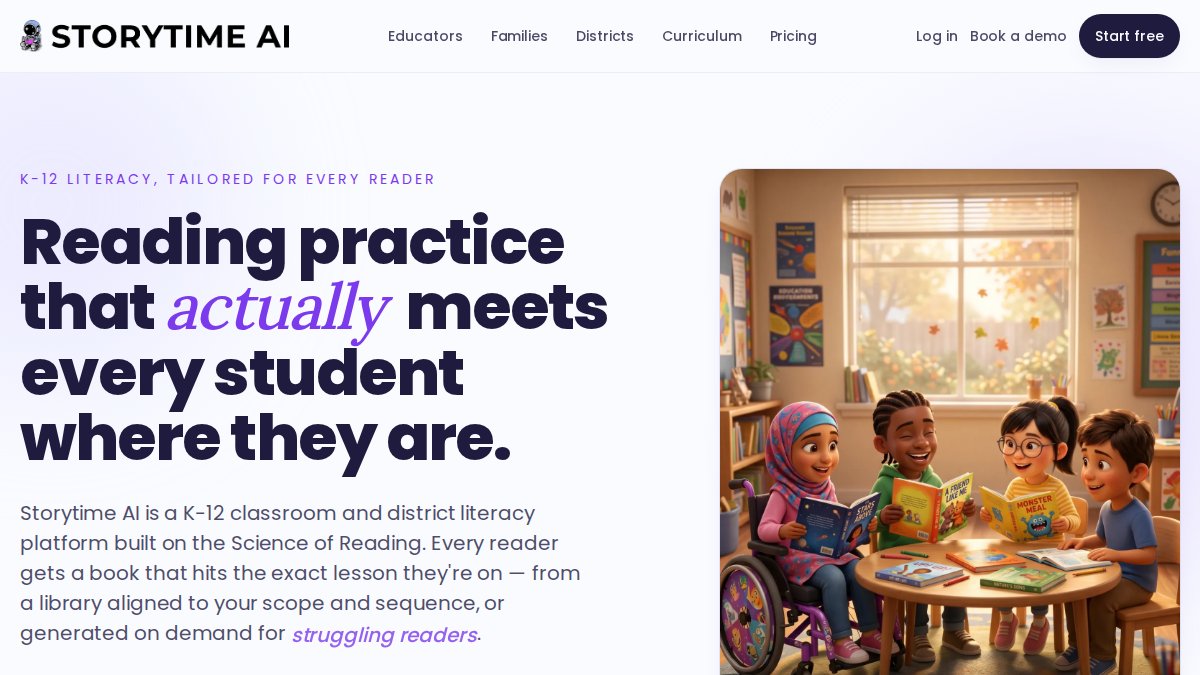
Storytime AI applies personalized content generation to literacy development, with district-level progress tracking and a science of reading-aligned methodology. Districts exploring differentiated learning at scale will find the reporting useful.
6. Lauren's Literacy Lounge: Best for Parents Who Want to Teach Early Reading at Home
Structured Literacy Activities at Home: Free and Low-Cost Ideas for Parents
-
First-sound isolation: Say a word slowly (sun) and ask your child to identify the first sound (/s/). Start with continuous sounds (/m/, /s/, /f/) before stop sounds (/b/, /t/, /p/), which are harder to hold.
-
Sound segmentation: Ask your child to tap once for each sound in a three-sound word (cat = three taps). This is the bridge to spelling.
-
Rhyme and alliteration chains: Build silly rhyming strings during car rides. Rhyme play strengthens the phonological awareness that later supports decoding.
-
Sound deletion: "Say cat. Now say it without the /k/." This is a kindergarten-to-first-grade skill and a strong predictor of later decoding.
-
Letter hunts: Find a target letter on signs, cereal boxes, and packaging. Pair the letter with its sound, not just its name.
-
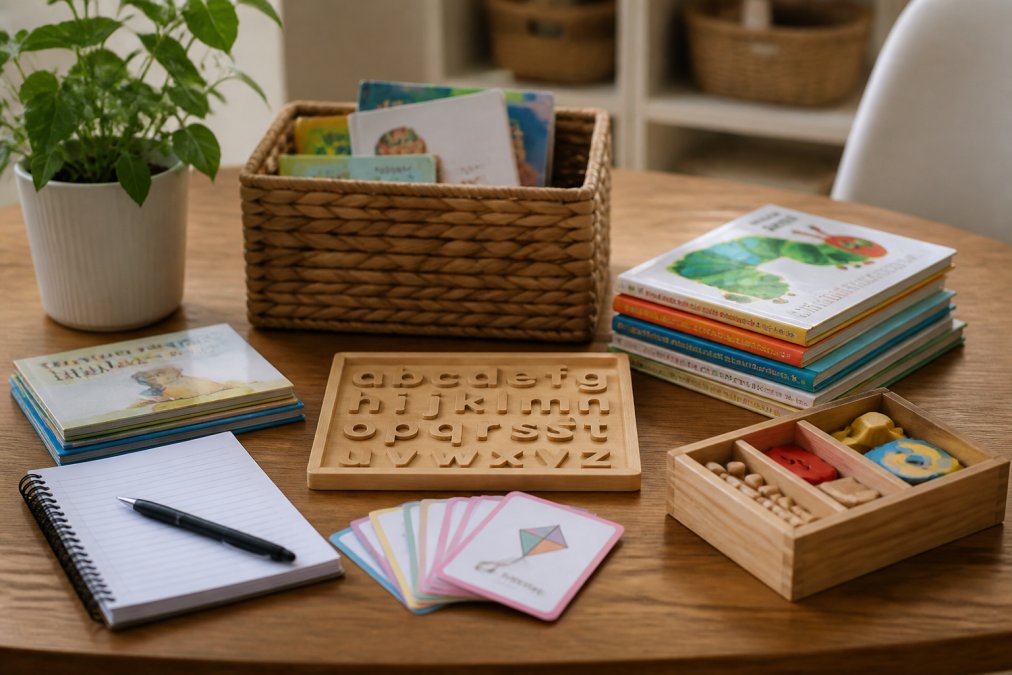
Sound mapping with tiles or magnets: Place one tile per sound in a word, then swap a tile to make a new word (cat to hat to hot). This is orthographic mapping in its simplest form.
-
Decodable text practice: Short, controlled passages that only use letter-sound patterns the child has been taught. Free decodable passages are widely available; the key is that the text matches the taught sequence, not the child's age.
Connected text and comprehension.
- Echo and choral reading: You read a sentence, your child reads it back. Repeated reading of the same short passage builds fluency faster than new material every night.
- Story talk: Ask what happens next before turning the page. Prediction and retelling are comprehension strategies, not just bedtime chat.
- Print awareness: Run a finger under words as you read aloud. This is the single highest-yield habit for toddlers and preschoolers.
Reading and literacy resources from the Institute of Education Sciences
The Bottom Line on Choosing Reading Resources
The best evidence based reading resources share one trait: their instructional design traces back to research rather than trend. Free libraries and clearinghouses cover the knowledge gap. Structured programs cover the intervention gap. And for parents who want to start before school does, Lauren's Literacy Lounge closes the home gap with a parent-first framework built for children from birth onward, portable across moves and school changes alike.
Frequently Asked Questions
What reading programs are evidence-based?
Evidence-based programs have research showing they improve reading outcomes. Look for programs aligned with the science of reading, such as structured literacy curricula that include systematic phonics, phonemic awareness, fluency, vocabulary, and comprehension. Free clearinghouses like Evidence for ESSA rate programs by study quality. CORE Learning's resource library offers guides on what makes instruction research-backed. Programs like Pride Reading Program follow the Orton-Gillingham approach, which has decades of evidence behind it.
How can parents identify if a reading program is truly evidence-based?
Check whether the program cites independent studies, aligns with the science of reading, and appears in a clearinghouse like Evidence for ESSA. Avoid programs that rely only on testimonials or vague claims. Look for structured literacy components: explicit phonics, phonemic awareness, and decodable text. If a program is for toddlers, it should focus on oral language, vocabulary, and print awareness. Free resources from CORE Learning and Reading Rockets can help you evaluate materials before buying.
Are there free evidence-based reading resources for home use?
Yes. CORE Learning's Science of Reading Resource Library offers free guides, webinars, and classroom-ready materials. Evidence for ESSA is a free database for comparing programs. Many public libraries provide free access to decodable books and early literacy kits. For structured literacy activities at home, you can use letter tiles, word-building cards, and interactive read-alouds. These free tools support phonemic awareness and vocabulary without cost.
What are the best reading programs for toddlers?
For toddlers, the best programs focus on language-rich interactions, not formal phonics. Look for resources that build vocabulary through conversation, songs, and shared reading. Programs like Lauren's Literacy Lounge's Literacy Roots guide parents in using everyday moments to develop early literacy. Avoid screen-heavy apps for this age. Instead, prioritize activities that involve pointing at pictures, naming objects, and rhyming. The goal is to make reading a positive, routine experience.
How does the science of reading influence modern curriculum choices?
The science of reading is a body of research from cognitive science, linguistics, and education that explains how children learn to read. It emphasizes phonemic awareness, systematic phonics, fluency, vocabulary, and comprehension. Many states now require curricula to align with this research. Programs like Pride Reading Program and Storytime AI incorporate these principles. When choosing resources, check for explicit, systematic instruction and opportunities for practice with decodable text.